

Director Pranab Bharali’s feature film, Chupa Chupi, is a pleasantly shot slice of rural Assam that captures the simple, enduring beauty of village life. Serving as a direct, feature-length continuation of the highly acclaimed 2024 YouTube web series of the same name, the film expands upon its popular digital predecessor. Ultimately, it offers an appealing weekend watch for families, seamlessly balancing clean situational humour with gripping drama.
Spanning from the early 2000s, when cell phones first arrived in rural villages as tenderly depicted in the web series to today’s hyper-connected landscape, this cinematic adaptation serves as a mirror to our mobile-obsessed society. It is a poignant reminder of how the very devices meant to connect us often act as barriers to genuine human bonds.
The story reunites audiences with four village schoolboys: Deepak (Kaushik Bharadwaj), Roop (Saptarshi Gogoi), Sanu (Jeet Kalita), and Bogo (Jintu Kumar Kashyap). In the original web series, their lives unraveled after they accidentally killed a man while protecting a vulnerable local woman, Urmila Bou. The feature film picks up after the boys finish their time in a juvenile correctional facility. It opens at the train station, where a dynamic new character, Billu (Kamal Lochan), makes a grand, South Indian-style entrance.
At its heart, Chupa Chupi captures the essence of true love. Love is profound, but it is often measured by the silent agony of unrequited devotion. Some play games with love, while others, haunted by loss, drown their sorrows. True love speaks to the soul.
These emotional themes shine vividly in the portrayal of grief. Bogo, mourning the loss of his mother and lover, finds comfort in Urmila. As a social outcast raising a daughter alone, she mirrors his heartbreak. The delicate portrayal of their shared loneliness gives the movie some of its best acting, delivered beautifully by Jintu Kumar Kashyap and Snigdha Gogoi. However, other character arcs, like that of Sangita and the man played by Bedabrat Borah, are sometimes confusing and lack clear motives.
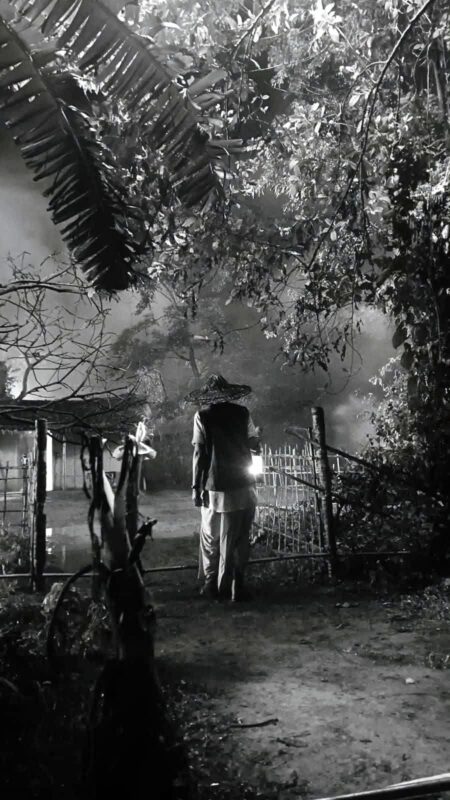

The film truly hits its stride when a harmless prank by the four rebellious boys spirals out of control, causing deeply rooted village superstitions to come to life. Within the span of a single night, hidden tensions and dark secrets emerge as the local socio-political fabric splinters, plunging the community into chaos and leading the villagers to believe that a restricted, forbidden area of the village is haunted or cursed.
The narrative then exposes how corrupt politicians use superstition as a deadly tool. They create false narratives of witchcraft to manipulate people, divide communities, and oppress ordinary citizens. Through clashes between rival factions and political brokers, the film unmasks the hypocrites hiding behind false morality.
Ultimately, the story captures the enduring darkness of a society where some still view women with ill intent. It mirrors the grim reality of predators stalking vulnerable women for sexual exploitation, while showcasing the malice of onlookers who delight in casting unmerited shame upon a woman simply because she refused to serve their selfish ends.
Technically, Chupa Chupi is superior to many recent Assamese films. It had a hefty budget of 3.5 to 4 crore and spans 2 hours and 40 minutes. The controversies surrounding its clever ‘Hah Khabo’ promotional campaign also worked incredibly well in its favour.
However, the film tries to cram in too many elements, shifting awkwardly between drama, comedy, romance, and social commentary. The first half lacks direction and wanders aimlessly. If the filmmakers had established the local superstitions about the cursed place earlier, and trimmed the runtime, the story would have been much tighter. Despite these pacing issues, actors like Arun Nath, who is a breath of fresh air as the Gaonburha, and Kamal Lochan, who dominates the screen, anchor the film with strong performances.
Ultimately, Chupa Chupi is an ambitious cinematic journey. It blends the harsh realities of social injustice with the innocent charm of rural life.