A Western wedding has one outfit decision: what to wear to the ceremony and reception (same day, often the same outfit). An Indian wedding has 3-5 different functions, each with its own vibe, formality level, color expectations, and outfit category. Most overwhelmed first-time guests pack the wrong outfit for the wrong function.
The good news: there are clear rules for each function. Once you understand the structure (haldi → mehendi → sangeet → main ceremony → reception), outfit selection becomes much easier. The 25 ideas below are organized by function — find the events on your wedding invitation, jump to those sections, pick from the options that fit your style.
The 2026 trends are good news for guests: tone-on-tone embroidery (ivory on ivory, gold on gold) is the luxury signature of the year, pre-draped sarees solve the draping problem for guests who love the look but can’t drape, and cape-style ensembles are becoming the contemporary modern alternative to traditional drape. Pastels are out, jewel tones are back.
Save the ideas you love. The “colors to avoid” section near the end is the single most important part of this guide — getting colors wrong at an Indian wedding is much more visible than getting them wrong at a Western wedding.
The 5 rules every Indian wedding guest should follow
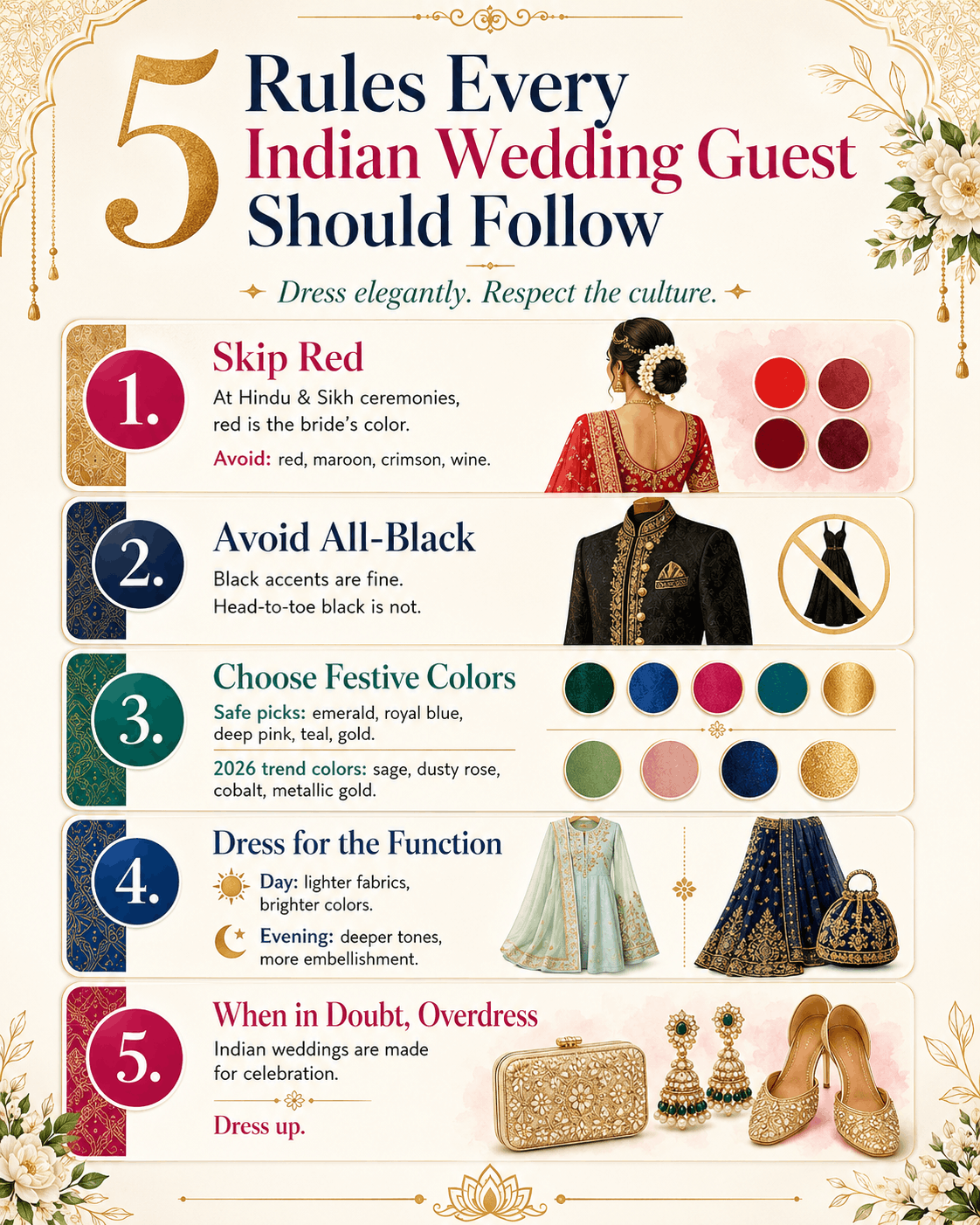
Before the outfits, five rules that separate guests who blend in elegantly from guests who stand out for the wrong reasons:
Rule 1: NEVER wear red to a Hindu or Sikh wedding ceremony. Red is the bride’s color. Wearing red is considered disrespectful because it competes with the bride visually. This includes maroon, crimson, scarlet, and deep wine shades. Save red for non-wedding events.
Rule 2: Avoid all-black unless specifically invited for a black-tie reception. Black is associated with mourning in many Indian traditions and is considered inappropriate for joyous celebrations. A black piece as one element (black blouse with a colorful saree, black accents on embroidery) is fine. Head-to-toe black is not.
Rule 3: Color matters more at Indian weddings than at any other celebration. Rich jewel tones — emerald green, royal blue, deep pink, teal, burgundy, gold, champagne — are always safe and celebratory. For 2026 specifically: sage green, dusty rose, cobalt blue, and metallic gold are the trending guest colors.
Rule 4: Match formality to the function, not the dress code on the invitation. The dress code on an Indian wedding invitation often says “traditional” or “Indian formal,” which doesn’t tell you whether jeweled lehenga or simple kurta. Daytime functions = lighter fabrics, less embellishment, brighter colors. Evening functions = heavier embellishment, deeper colors, more drama.
Rule 5: Overdressed is always better than underdressed. Indian wedding guests are expected to dress up, period. Even guests who feel “the most formal in the room” usually aren’t. When in doubt, choose the more elaborate option. The cultural expectation is celebration — show up dressed for celebration.
Now the outfits.
Haldi ceremony outfits
The turmeric ceremony. Casual, intimate, daytime, expect to potentially get turmeric stains. Your outfit should be cheerful but not precious — you may end up with turmeric handprints by the end.
1. Yellow cotton kurta set
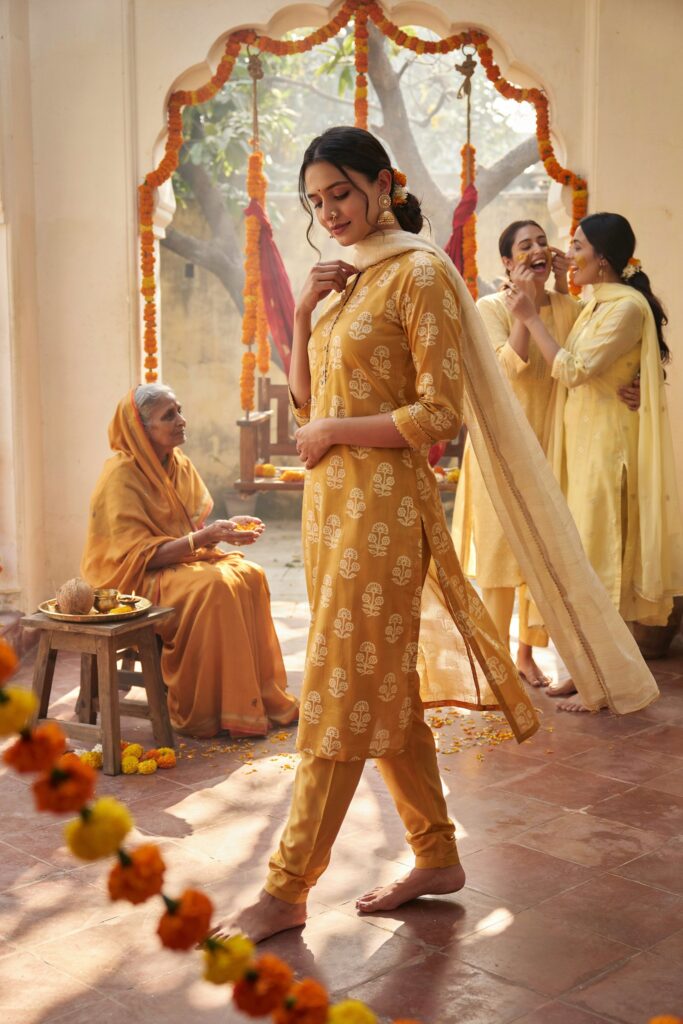
The traditional haldi outfit. A simple yellow cotton kurta with white churidar (fitted pants) or palazzo bottoms. Comfortable, breathable, and intentionally light because turmeric WILL get on it. Don’t wear anything expensive or sentimental.
2. Yellow or marigold-orange lightweight Anarkali
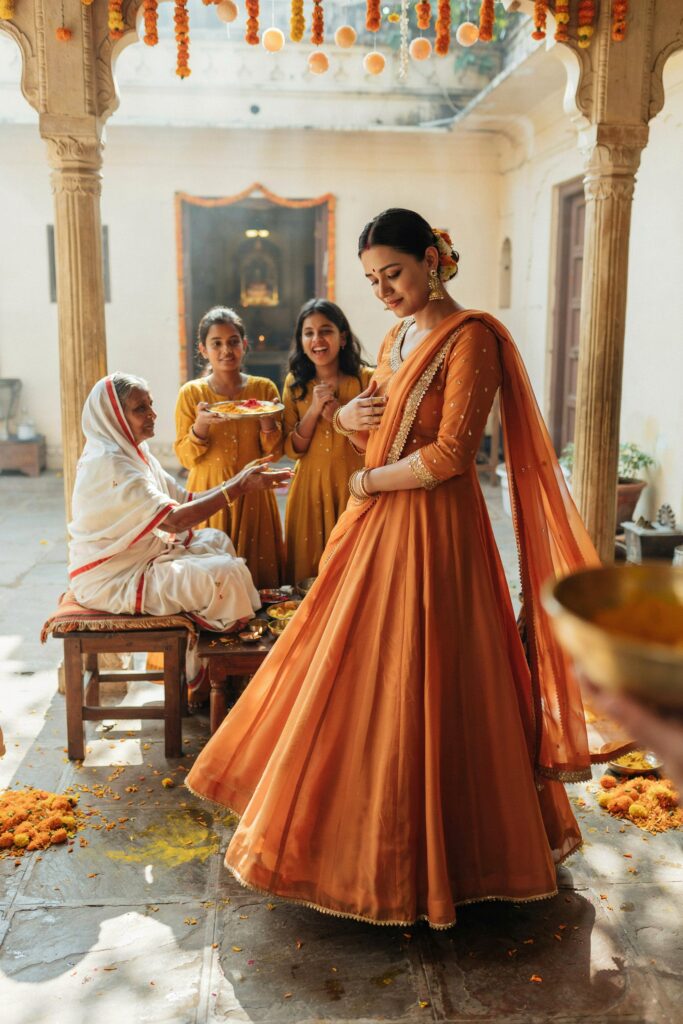
A simple Anarkali (flowing tunic that flares from the waist) in yellow, marigold, or soft mango orange. Slightly more polished than a basic kurta but still simple enough that stains don’t ruin the day. Pair with simple flat sandals.
3. Floral printed cotton suit
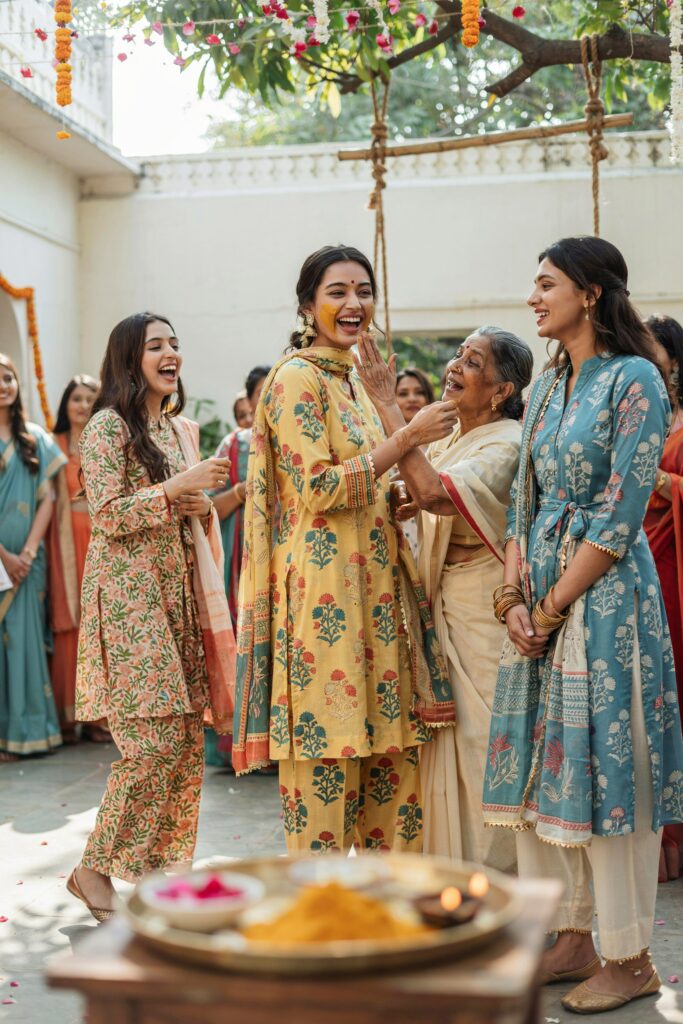
A casual printed cotton salwar suit in yellow, green, or floral prints. Comfortable, breathable, and reads as festive. Photographs beautifully against the marigold flowers typically used in haldi decor.
Mehendi (henna) ceremony outfits
The henna ceremony. Casual to semi-formal, bright colors, daytime, often outdoor. Most photos from this event become iconic because the henna designs photograph beautifully against vibrant outfits.
4. Green lehenga with floral embroidery
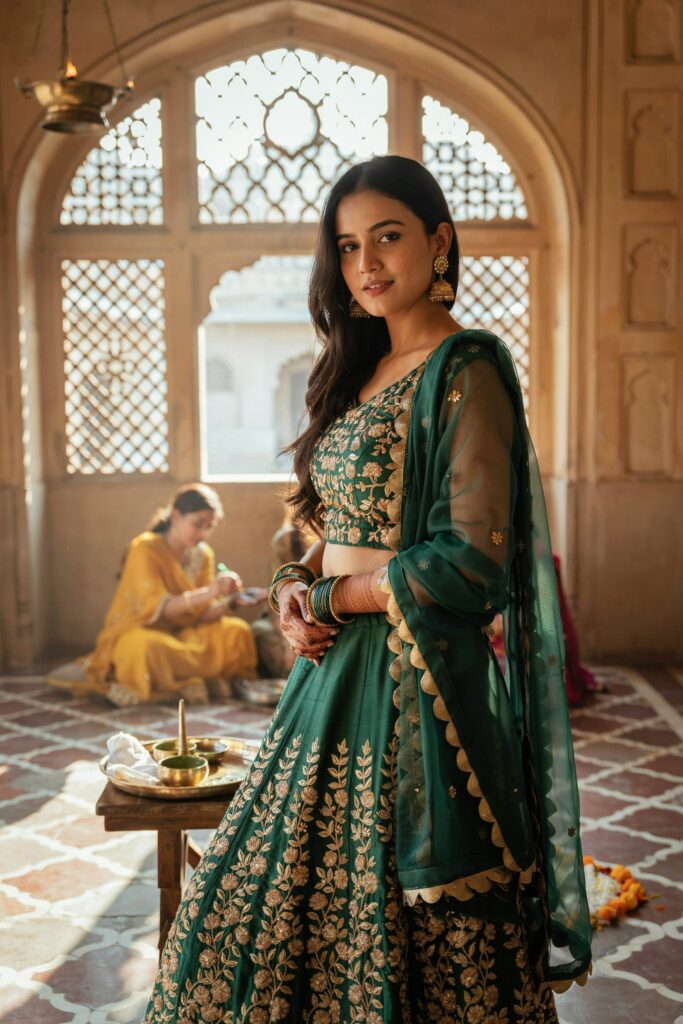
The traditional mehendi color is green (the same color as henna paste). A green lehenga with subtle floral embroidery, paired with a contrasting choli (blouse) and dupatta, is the most-photographed mehendi outfit. Particularly beautiful in sage or emerald green for 2026.
5. Printed Anarkali in bright colors
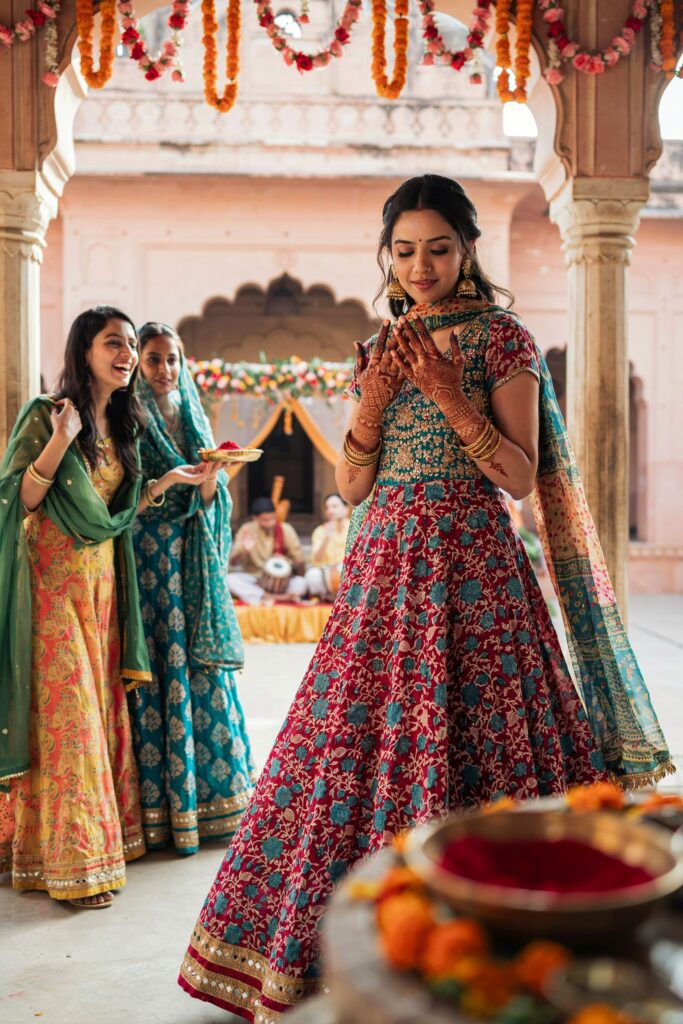
A printed Anarkali in saturated jewel tones (deep pink, royal blue, orange) with intricate prints. Lightweight enough for daytime, polished enough for photos. Comfortable for the long sitting time required for henna application.
6. Lightweight lehenga with mirror work
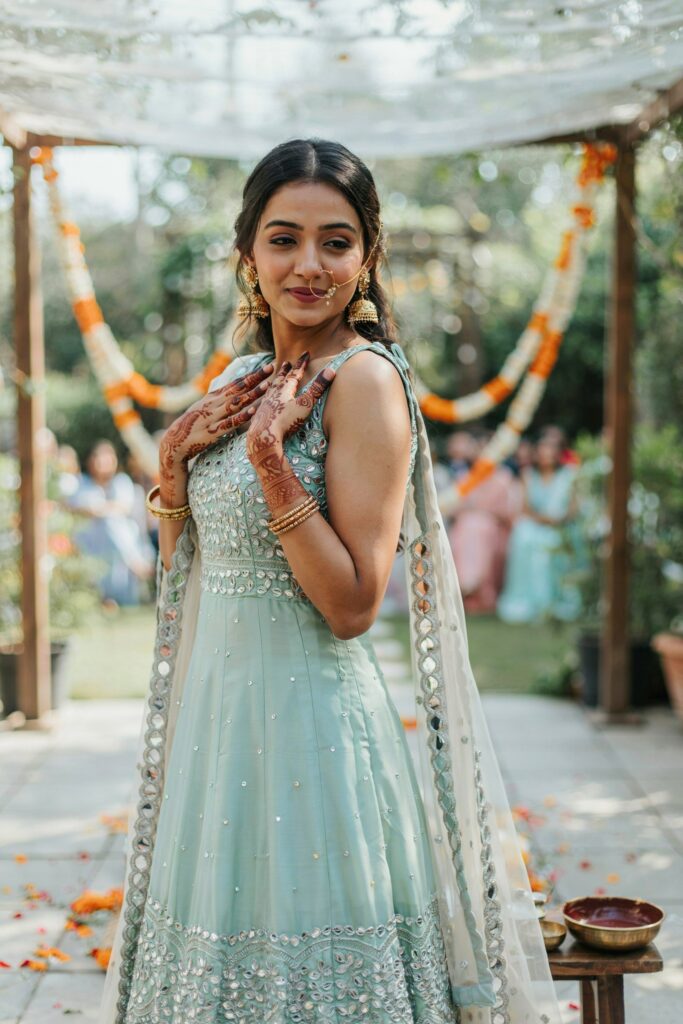
A lightweight lehenga (georgette or chiffon, NOT velvet) with mirror work embellishment. The mirrors catch sunlight beautifully in outdoor mehendi settings. Avoid heavy lehengas — you’ll be sitting for hours getting henna and the lehenga becomes uncomfortable.
7. Printed kurta set with palazzo bottoms
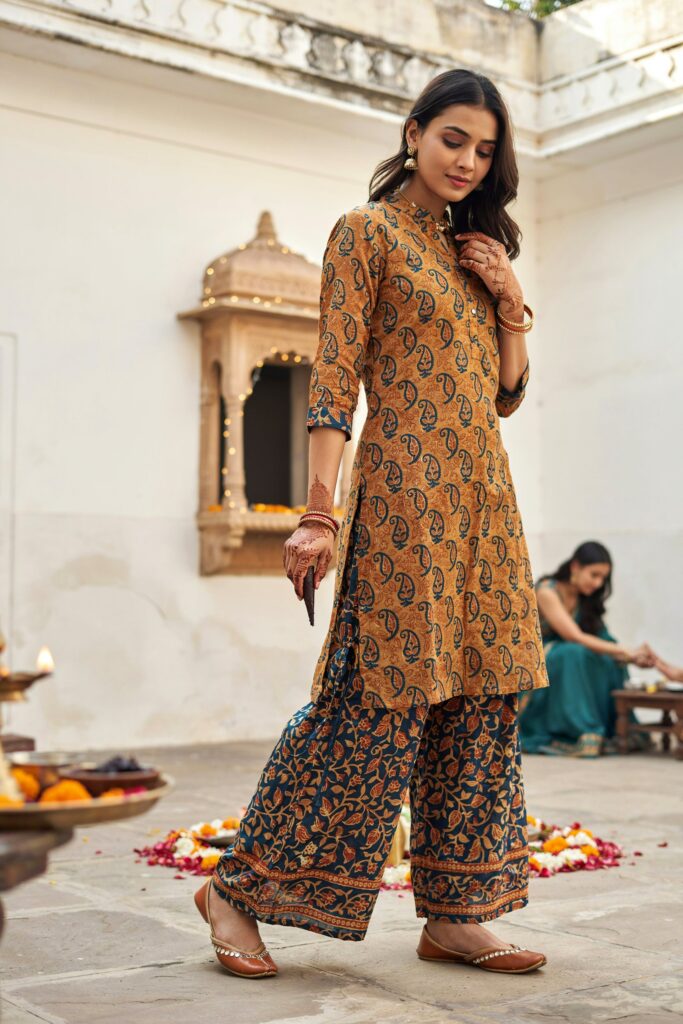
For semi-formal mehendi: a printed kurta with palazzo pants in bright festive prints. More polished than basic cotton kurta but still daytime-appropriate. Pair with statement earrings and minimal other jewelry.
Sangeet night outfits
The music and dance night. Festive, semi-formal, the most fun function of the wedding week. Outfits should sparkle and move — this is where you bring drama and danceability.
8. Embellished lehenga choli in jewel tones
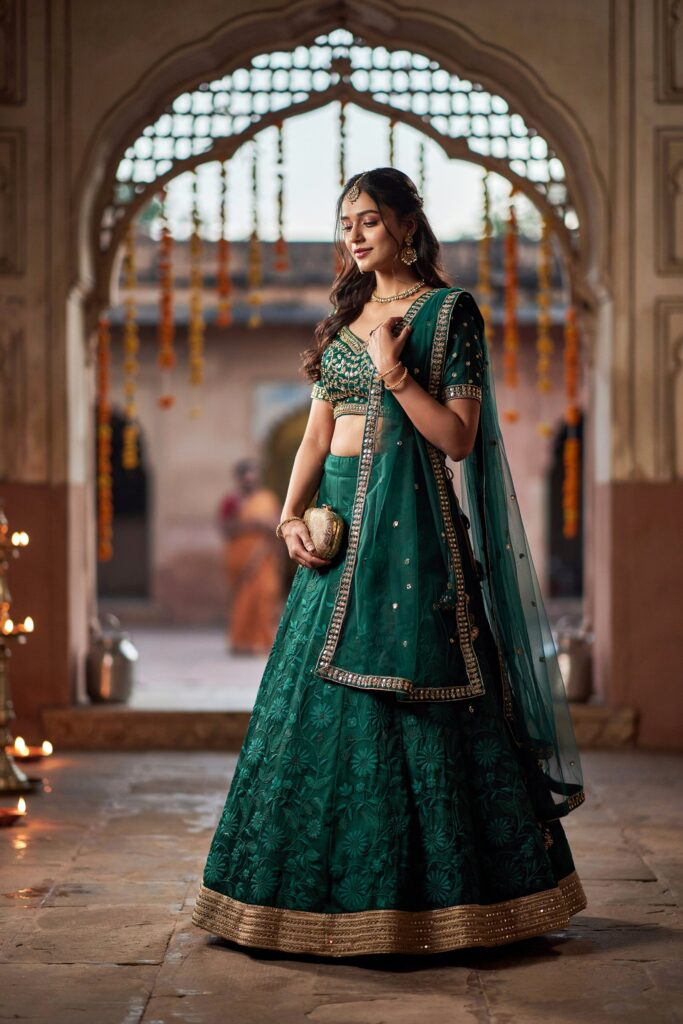
The classic sangeet outfit. A lehenga with significant embellishment (sequins, mirror work, embroidered details) in deep jewel tones — sapphire blue, emerald, deep pink, or wine purple. Choose georgette or organza over velvet so you can actually dance.
9. Sharara set with embellished kurta
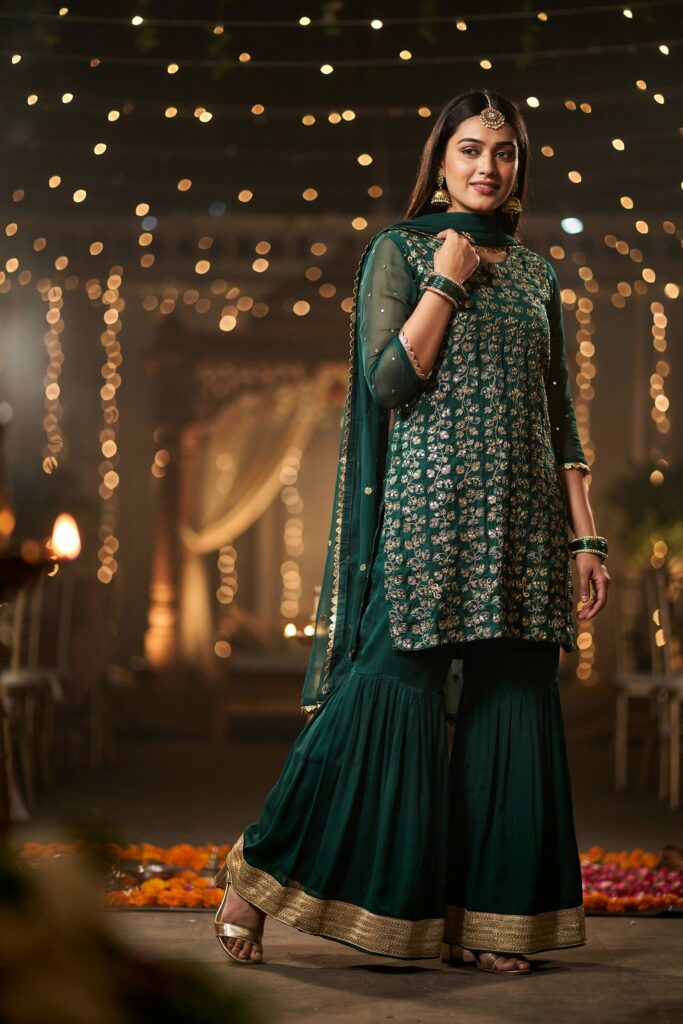
A sharara (wide-legged pants that flare at the knee) paired with a heavily embellished kurta and dupatta. The flare creates beautiful movement when dancing. Particularly current and modern for 2026.
10. Sequin saree (pre-draped or traditional)
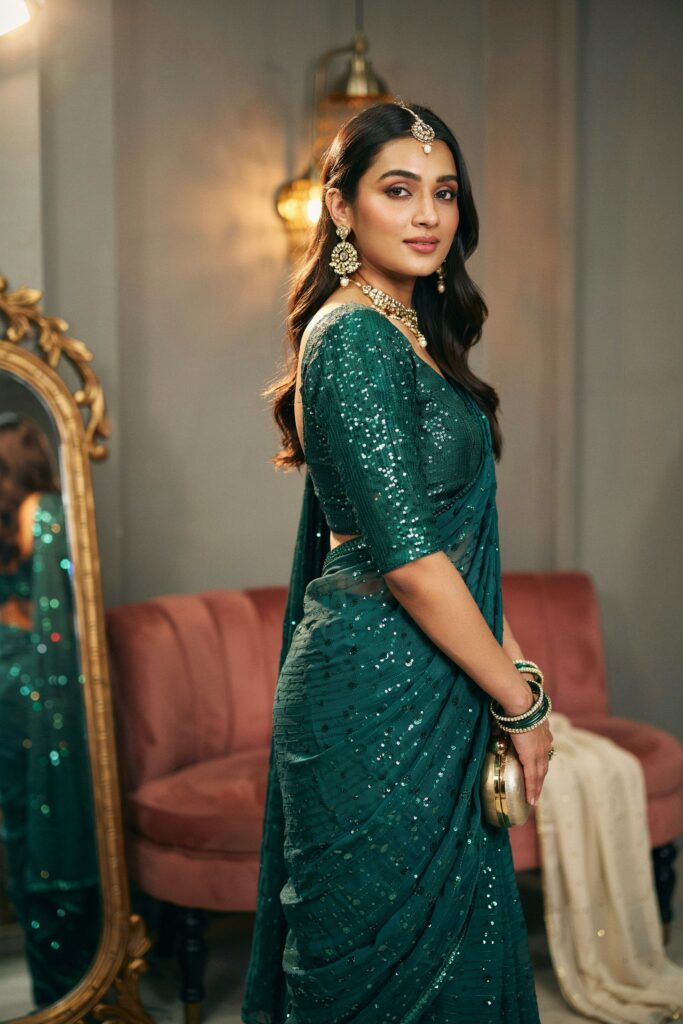
A saree in sequined fabric or with sequin embroidery throughout. Pre-draped versions are popular for 2026 sangeets specifically — you get the saree look without the draping difficulty. Choose colors that complement reception lighting.
11. Cape-style ensemble
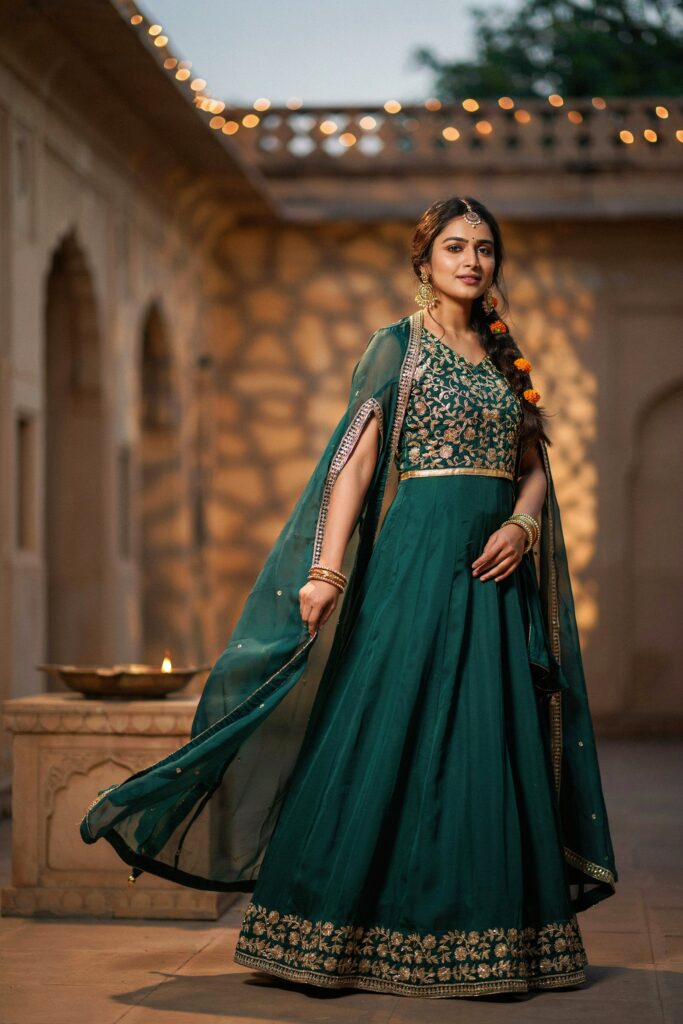
A contemporary cape worn over a lehenga or sharara set. The cape adds a modern silhouette and drama. Particularly stunning for fashion-forward guests who want to stand out without being inappropriate. A 2026 signature trend.
12. Indo-Western fusion outfit
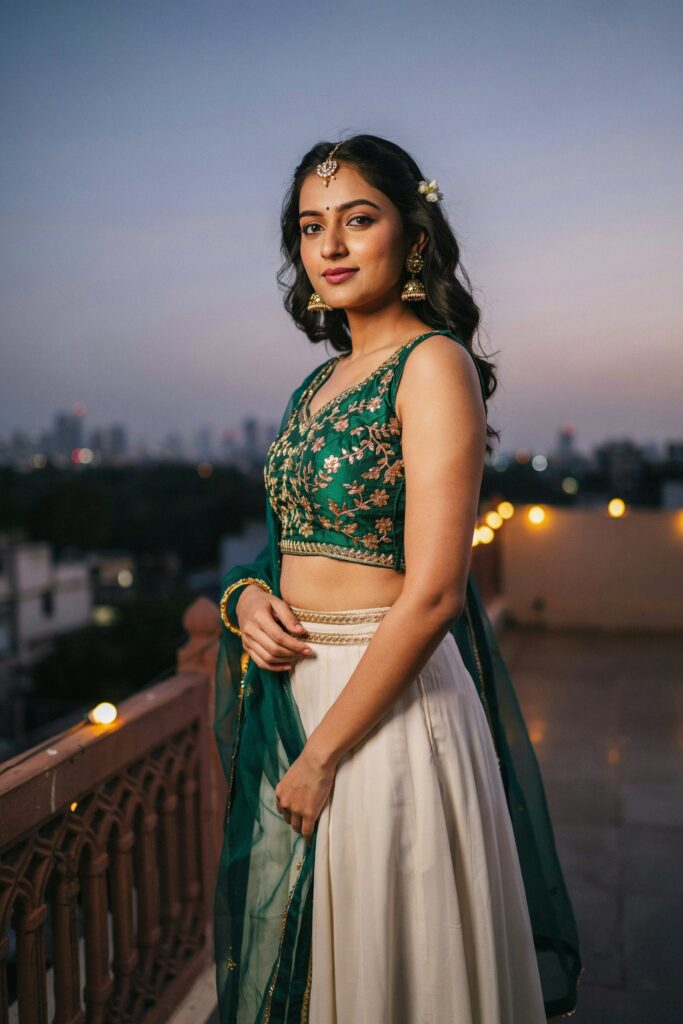
A fusion ensemble — embroidered top with palazzo pants, dhoti pants with crop top, structured Indo-Western dress. Best for younger guests and modern weddings. Don’t wear to traditional families — choose more traditional options if the family is conservative.
Main wedding ceremony outfits
The most formal event. Traditional Indian outfits required. The “black-tie” equivalent of the wedding week — bring your most elegant outfit.
13. Heavily embroidered lehenga choli
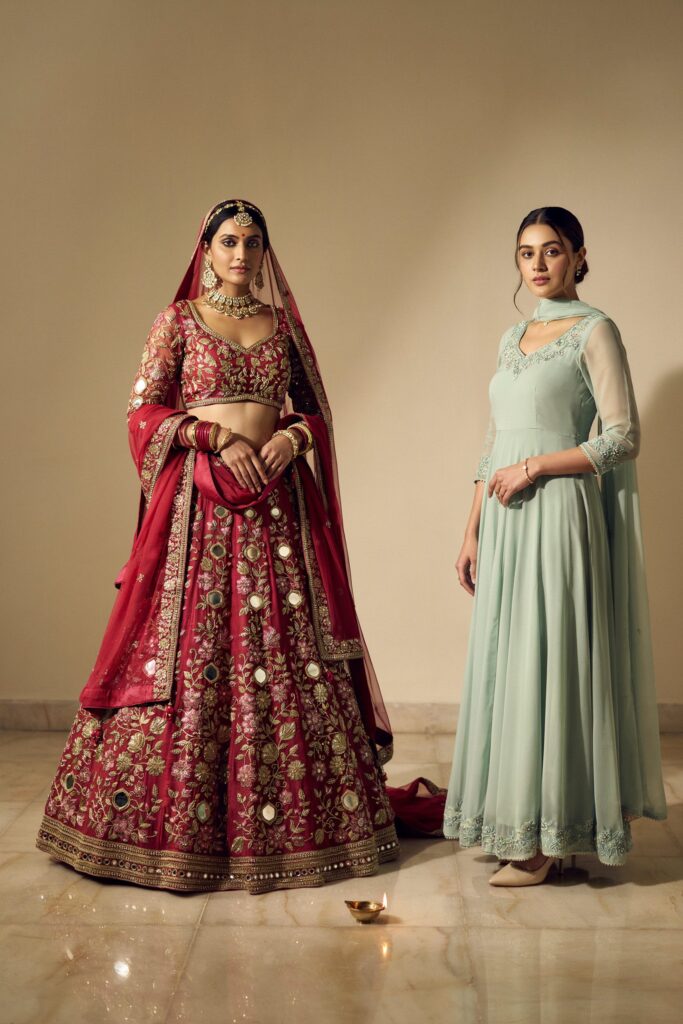
The most popular choice for wedding ceremony guests. A lehenga with extensive zardozi (gold metallic) embroidery, paired with a fitted choli and ornate dupatta. Choose jewel tones (emerald, royal blue, burgundy, or champagne) — not red.
14. Silk saree with traditional embroidery
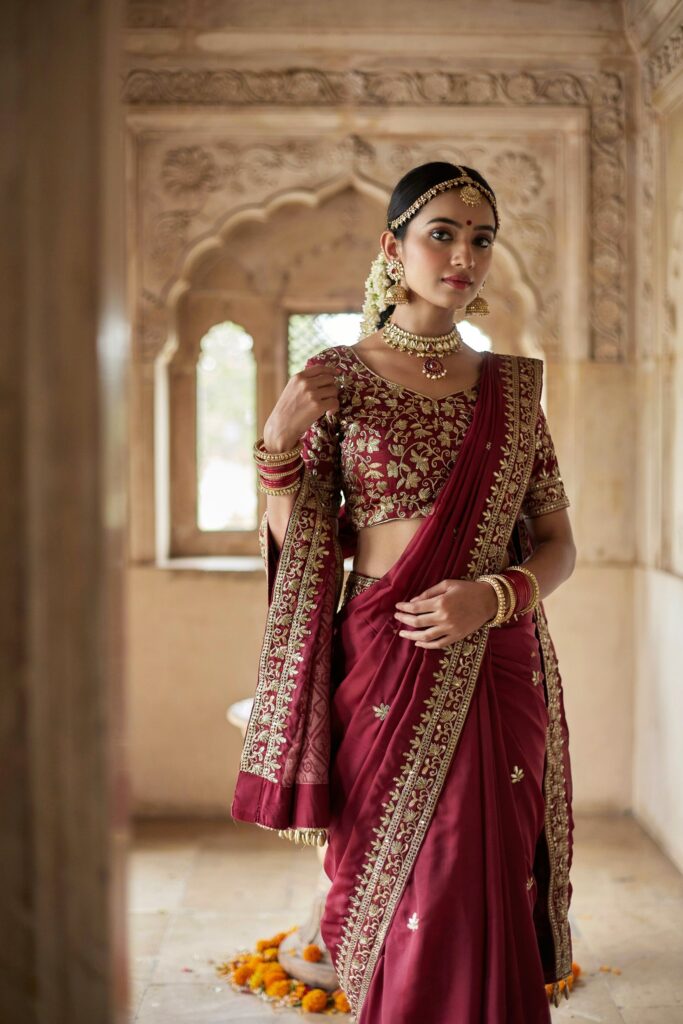
A Banarasi silk saree or kanjeevaram silk saree in a deep jewel tone with gold embroidery (zari work). The most respectful, traditional, and timeless wedding ceremony outfit. Particularly beautiful in royal blue, emerald, or champagne gold.
15. Embellished Anarkali floor-length
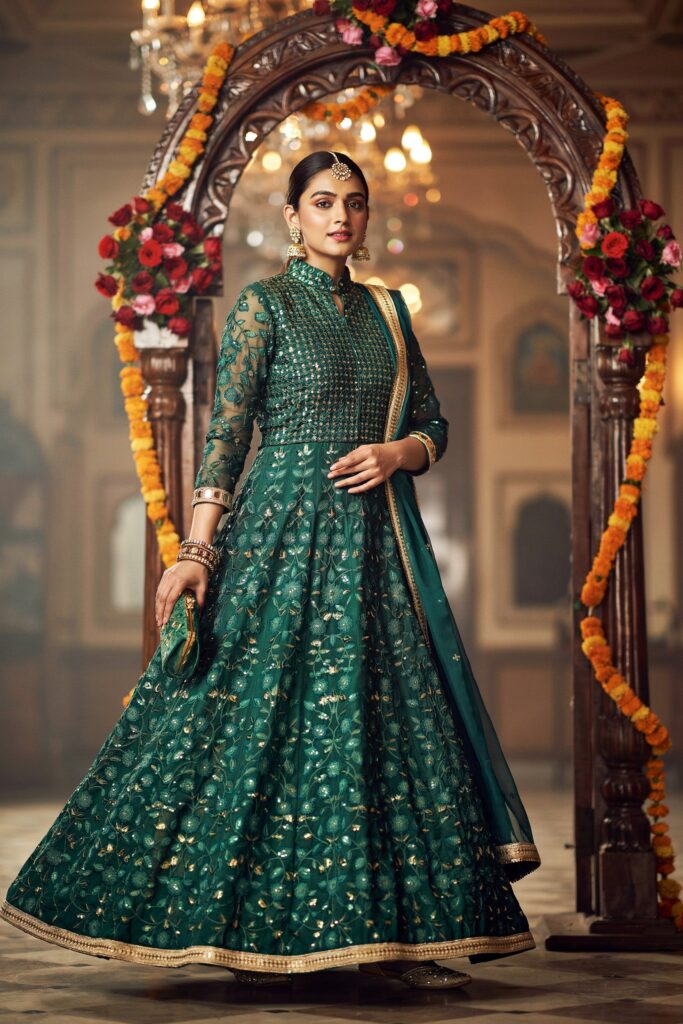
A floor-length Anarkali with heavy embellishment, paired with churidar and dupatta. Slightly more comfortable than a saree or lehenga for long ceremonies. Choose darker, richer colors for the ceremony specifically.
16. Tone-on-tone embroidered lehenga
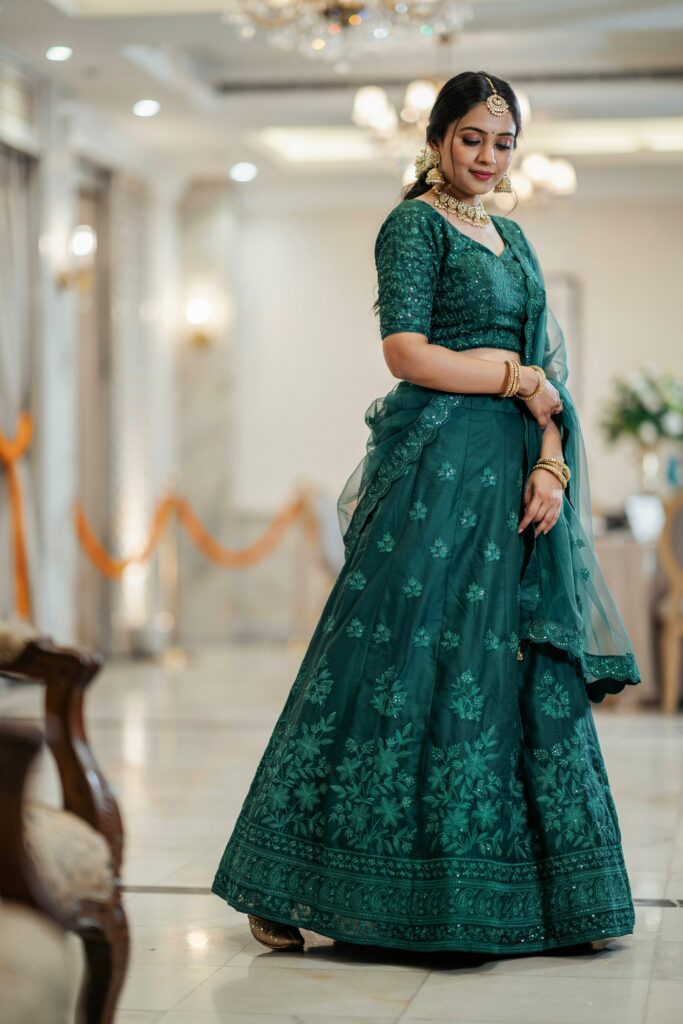
The 2026 luxury trend: ivory-on-ivory or gold-on-gold embroidery throughout the lehenga. Subtle, sophisticated, and reads as expensive and intentional. The “I know what I’m doing” wedding guest outfit. Particularly stunning in cathedral-style indoor venues.
17. Pre-draped designer saree
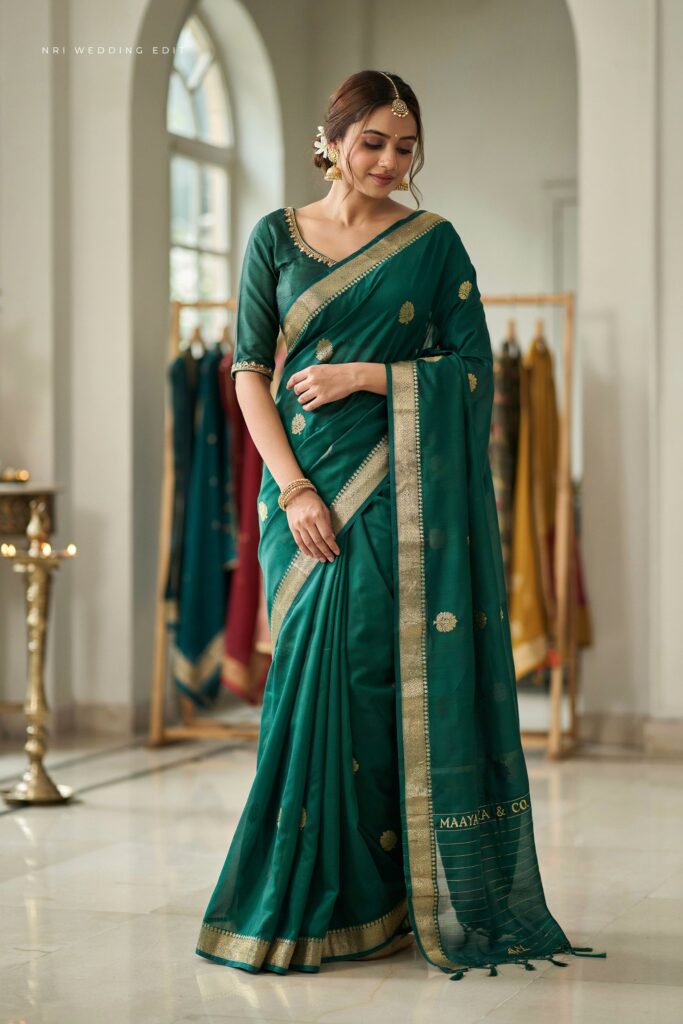
For guests who love the saree look but find draping difficult: pre-draped sarees from designers like Anita Dongre, Tarun Tahiliani, and Seema Gujral offer the luxury saree silhouette without the 2-hour draping ritual. Particularly popular in 2026 for non-Indian guests and busy professionals.
Reception outfits
The post-wedding celebration. Evening glamour, dance-friendly, more contemporary than the ceremony. This is where you can lean into trends and modern silhouettes.
18. Modern Indo-Western gown
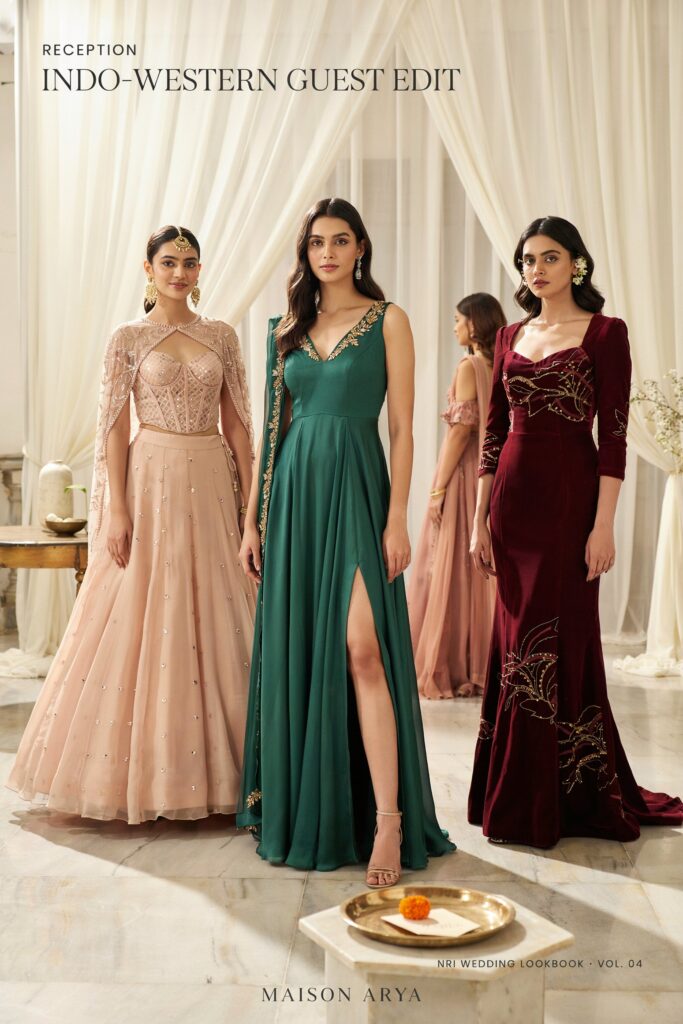
A floor-length gown with Indian embroidery or detailing — bringing together Western silhouette with Indian craftsmanship. Particularly current for receptions and increasingly popular for 2026. Reads as elegant and modern.
19. Sequin saree for evening reception
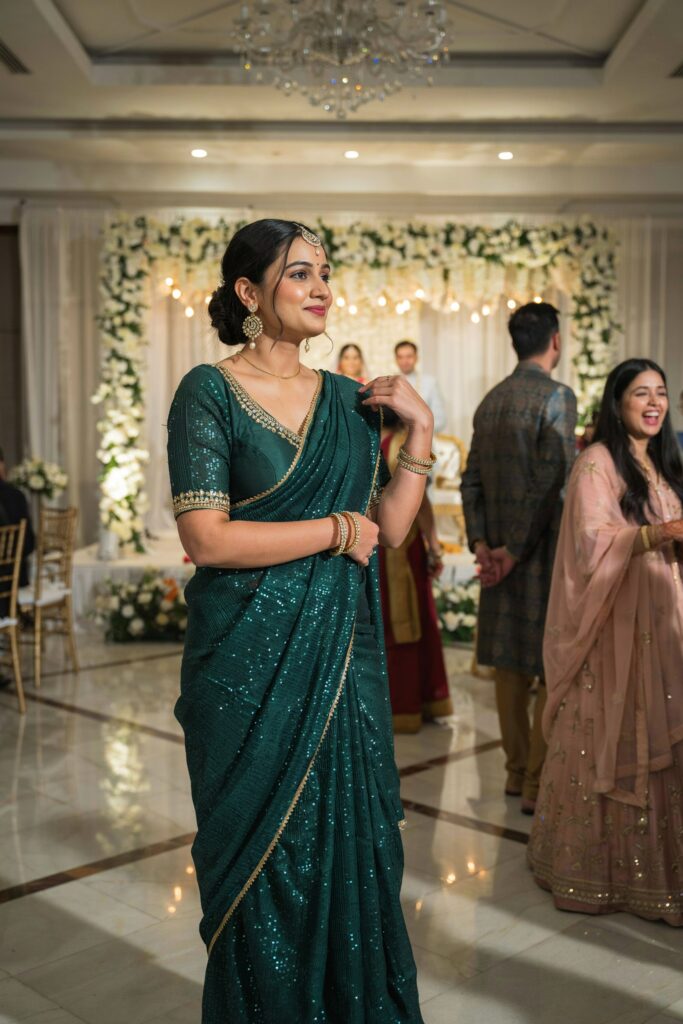
A saree in heavy sequins or all-over embellishment. Reflects reception lighting beautifully and photographs as glamorous in dance-floor moments. Choose champagne, gold, deep emerald, or wine tones for evening receptions.
20. Embellished long gown with dupatta
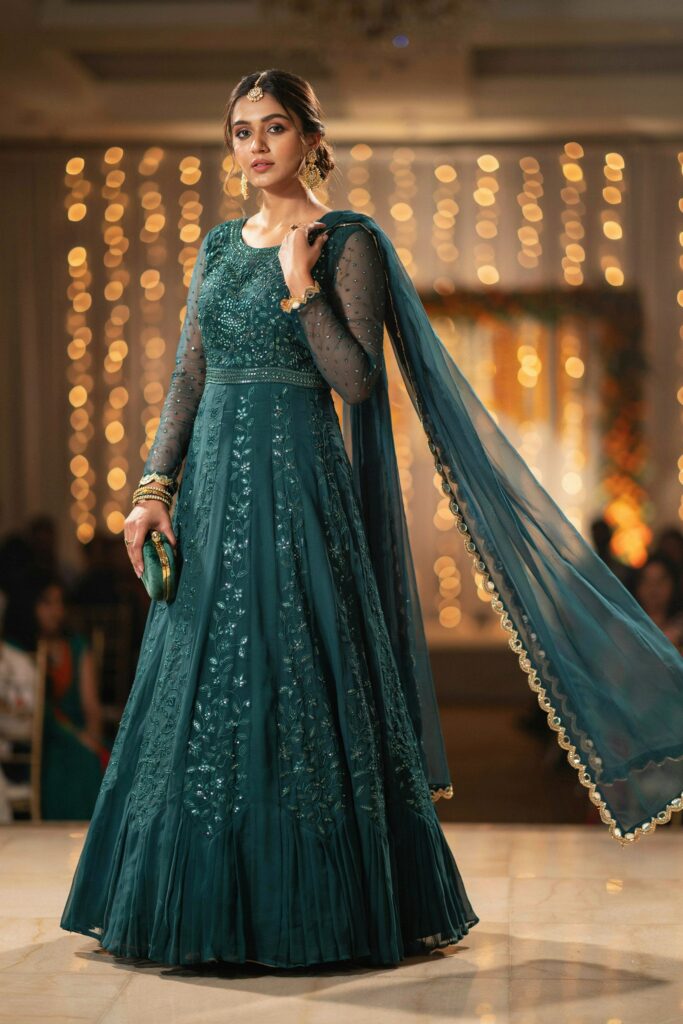
A traditional Western evening gown paired with an embroidered dupatta draped over one shoulder. The dupatta adds the Indian element without committing to a full traditional outfit. Particularly good for late-evening receptions and after-parties.
21. Velvet lehenga (the reception-only option)
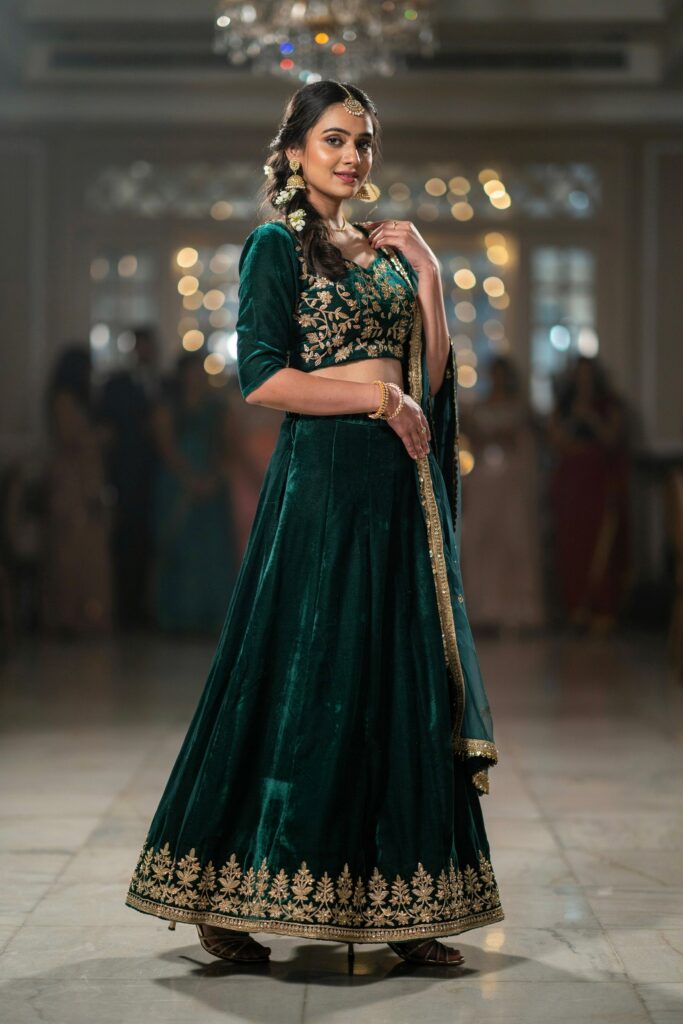
Velvet lehengas are too heavy for sangeet (too hot for dancing) but stunning for the more stationary reception. Particularly beautiful in deep emerald, sapphire blue, or burgundy. Save this for the formal reception only.
For non-Indian wedding guests
If you’ve been invited to an Indian wedding and you’re not Indian — first, what an honor. Here’s what to know:
22. Pre-draped saree (the easiest start)
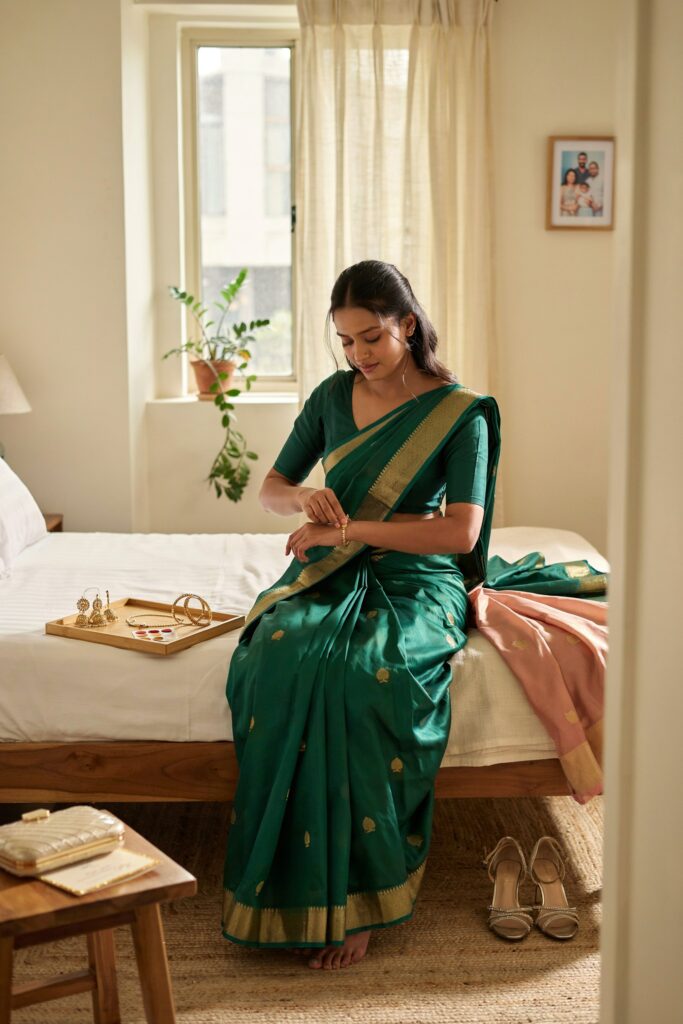
Pre-draped sarees solve the draping problem entirely for non-Indian guests. You get the elegance of a saree without learning to drape one. Available from most Indian designers in size-friendly options. Particularly good for guests attending their first Indian wedding.
23. Simple Anarkali suit
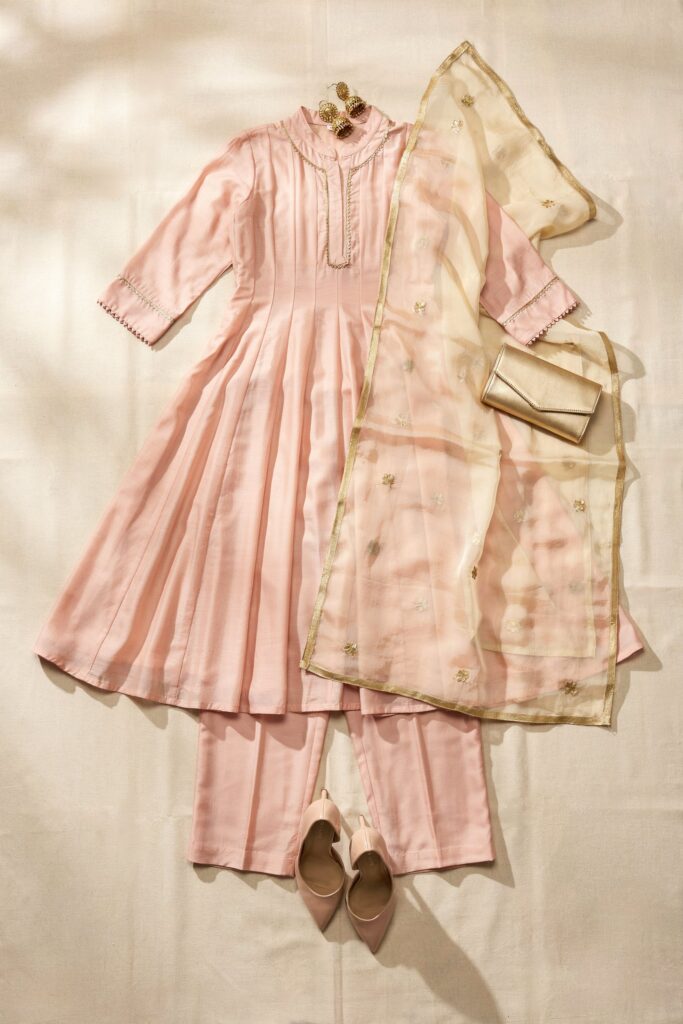
A simple silk Anarkali suit (long tunic + churidar + dupatta) is perhaps the easiest entry into Indian wedding wear. Comfortable, flattering on most body types, and clearly Indian in style. Choose deep jewel tones or rich pastels for safe options.
24. Kurta set for casual functions
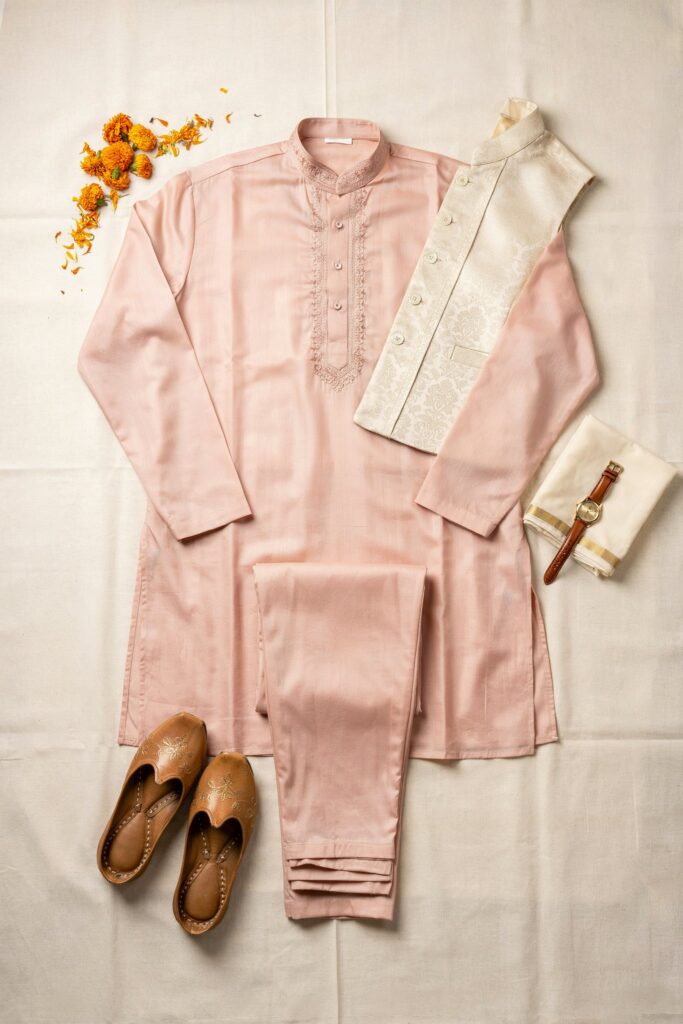
For haldi or mehendi specifically: a simple cotton or silk kurta set is appropriate and easy. The host family will appreciate the effort. Solid colors are safer than busy prints if you’re unfamiliar with traditional patterns.
25. Western formal with Indian elements (reception only)
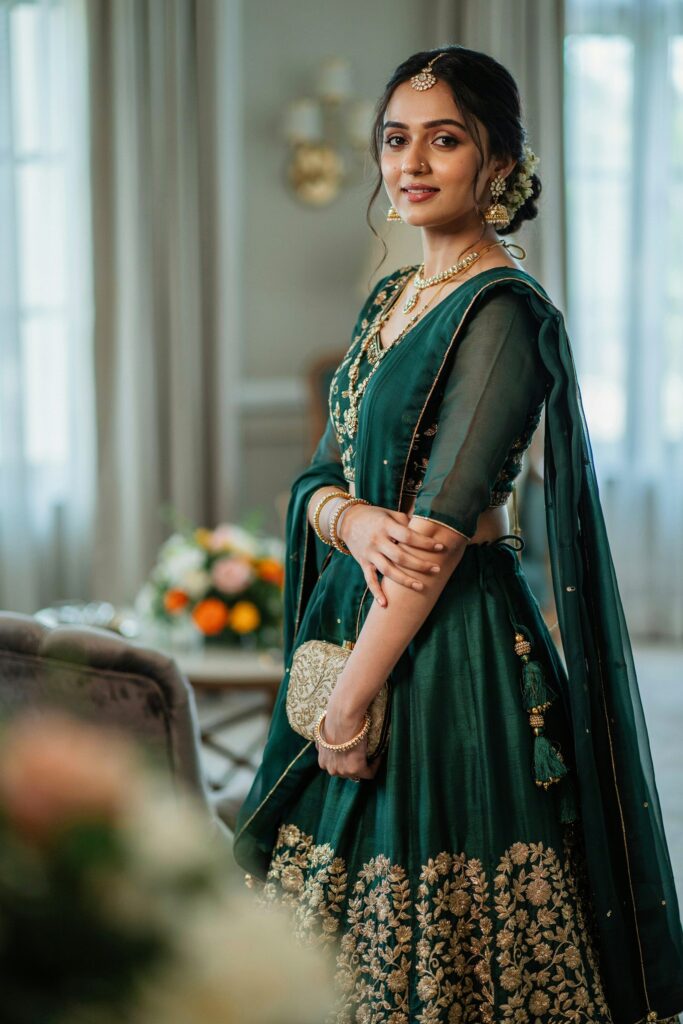
For the reception specifically (NOT the ceremony): a Western formal dress paired with Indian elements (an embroidered dupatta, statement Indian jewelry, beaded clutch) is appropriate at modern receptions. Save this look for evening reception only — daytime functions require fully Indian outfits.
The general rules for non-Indian guests:
- You ARE expected to dress Indian. The family will love seeing you in Indian clothes. Don’t show up in a Western cocktail dress to the ceremony.
- Bright colors are welcome. Unlike Western weddings, bright bold colors are celebrated, not avoided.
- Gold jewelry is the safe bet. Kundan, jhumkas (traditional Indian earrings), or simple gold pieces tie any Indian outfit together.
- Ask the person who invited you. They’ll be thrilled to help you pick colors and explain the dress code for each function.
- Most Indian designers and stores have non-Indian-friendly resources. Look for stores with US sizing, free alterations, and styling guidance.
Colors to absolutely avoid
This is the single most important section. Getting colors wrong at an Indian wedding is much more visible than at a Western wedding.
RED in any shade — Red is the bride’s color at Hindu and Sikh weddings. Wearing red (including maroon, crimson, scarlet, deep wine) is considered disrespectful because it competes with the bride visually. The only exceptions: if the invitation specifically says otherwise, or if the family is non-Hindu/non-Sikh and red is not bride-coded.
ALL-BLACK — Associated with mourning in many Indian traditions. Inappropriate for joyous celebrations. Black as one element (black choli with colorful skirt, black trim on embroidery) is fine. Head-to-toe black is not.
PURE WHITE — Also associated with mourning in some Indian traditions. Increasingly accepted at modern weddings (especially for non-ceremony events), but the safer choice is ivory, cream, or champagne instead of pure white. NEVER wear white to the main ceremony.
EXACT MATCH TO BRIDE’S OUTFIT — If you know the bride’s outfit color, avoid wearing the same shade. Standard guest etiquette: don’t outshine the bride. This is harder to navigate at Indian weddings because brides often wear red — but even if you avoid red, don’t match her specific shade.
Safe color choices for 2026:
- Emerald green
- Royal blue and cobalt blue
- Deep pink and magenta
- Burgundy (slightly safer than red but still close — avoid for Hindu/Sikh ceremonies)
- Champagne and gold
- Sage green (2026 trending)
- Dusty rose (2026 trending)
- Teal and turquoise
- Mustard yellow and ochre (for daytime functions)
- Soft purples and lavender
Jewelry and accessory guide
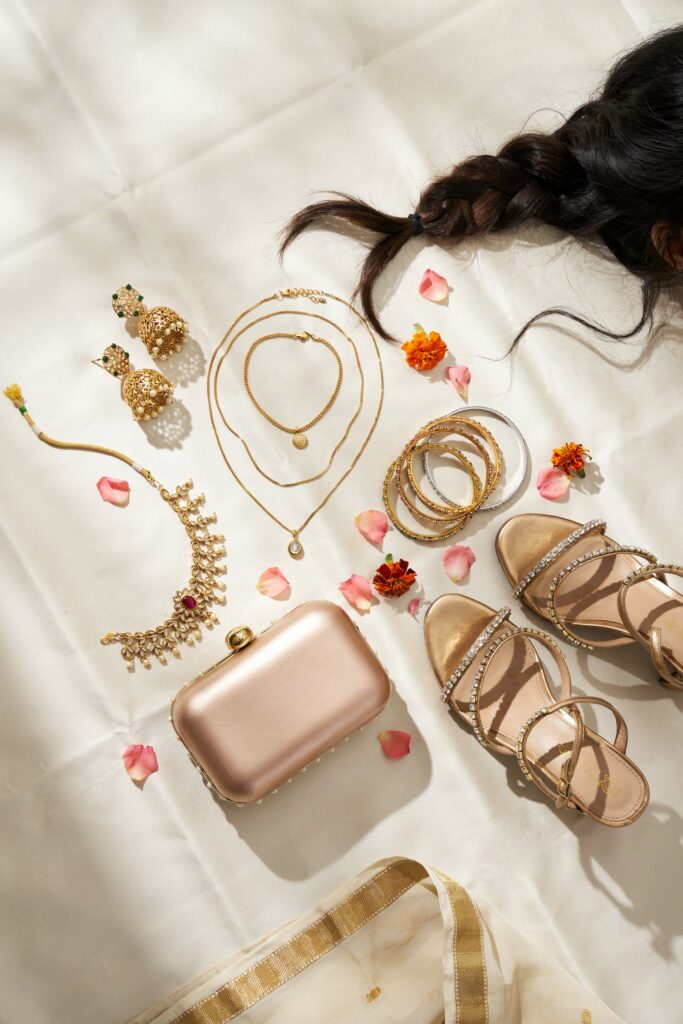
Jewelry completes the look. Indian wedding guests are expected to wear more jewelry than at Western weddings.
Earrings: Statement earrings are essential. Jhumkas (traditional bell-shaped earrings), Chandbalis (crescent-moon shaped earrings), or large dangly earrings are all appropriate. For ceremony: heavier traditional pieces. For sangeet/reception: can be more modern.
Necklaces: A choker or short statement necklace works well with most outfits. Skip the necklace if your blouse or choli has heavy embellishment around the neckline. For sarees specifically: a longer chain or layered necklaces look beautiful.
Bangles: Stacked bangles are traditional and beautiful. Match the metal to your other jewelry. Glass bangles in colors that match your outfit are particularly traditional.
Maang tikka: The forehead piece (worn at the center hair part). Traditionally worn by brides but increasingly popular for guests. Particularly stunning for ceremony outfits.
Footwear: Embellished flats or block heels. AVOID stilettos (most Indian wedding venues have stairs, grass, carpets that are stiletto-hostile). Block heels and flats let you actually dance.
Bag: A small embellished clutch or potli bag (drawstring pouch). Should hold phone, lipstick, tissues, and not much else. Match metal/color tone to your jewelry.
Hair: Traditional Indian wedding guest hair is either pulled back into an elegant bun (often with fresh flowers) or styled in soft waves. Heavy curls and elaborate updos work too. Avoid: super-casual hair (ponytails, messy buns) for ceremonies.
Frequently asked questions
What should a guest wear to an Indian wedding?
The most popular choice for women wedding guests in 2026 is a lehenga choli — a three-piece ensemble with skirt, fitted blouse, and dupatta. Other excellent options include a silk saree (or pre-draped saree), a heavily embellished Anarkali suit, or a salwar kameez for less formal functions. Match formality to the specific function (more elaborate for ceremony, lighter for haldi/mehendi).
Can I wear black to an Indian wedding?
Generally no — black is associated with mourning in many Indian traditions and considered inappropriate for joyous celebrations. Black as ONE element (black blouse, black trim) is fine, but head-to-toe black should be avoided. The only exception: some modern receptions where the dress code is specifically “black tie” — though even then, navy or deep jewel tones are safer choices.
What’s the difference between a lehenga, saree, and Anarkali?
A lehenga choli is a three-piece set: long flared skirt + fitted crop top + draped dupatta. A saree is a single long piece of fabric (typically 9 yards) draped around the body, paired with a fitted blouse. An Anarkali is a floor-length tunic that flares from the waist, paired with churidar (fitted pants) and dupatta. Each photographs differently and suits different body types.
What if I don’t know how to drape a saree?
Pre-draped sarees solve this entirely. Available from designers like Anita Dongre, Tarun Tahiliani, and most major Indian wedding boutiques. They give you the saree silhouette without the draping difficulty. Particularly popular for non-Indian guests and women new to wearing sarees. Also an option: hire a local saree draper — most Indian-populated areas have professional drapers who charge $30-$80.
How many outfits do I need for an Indian wedding?
For a guest attending all events: 4-5 outfits (one per function: haldi, mehendi, sangeet, ceremony, reception). For guests attending only some events: dress for each event you attend. Many guests rent or borrow outfits to keep costs reasonable — rental services like Aza Fashions, Rent the Runway India, and similar platforms have become standard.
What colors are trending for Indian wedding guests in 2026?
Sage green, dusty rose, cobalt blue, and metallic gold are the trending 2026 guest colors. Tone-on-tone embroidery (ivory on ivory, gold on gold) is the luxury signature of the year. Deep jewel tones (emerald, royal blue, sapphire, ruby) remain timeless and always appropriate.
Should non-Indian guests wear Indian clothes?
Yes — wearing Indian ethnic wear to an Indian wedding is warmly welcomed and appreciated. A well-fitted salwar kameez, Anarkali, or pre-draped saree shows respect for the culture and makes for wonderful wedding photos. Stores serving Indian wedding fashion typically have specific resources for non-Indian guests including styling guidance and US sizing.
How much should I budget for Indian wedding guest outfits?
For an entire wedding week of 4 outfits: budget $400-$800 for quality outfits that you’ll wear again. Individual pieces start around $80-$150 for cotton kurta sets and run to $500-$1,500 for heavily embellished lehengas. Rental options can dramatically reduce costs — many guests rent the formal pieces (lehenga, saree) and buy only the simpler outfits.
What’s the etiquette around colors at Indian weddings?
Avoid red (bride’s color at Hindu/Sikh weddings), all-black (mourning association), and pure white (also mourning-associated). Safe colors: jewel tones (emerald, royal blue, deep pink), pastels for daytime, champagne and gold for evening. When in doubt, ask the person who invited you — they’ll be thrilled to advise on color choices.
Can I wear a Western dress to an Indian wedding reception?
For modern Indian wedding receptions specifically: a Western evening gown paired with Indian elements (embroidered dupatta, statement Indian jewelry) is increasingly accepted. For the ceremony specifically: no — Western dresses are inappropriate. Save the Western look for late-evening reception only. And confirm with the family before assuming — some families are more traditional.