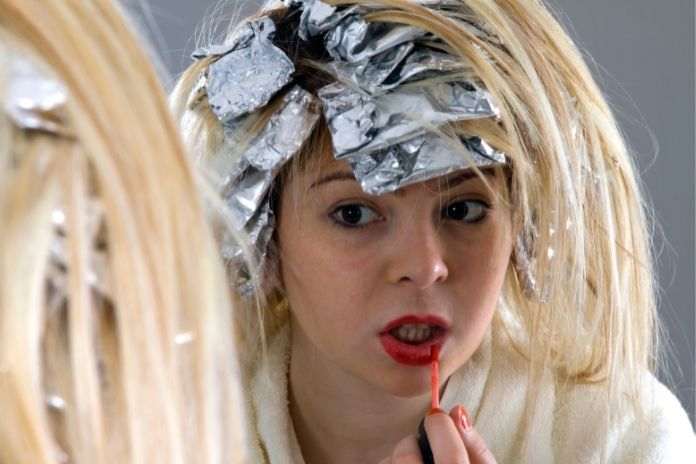
If you’ve scrolled hair content in the last six months, you’ve seen the same shift everywhere: deep, glossy, multi-dimensional brunettes are dominating, and espresso is the specific shade leading the conversation. Marie Claire’s hair editors confirmed it in February 2026, Coveteur in April, Fashion Times two weeks ago — every major beauty publication is calling espresso “the most in-demand shade” of 2026. Pinterest search volume for espresso hair color is up significantly year-over-year, with espresso-related searches surging through spring and into summer.
The appeal is specific: espresso isn’t flat dark brown. It’s the deepest brown imaginable without crossing into black, built from subtle ribbons of warm and cool depth that catch light differently throughout the day. Stylists are calling it “expensive and natural all at once” — the rare color that reads as both luxurious and effortless. It works on every brunette texture, every age, and almost every skin undertone.
The 23 ideas below show the range — from barely-there espresso lowlights for naturally dark hair to dimensional balayage for medium brunettes to the cooler “iced espresso brunette” that’s been Jennifer Lopez’s signature. Sorted by intensity so you can pick the version that fits your current hair color and your comfort level with maintenance.
Save the ones you love. Take three reference photos to your colorist — espresso is one of those colors that looks dramatically different in different photos, so multiple references protect you.
The 4 rules for espresso highlights that don’t look flat
Before the gallery, four rules separate espresso highlights that read as dimensional from ones that look painted-on:
Rule 1: Espresso needs warm AND cool ribbons. Flat espresso (one uniform dark brown) reads as a dye job, not a highlight. The 2026 trending version layers cool espresso with subtle warm mocha or caramel undertones — the contrast is what creates the reflective shine the trend is built around.
Rule 2: Highlights should be lighter than your base, not lighter than your dreams. On naturally dark hair, espresso highlights should lift the base by 2-3 shades maximum. Stylists pair espresso bases with soft mocha highlights specifically to prevent the color from looking too heavy. Going lighter than 2-3 shades creates contrast that reads harsh, not dimensional.
Rule 3: Placement matters more than amount. Heavy all-over highlighting on dark hair looks like an attempted blonde gone wrong. The 2026 espresso approach: strategic face-framing ribbons, balayage on the mid-lengths and ends, and minimal highlights at the crown. Less placement, more strategic.
Rule 4: Gloss is non-negotiable. Espresso’s defining quality is its reflective shine. Skip the gloss treatment and the entire color reads as dull and flat. Always book a clear or tinted gloss as part of your espresso color appointment — it’s what makes the difference between salon and at-home.
Now the ideas.
Subtle espresso highlights
For dark-haired women who want dimension without commitment. These five ideas add the espresso effect with minimal contrast — perfect for first-time color or anyone with low-maintenance lifestyles.
1. Hidden espresso lowlights on dark brown hair
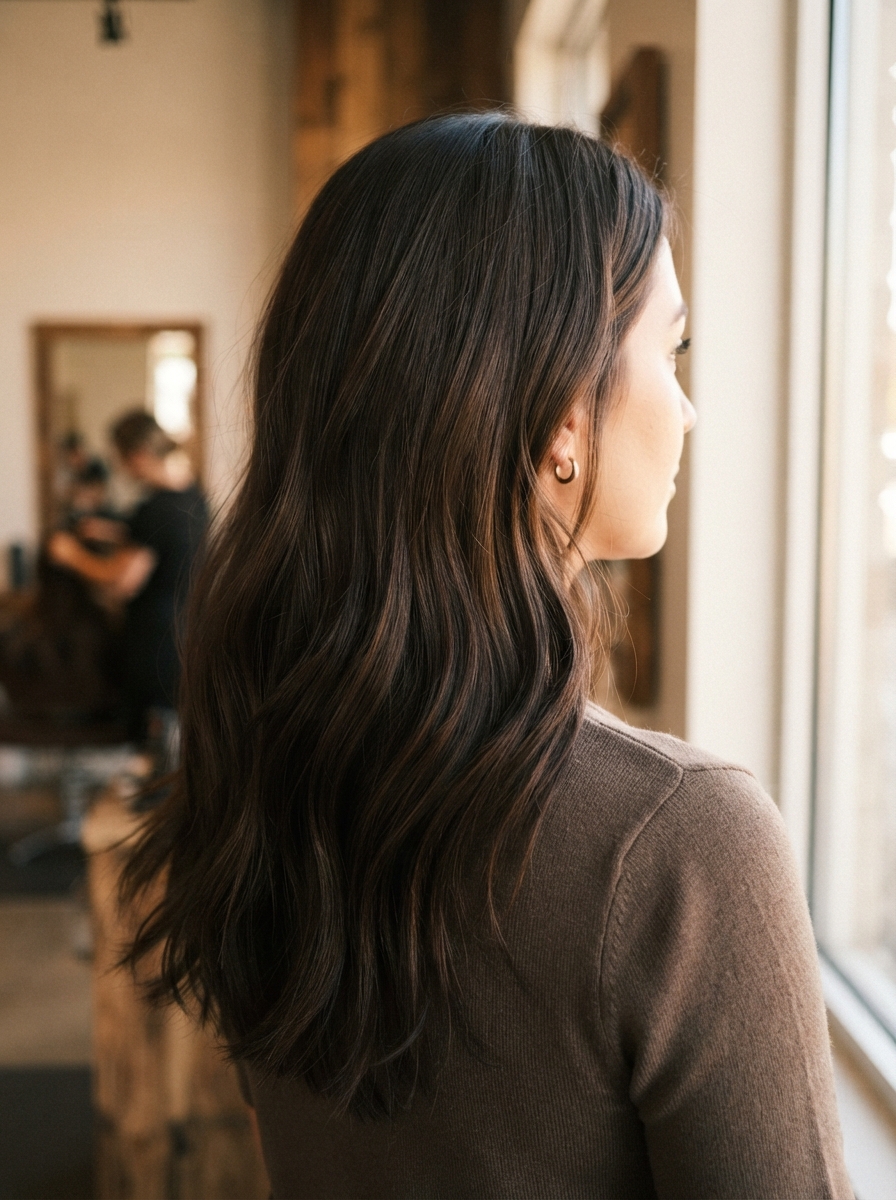
The TikTok-viral subtle version. On naturally dark brown hair, the colorist adds even darker espresso ribbons strategically through the mid-lengths. The “lowlight” version of highlighting — adds depth without lightening. Maintenance: 4-6 months between appointments. Works for women who want richness, not brightness.
2. Mocha micro-highlights
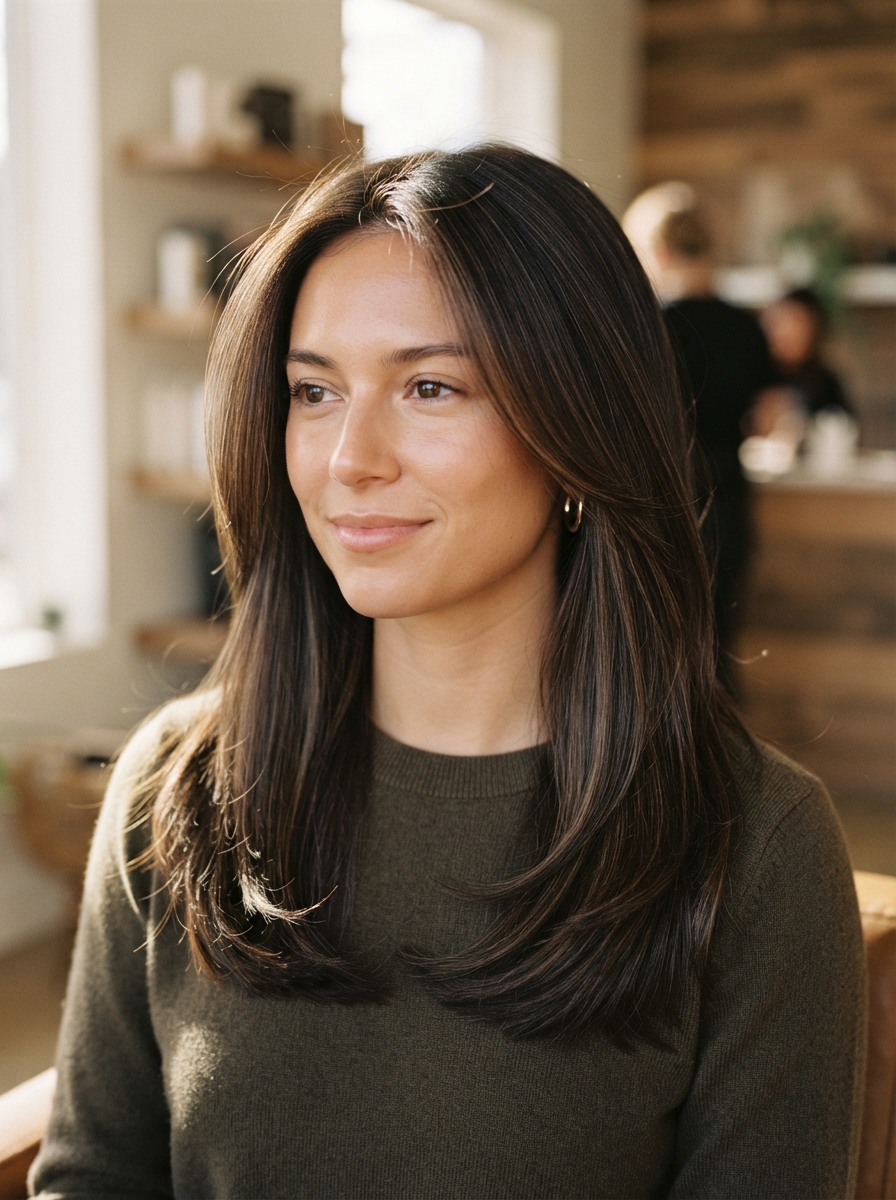
Tiny, finely-woven highlights in soft mocha tones placed throughout dark brown hair. The “micro” placement keeps the look subtle from a distance; up close, you see dimension. Particularly beautiful in natural daylight where the highlights catch light without screaming.
3. Espresso with chestnut undertones
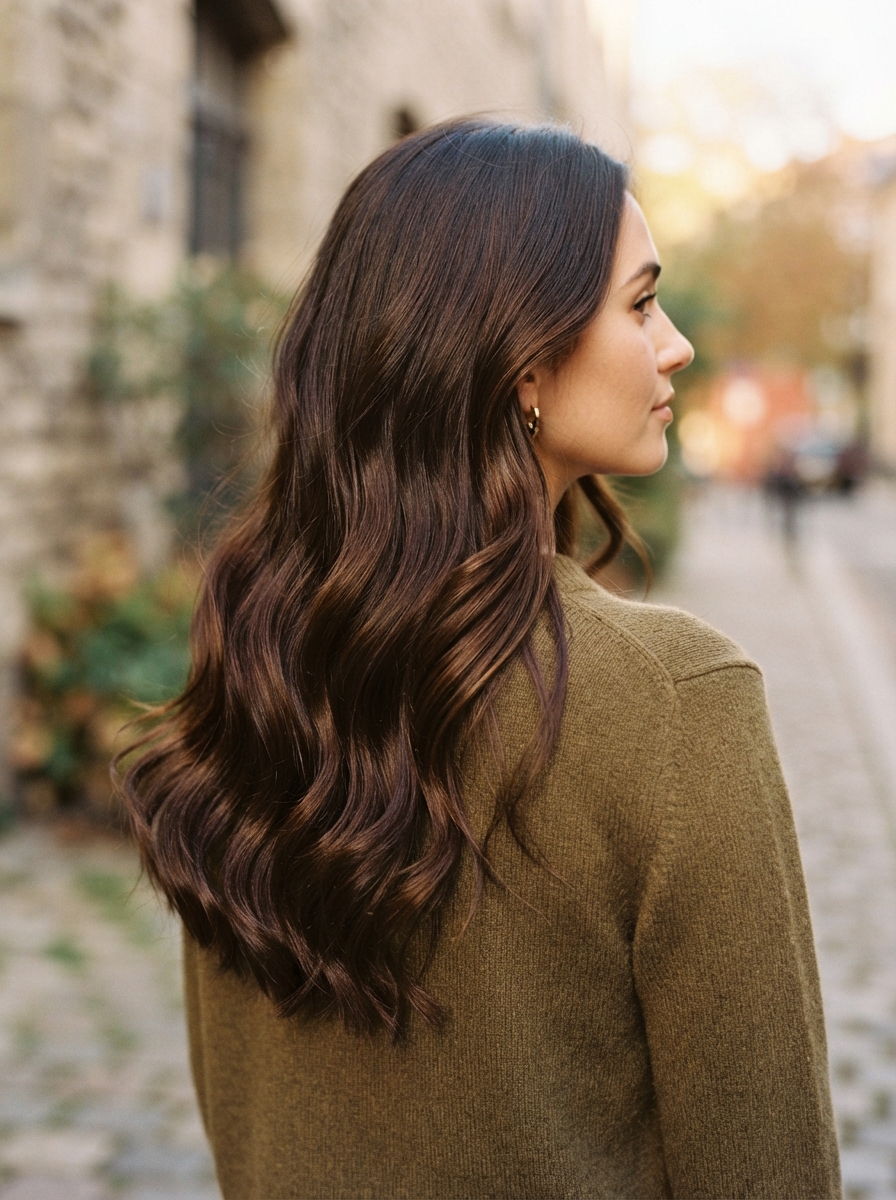
The base stays espresso-dark, but with subtle chestnut undertones woven through. Looks like the hair has a natural warm light source. Perfect for warm skin tones who want depth without going lighter.
4. Face-frame-only espresso highlights
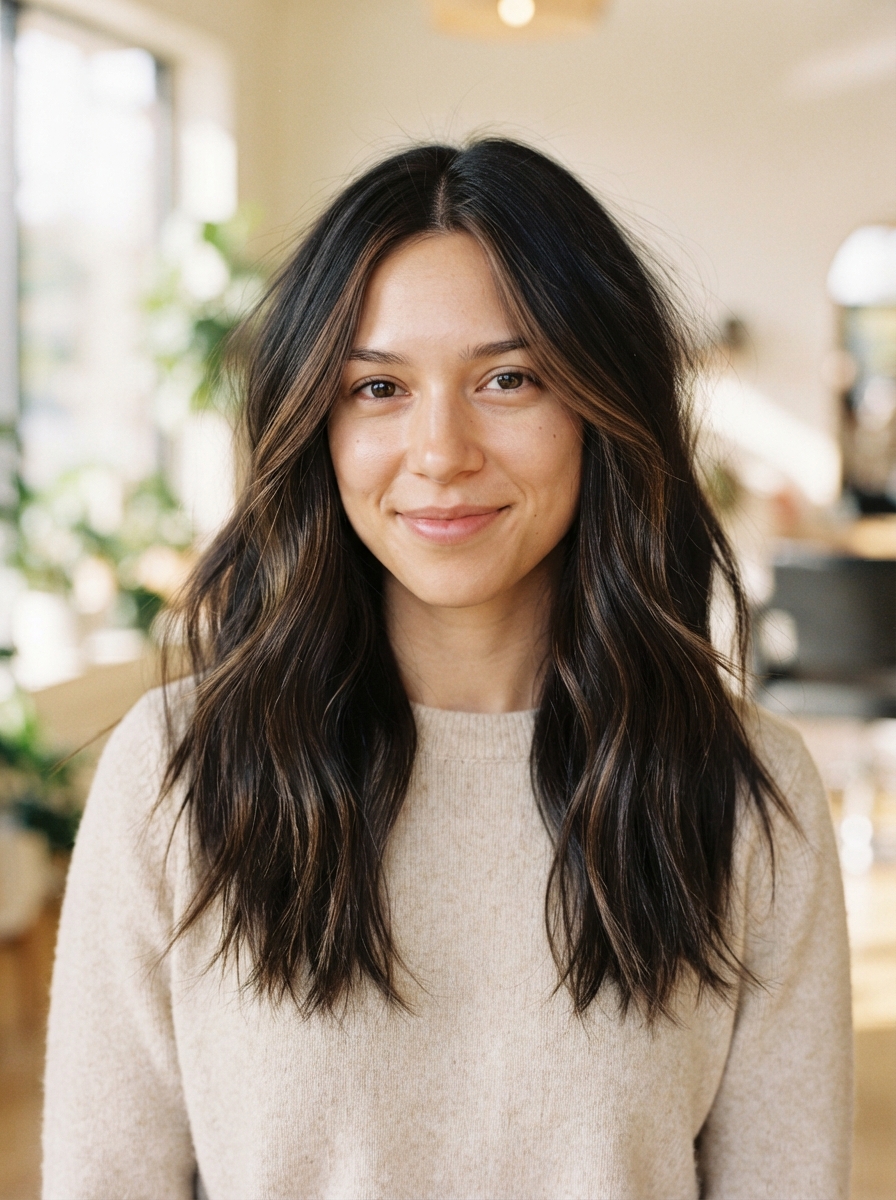
A barely-there approach — espresso-toned highlights placed ONLY around the face, leaving the rest of the hair its natural dark shade. Brightens the complexion (the “money piece” effect) without committing to all-over color.
5. Espresso melt at the ends
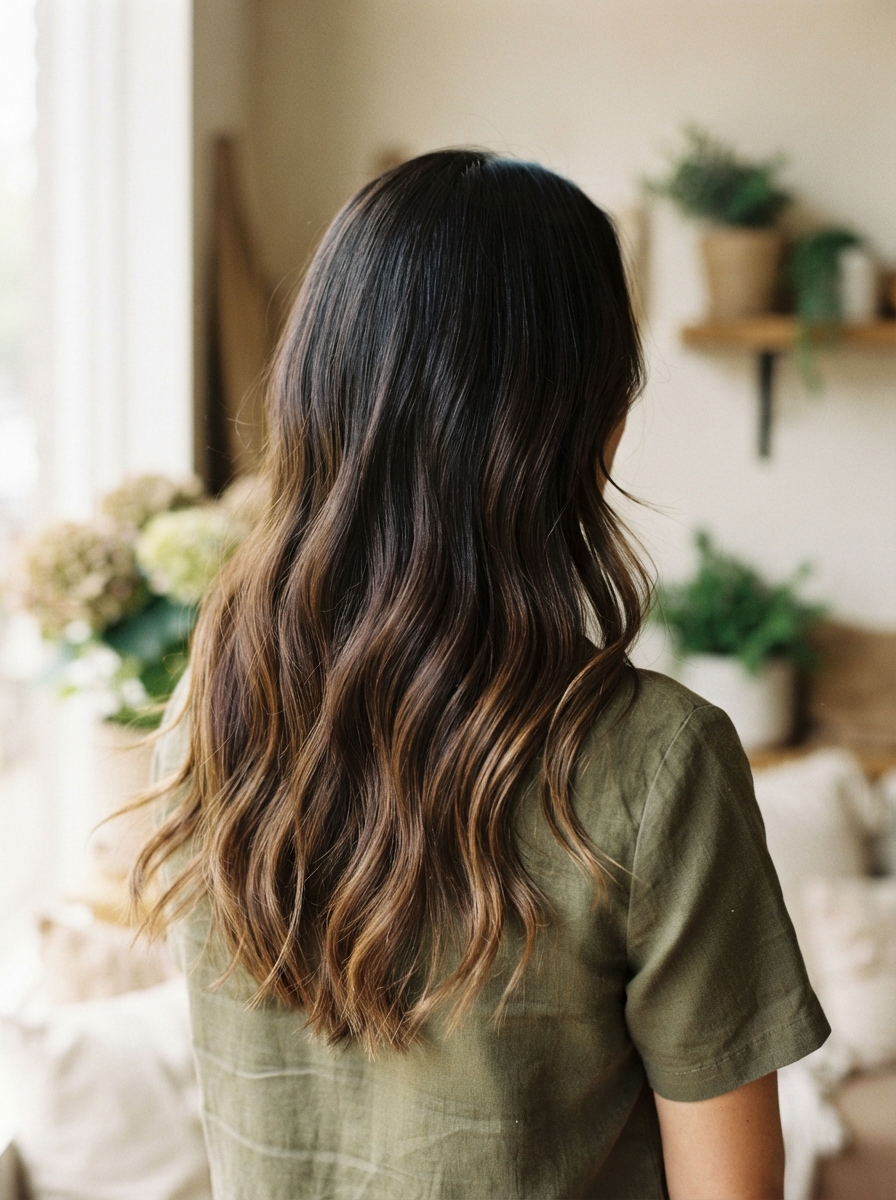
The crown stays naturally dark; only the ends are lightened into a warm espresso tone. Creates a soft “melt” effect from root to tip. Particularly flattering on long layered cuts where the ends are the most visible part of the hair.
Espresso balayage on dark hair
The most-photographed espresso variation of 2026. Balayage (hand-painted highlights) creates the dimensional, sun-kissed effect that defines the trend. These five variations show different intensities.
6. Classic espresso balayage
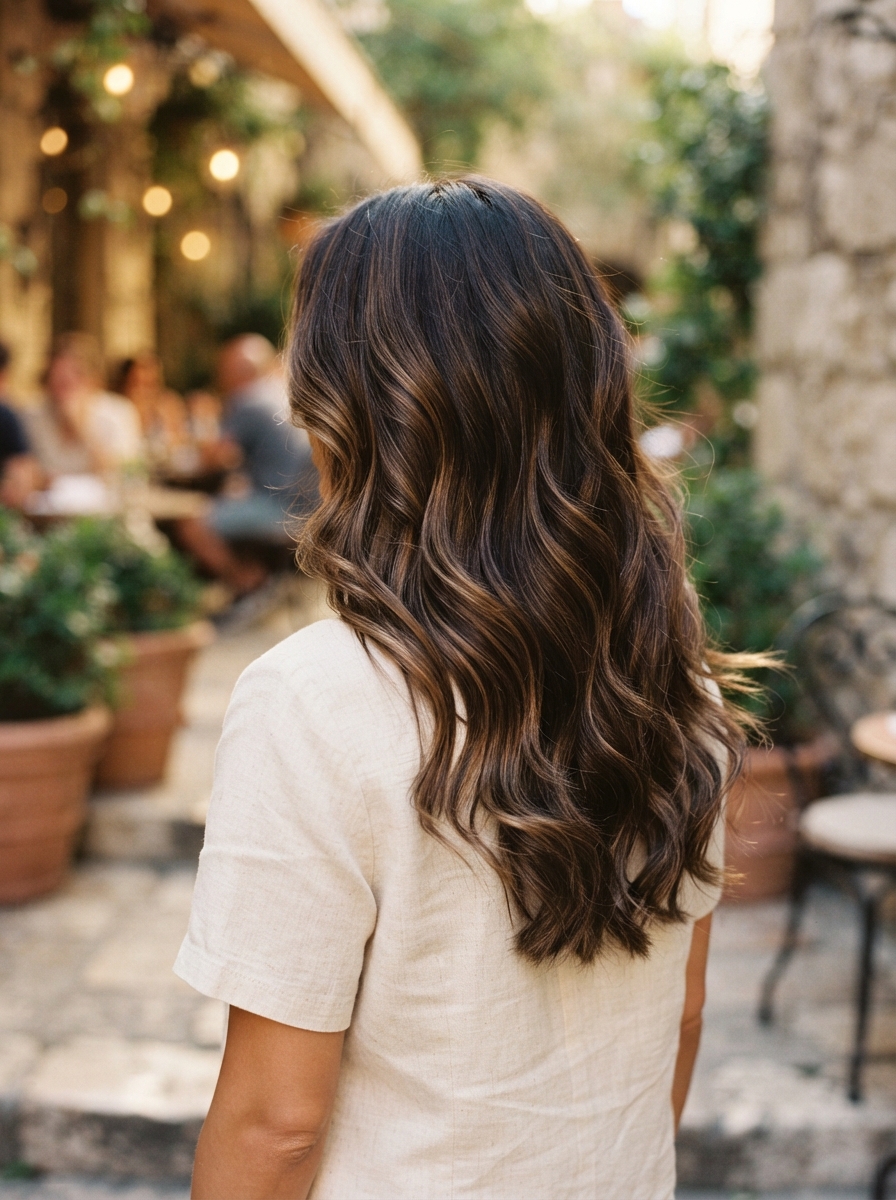
The reference look. Dark brown base with hand-painted espresso ribbons running from mid-lengths through the ends. Soft, blended, no harsh lines. The “I just got back from somewhere warm” effect. Works on every length from lob to mid-back.
7. Espresso melt balayage
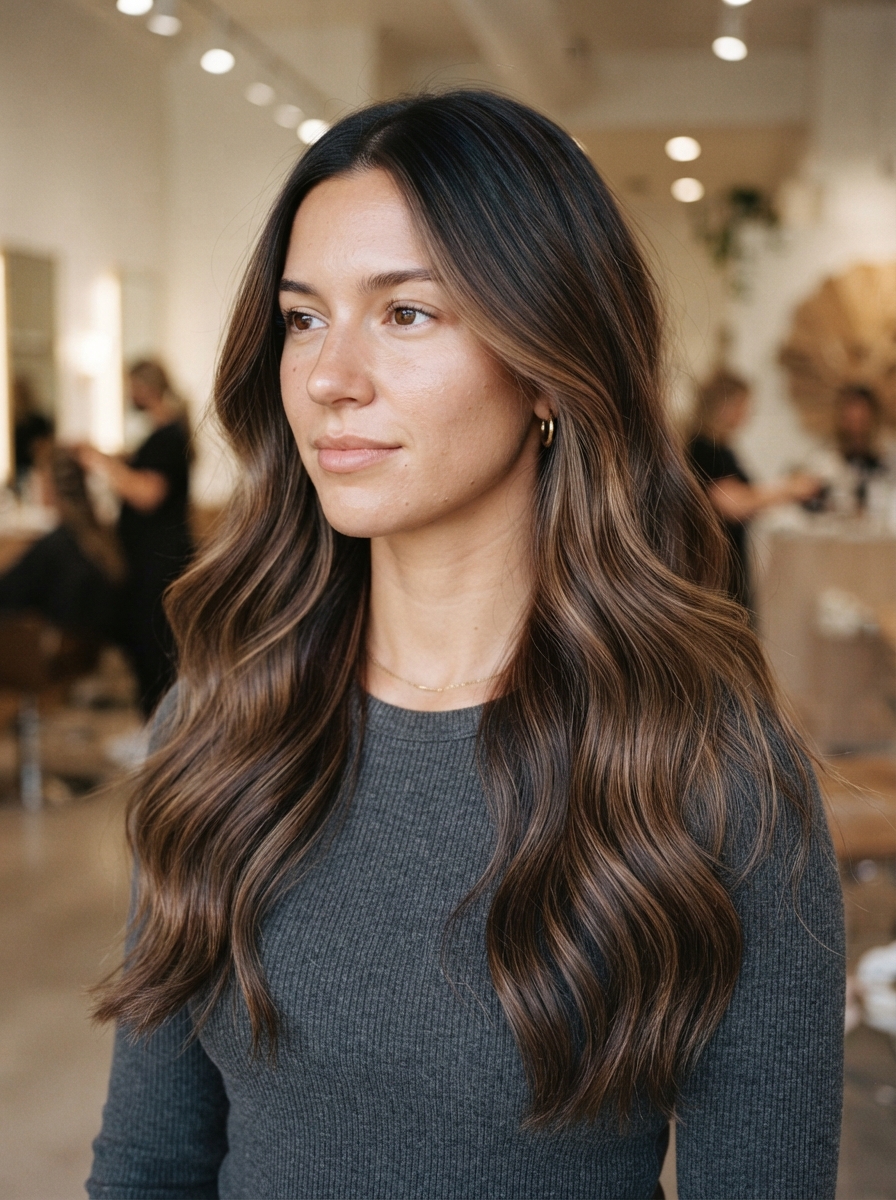
A specific 2026 technique — the colorist creates a “melt” by blending the natural roots seamlessly into the espresso highlights with no visible demarcation. The result looks impossibly natural. Particularly low-maintenance because grow-out is invisible.
8. Caramel-ribboned espresso balayage
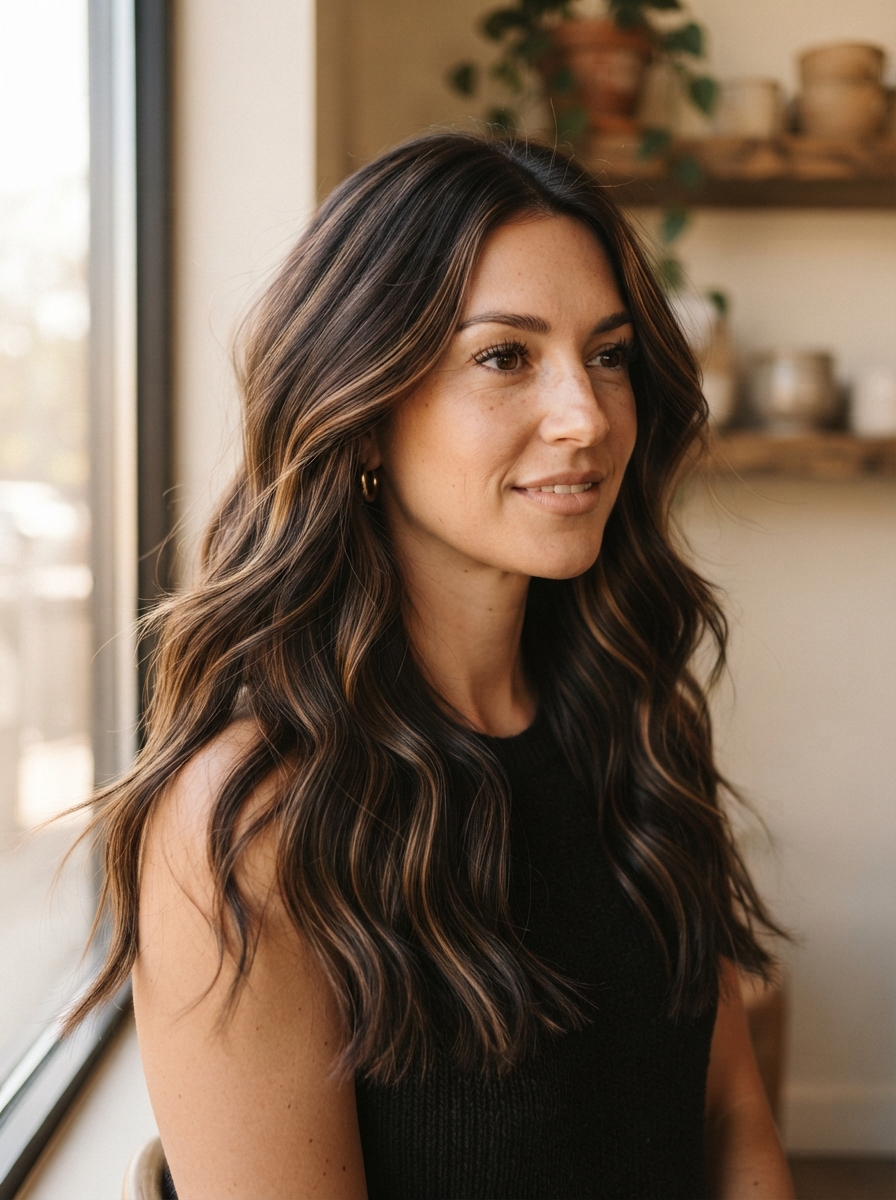
Espresso base with subtle caramel ribbons hand-painted through. The caramel adds warmth without crossing into honey or amber territory. Particularly stunning on warm-undertone skin and during summer months when sunlight intensifies the color.
9. Dimensional espresso balayage with money piece
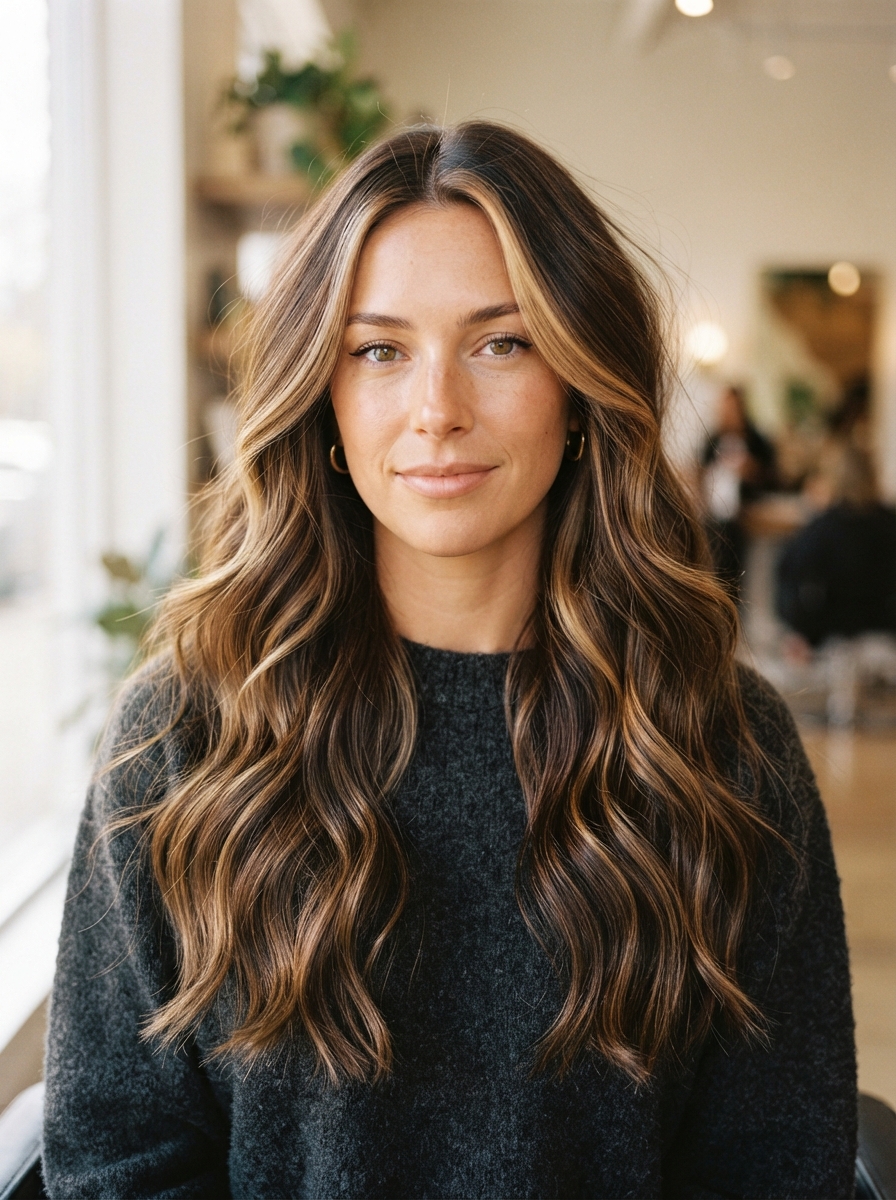
Standard espresso balayage throughout, plus two slightly brighter “money piece” sections framing the face. The contrast between the lighter face-frame and darker depths makes the eyes pop. The Pinterest-favorite version for 2026.
10. Cool-toned espresso balayage
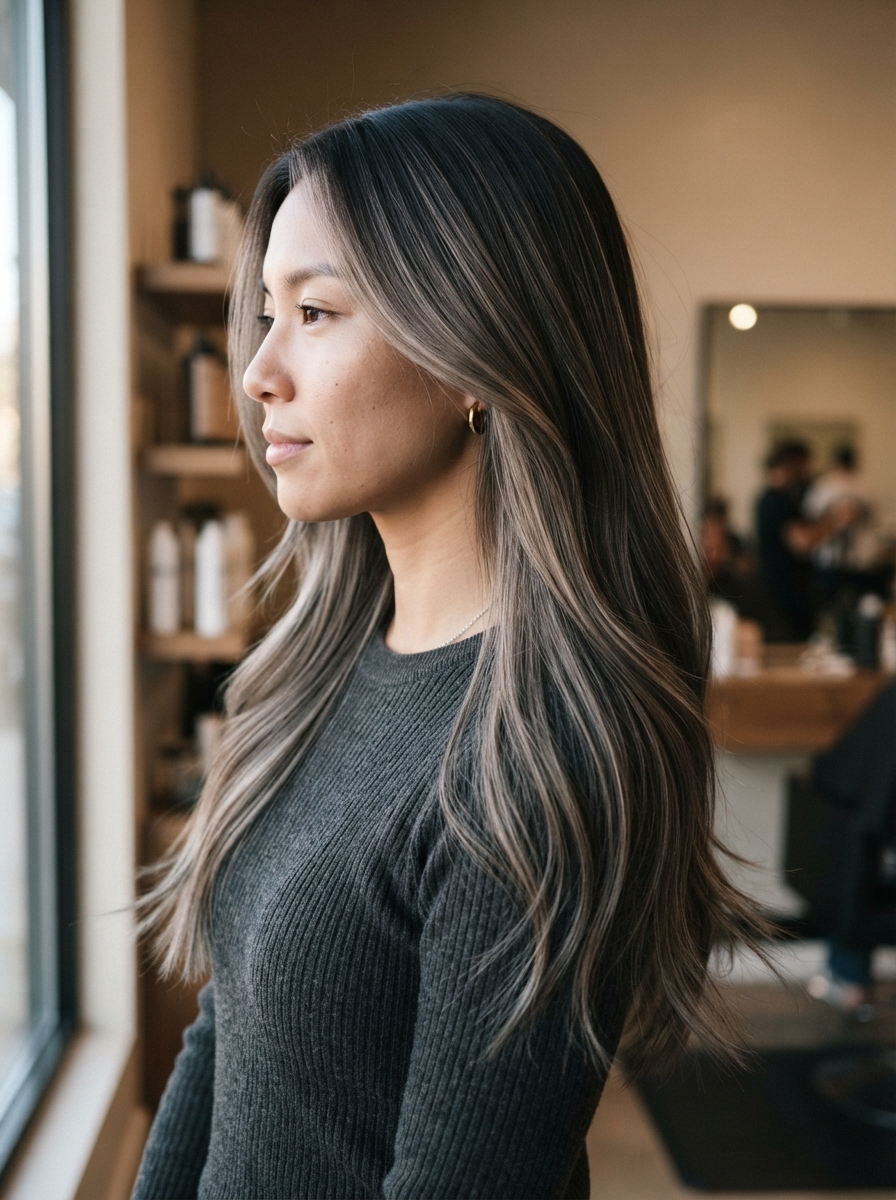
The “iced” variation. Espresso balayage but with cool undertones (slight ash, no warmth). Reads as more sophisticated, slightly more editorial. Particularly beautiful on cool-undertone skin and best for the autumn/winter version of the trend.
Espresso with face-framing highlights
Strategic placement around the face. The most flattering espresso variation for women who want the color to do work for their face — brightening the complexion, drawing the eye upward, adding youth.
11. Money piece in mocha espresso
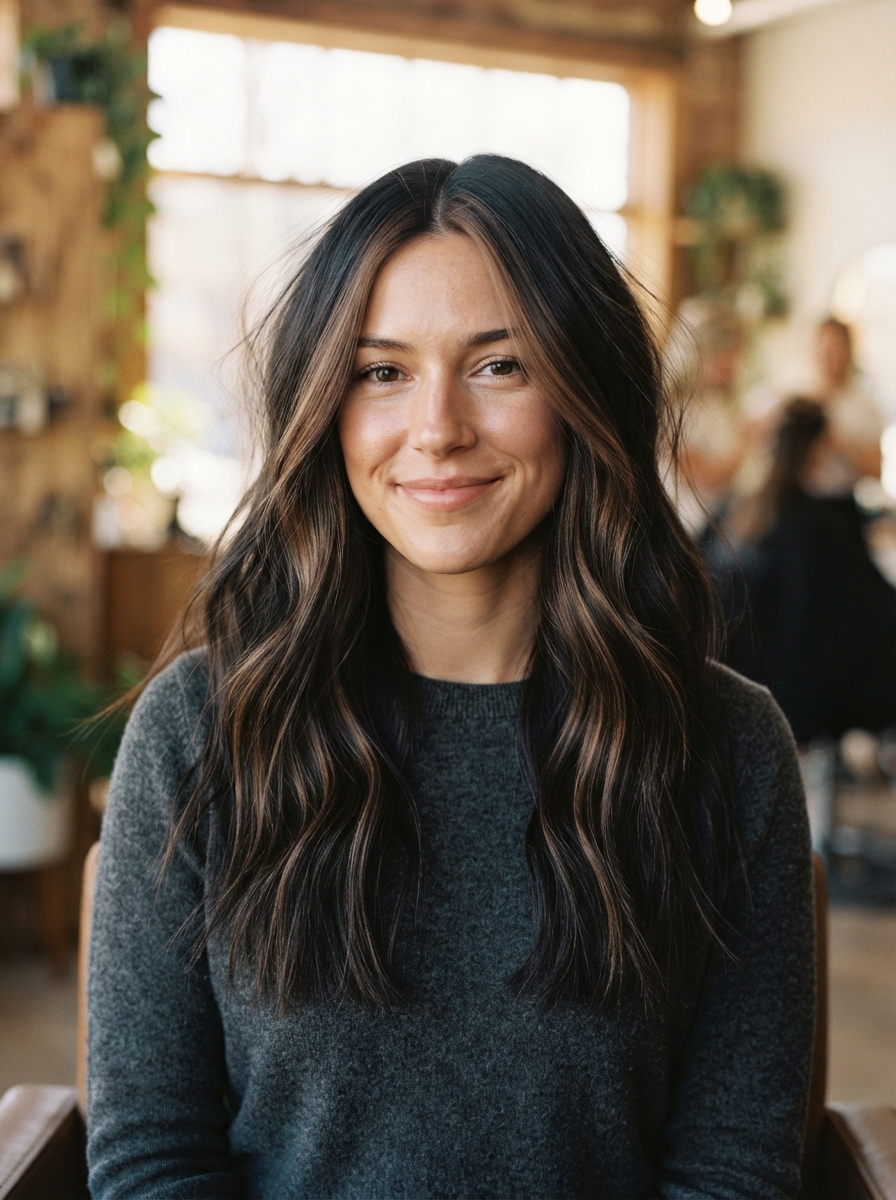
Two thick sections of slightly-lighter espresso (mocha-toned) framing the face from the temples down. The lighter shade around the face acts like makeup — instantly brightens the complexion. The single most-requested espresso variation in 2026.
12. Curtain bangs with espresso highlights
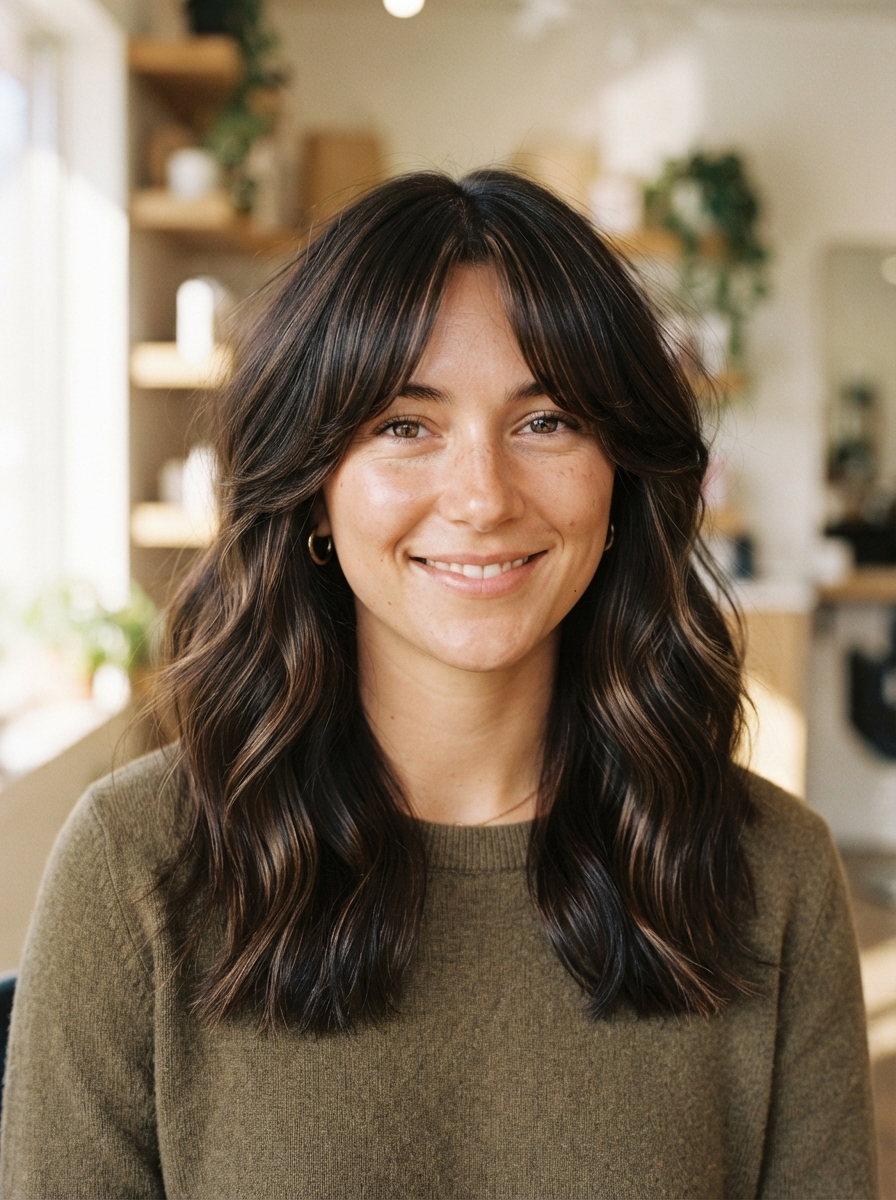
For women with curtain bangs (or those getting them): subtle espresso highlights placed through the bang sections add dimension to the most-visible part of the cut. The bangs become a feature rather than a frame.
13. Babylights around the face
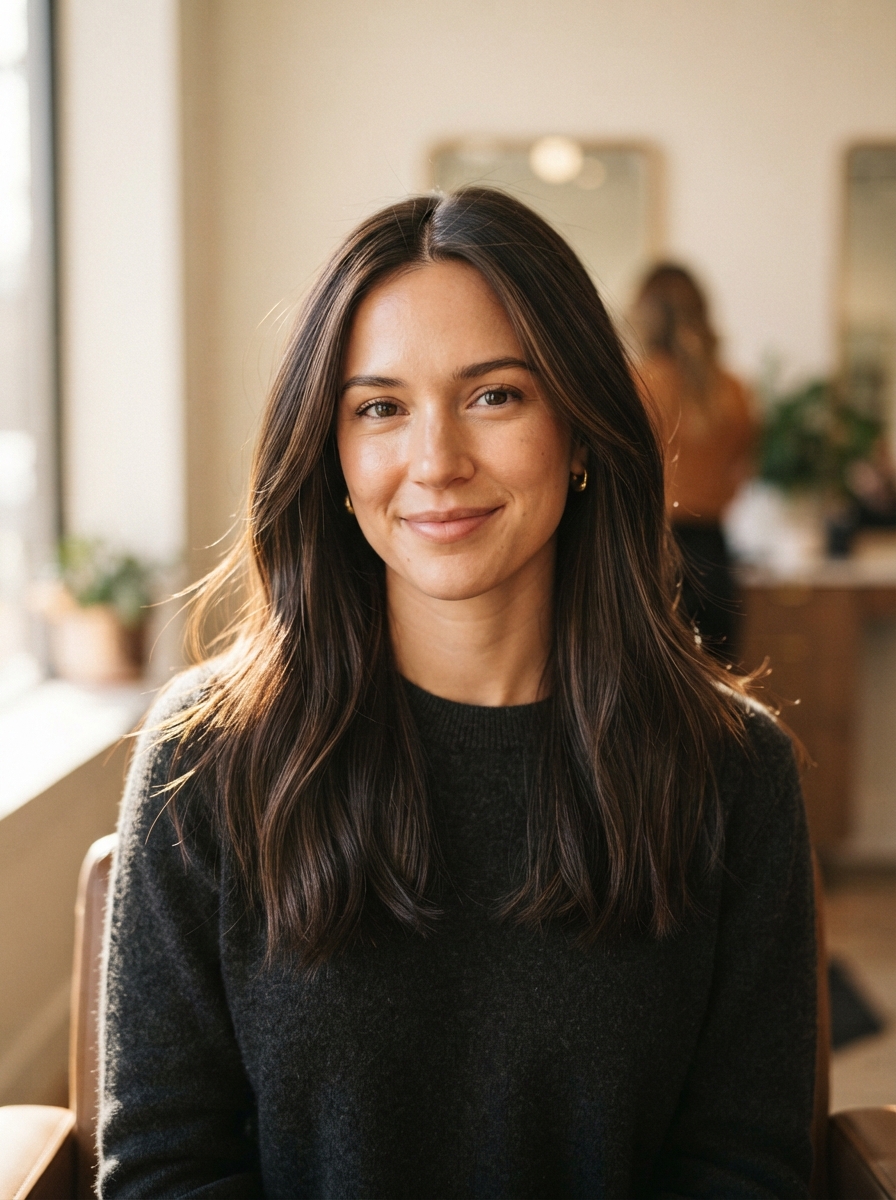
The thinnest possible espresso highlights placed all around the face, finer than micro-highlights. Adds light dimension without obvious color change. Particularly stunning in selfies — the babylights catch front-light beautifully.
14. Hidden face-frame espresso
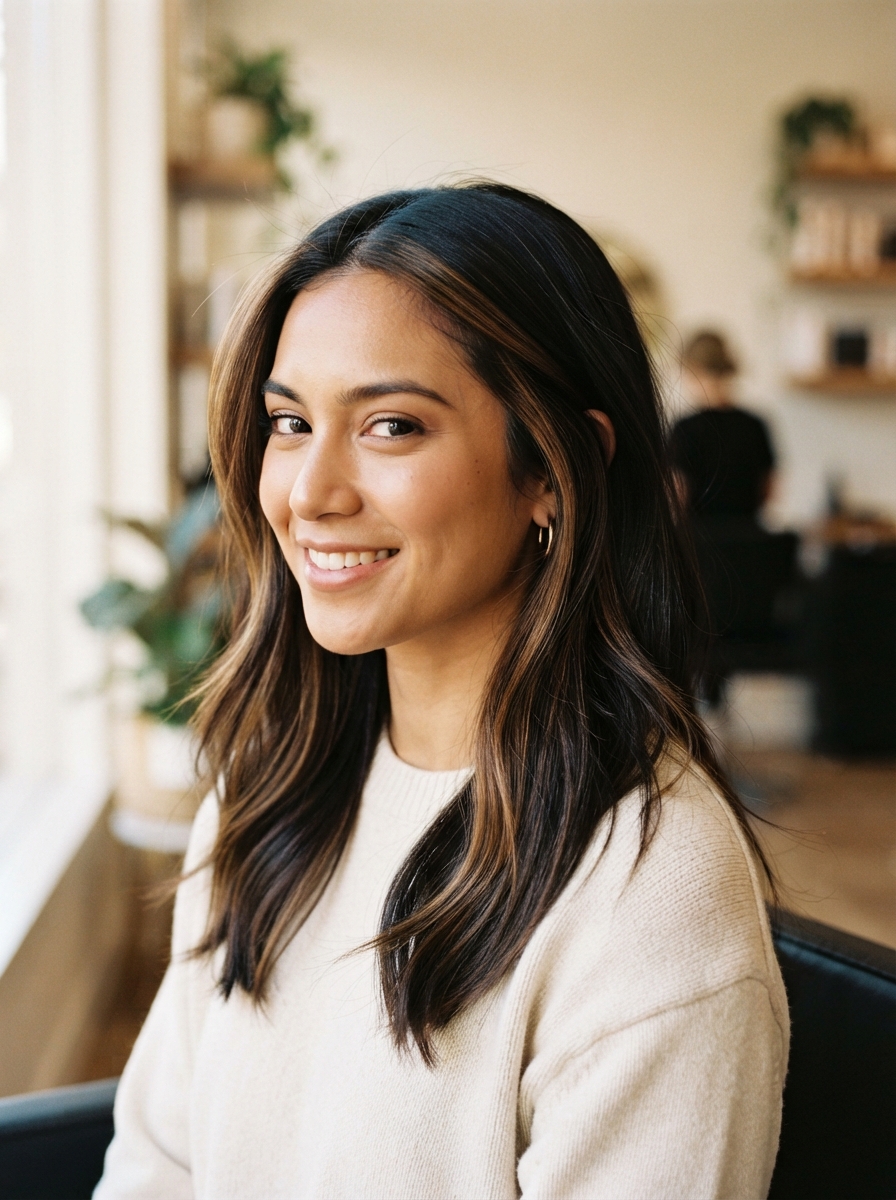
Espresso highlights placed underneath the front sections of hair so they only show when the hair moves or is pulled back. Stealth dimension. Perfect for professional settings where obvious color change feels too much.
Iced espresso brunette
The cooler-toned variation of the trend. Inspired by iced coffee (intentionally), this version skips the warm undertones for a sleeker, more sophisticated finish. Jennifer Lopez’s signature.
15. Iced espresso brunette balayage
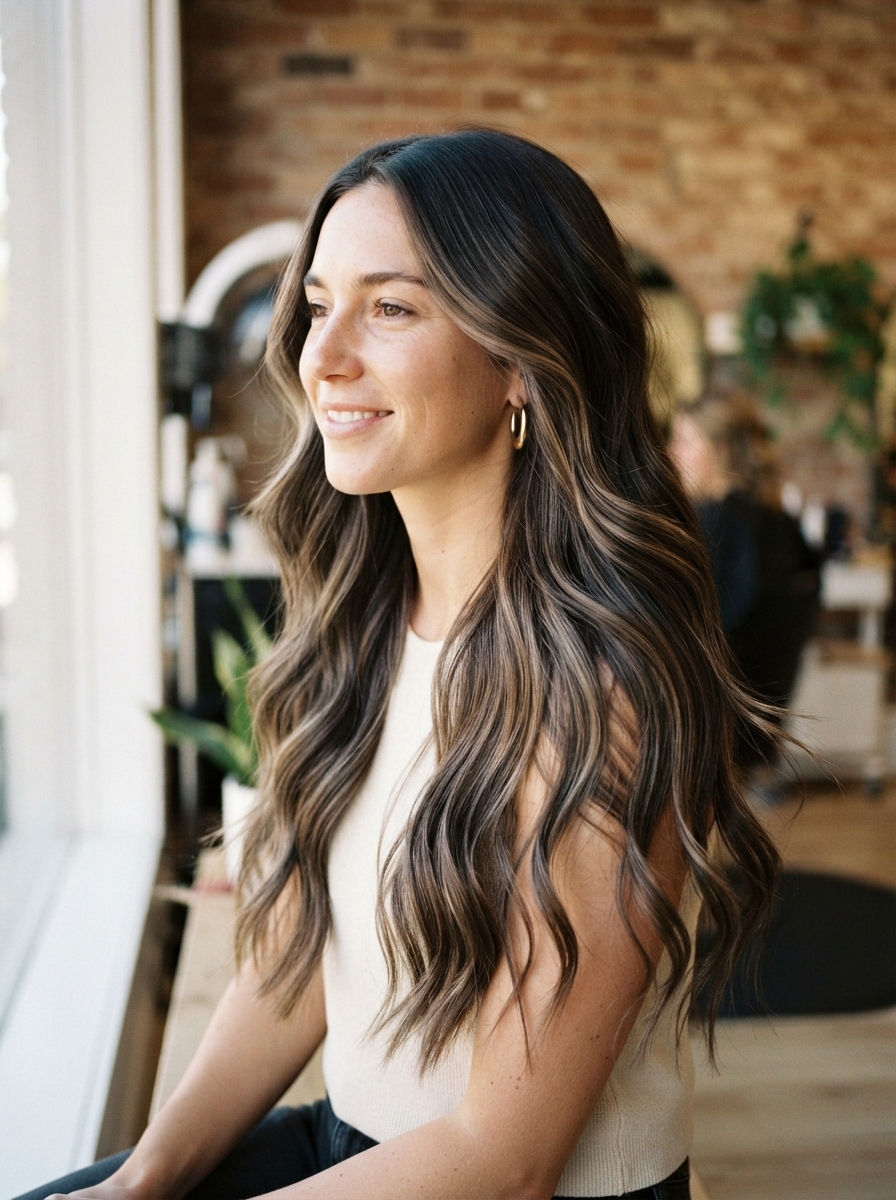
Cool-toned espresso base with cool-toned highlights. No warmth, no caramel, no amber. The result reads as sleek, polished, and slightly editorial. Particularly stunning on cool-undertone skin and works exceptionally with silver or platinum jewelry.
16. Iced espresso with shadow root
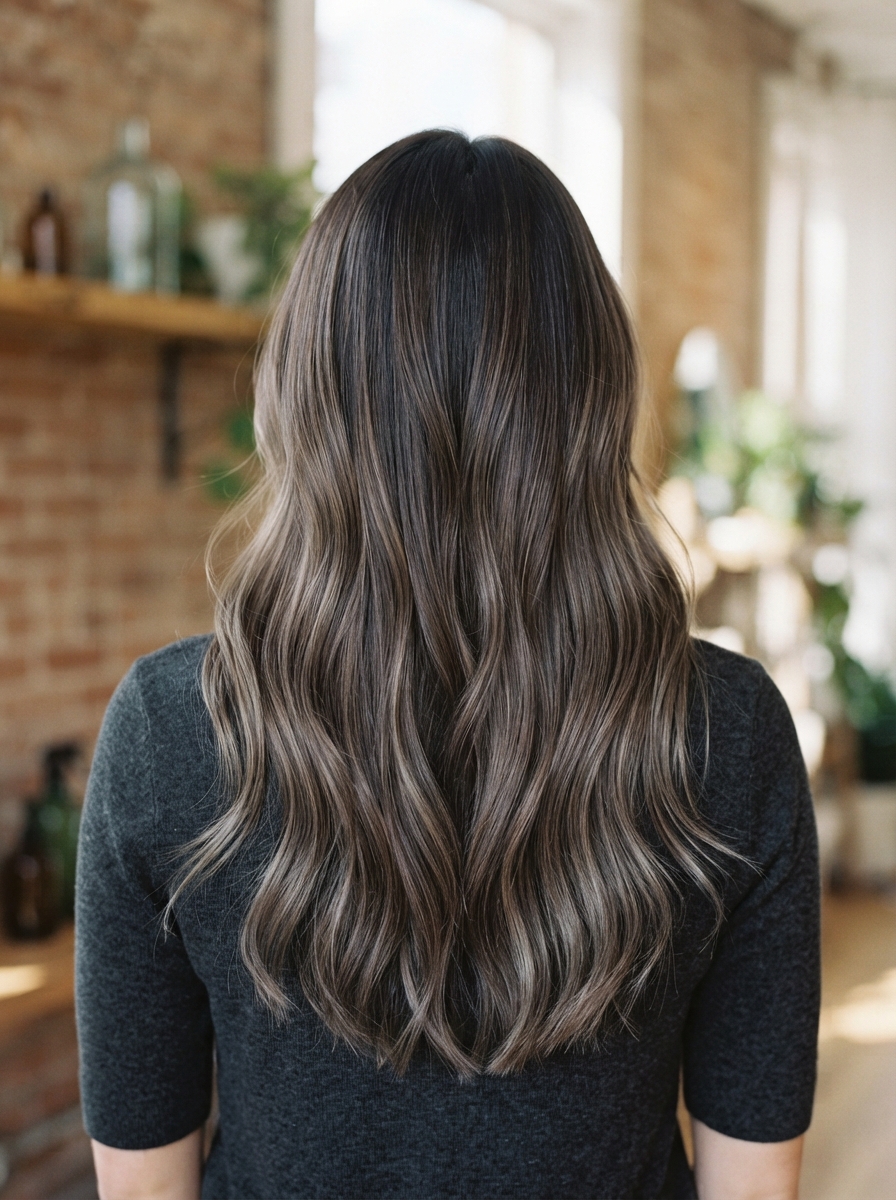
Cool espresso highlights with a deliberately darker, slightly shadowed root area. The shadow adds depth and makes the highlights pop without harsh contrast. Best for women who want a clear “highlighted” look rather than a subtle dimension effect.
17. Frosted chestnut espresso (the sister shade)
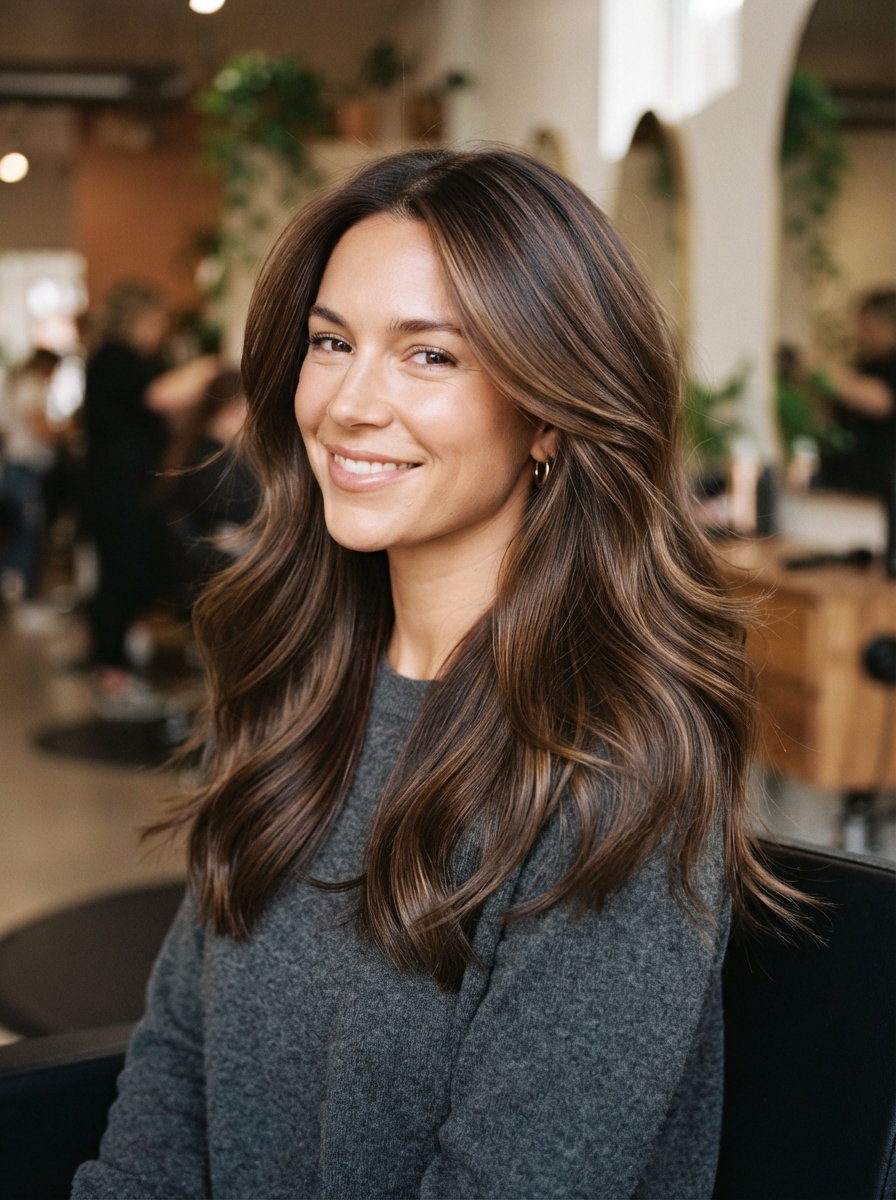
The slightly more neutral version of iced espresso — frosted chestnut brown is “more of a glossy, neutral brown” per stylist guidance. Less cool than iced espresso, more neutral than warm espresso. The “Goldilocks” shade.
18. Iced espresso with chrome gloss
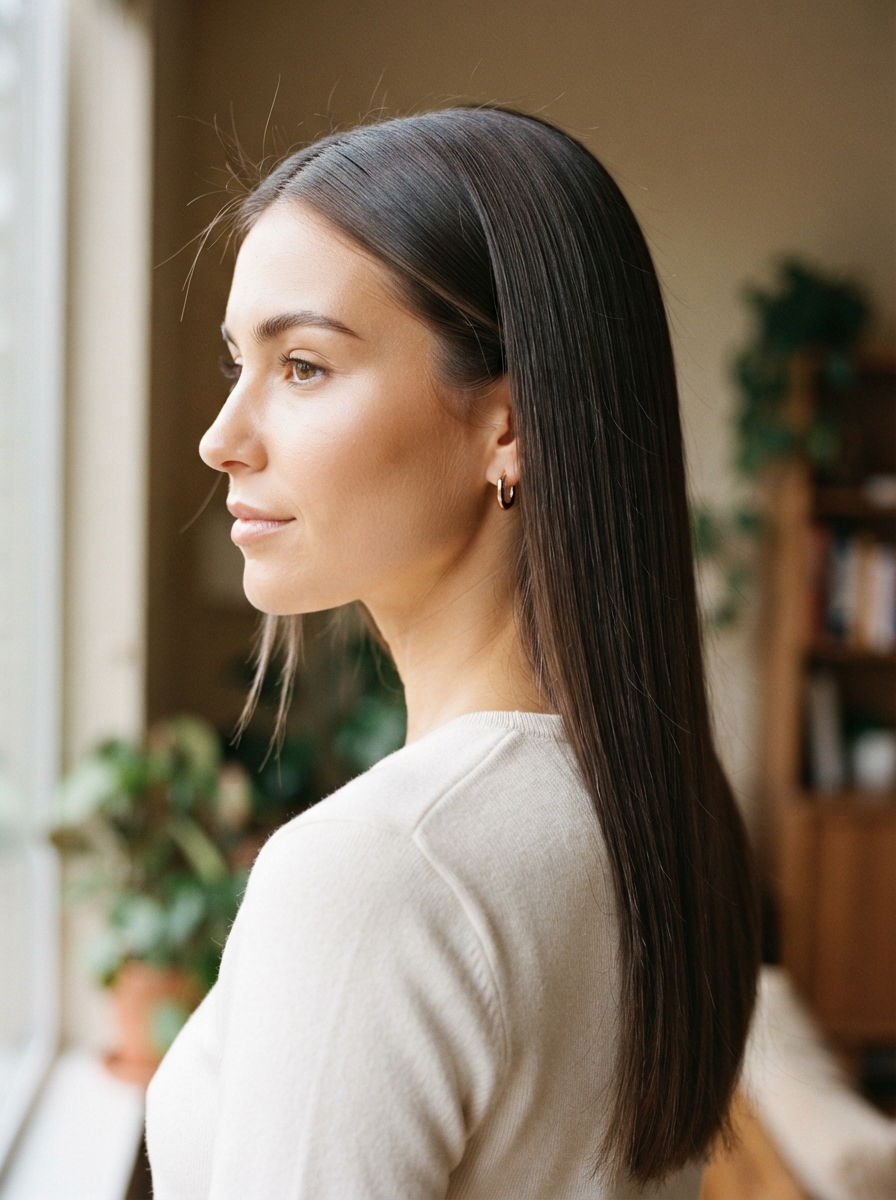
Iced espresso base finished with a chrome-tinted gloss treatment. Creates a near-metallic shine effect under direct light. High-impact, very photo-friendly. Best for women who get color regularly and want a salon-quality finish.
Espresso highlights for black hair
For naturally black or very dark hair specifically. Espresso highlights on black hair require a slightly different approach — the contrast is more dramatic, the maintenance is more involved, and the result is often more striking.
19. Subtle espresso ribbons on black hair
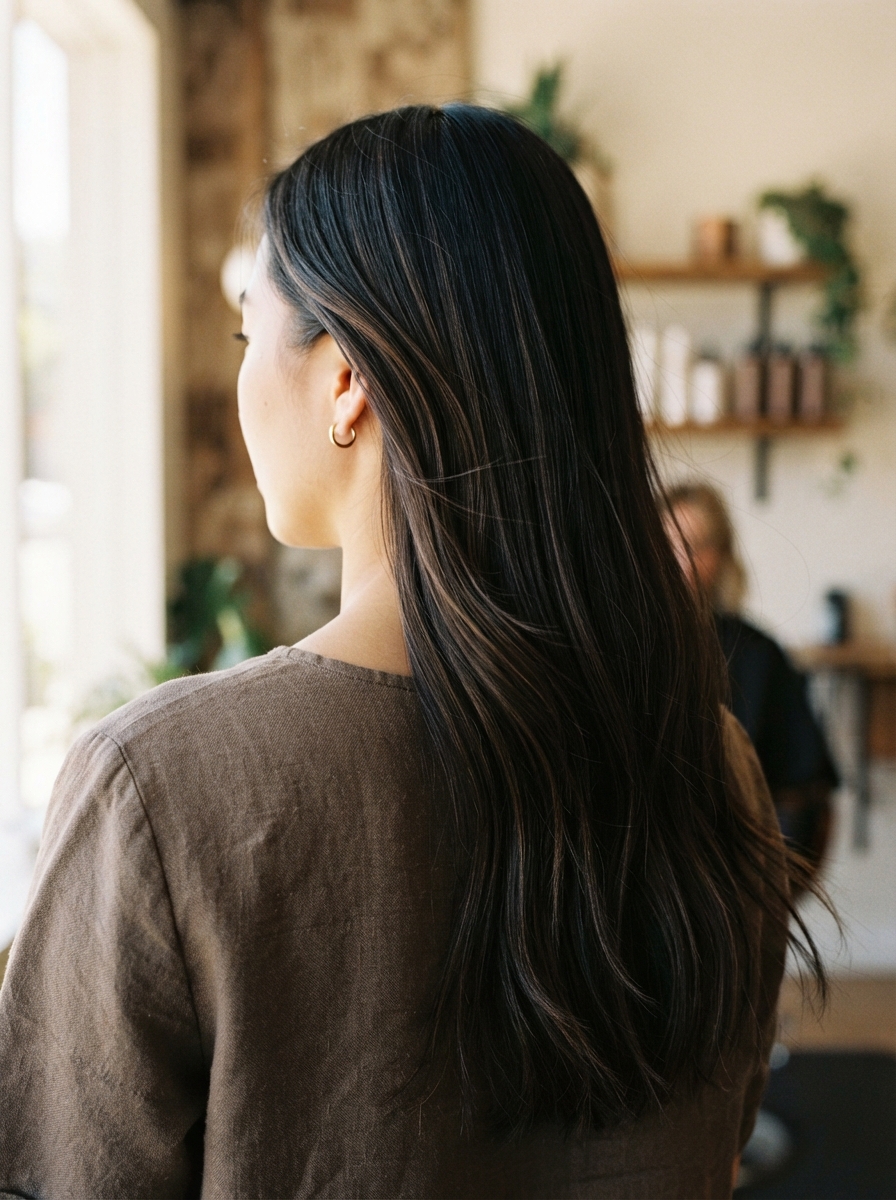
The safest entry into highlights for naturally black hair. Espresso ribbons placed sparingly through the mid-lengths. The contrast is visible but soft — adds dimension without screaming “highlights.” Particularly stunning when hair is styled in loose waves.
20. Espresso on Black hair (4A, 4B, 4C texture)
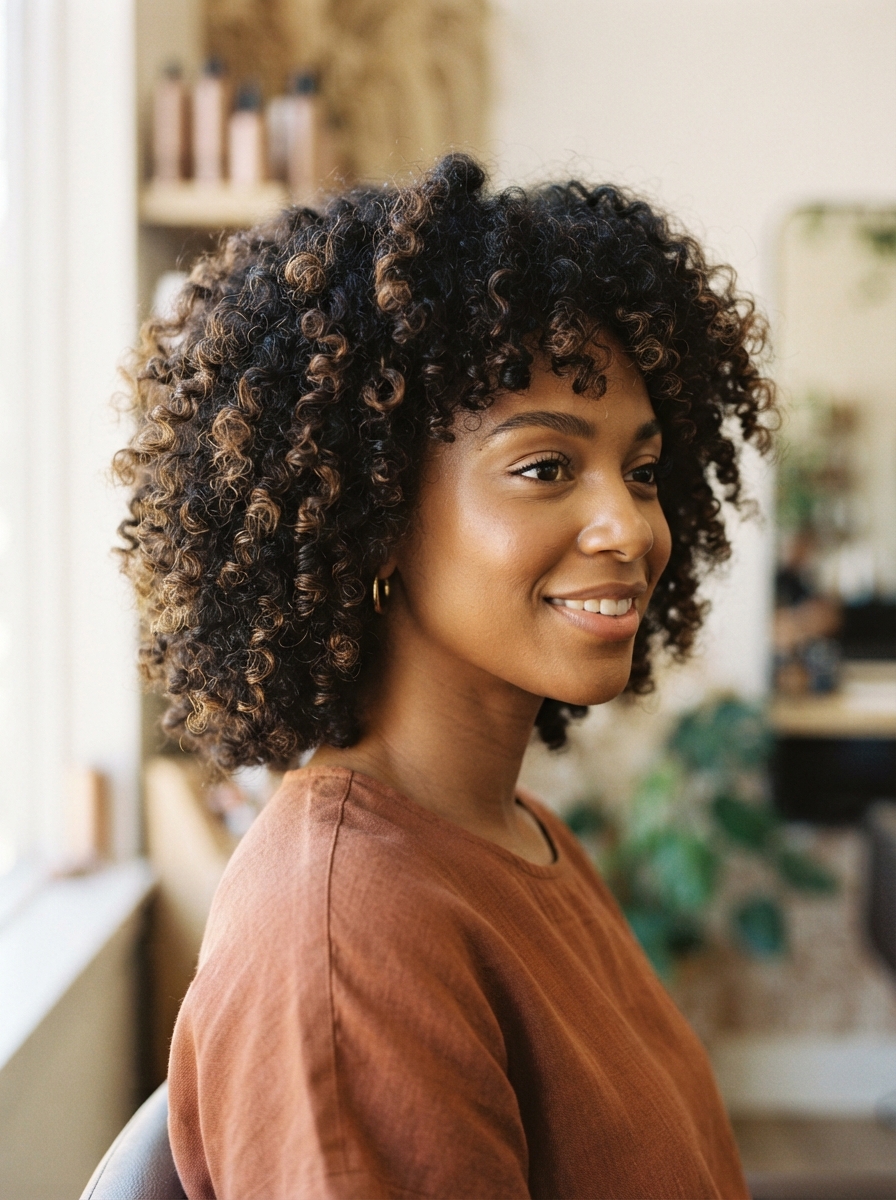
For Type 4 textures specifically: espresso highlights placed through select coils for dimension while preserving curl pattern integrity. Best done by colorists experienced with textured hair. Pair with a bond-rebuilding treatment as part of the appointment.
21. Espresso underneath layer on black hair
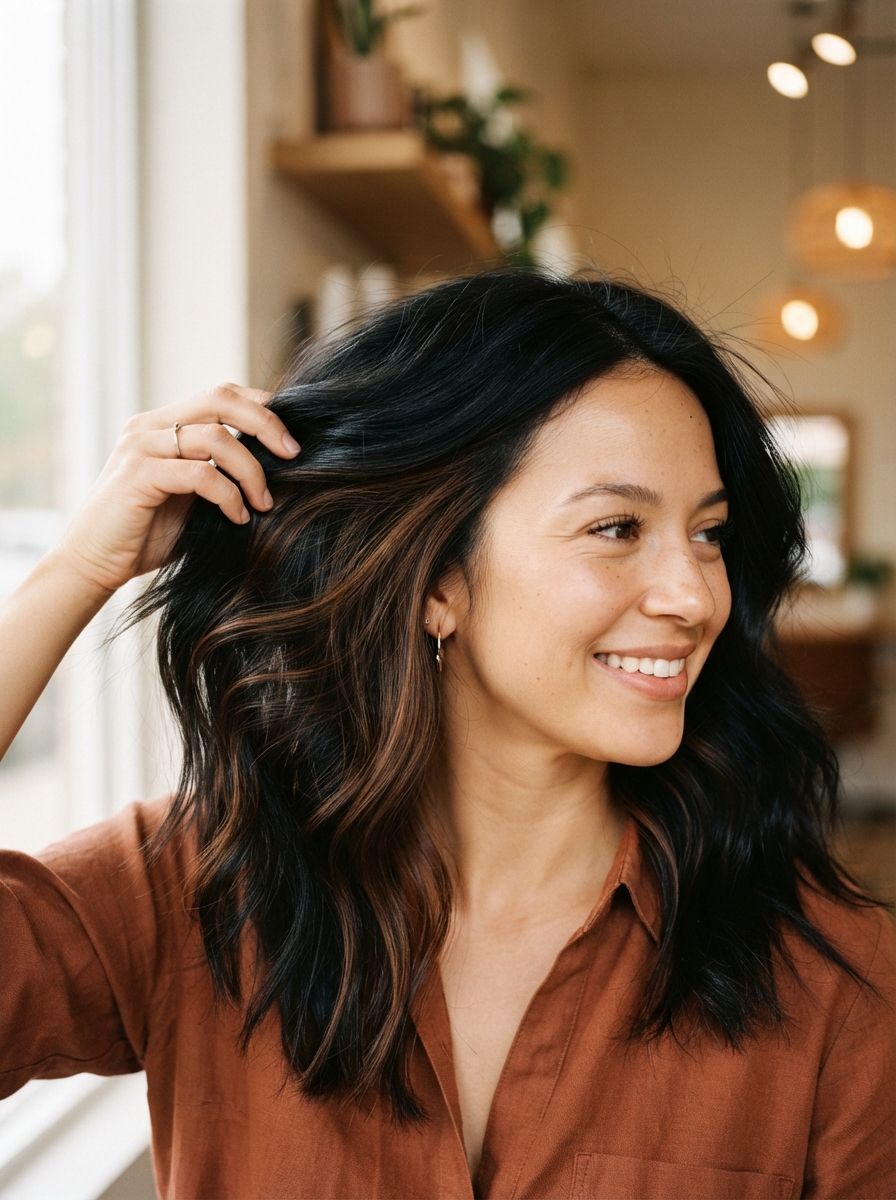
Highlights placed ONLY on the underneath layer of black hair — so they show when the hair moves but stay hidden when worn down. Lower maintenance, lower visible commitment, perfect for first-time color on dark hair.
22. Espresso balayage on natural Indian and South Asian hair
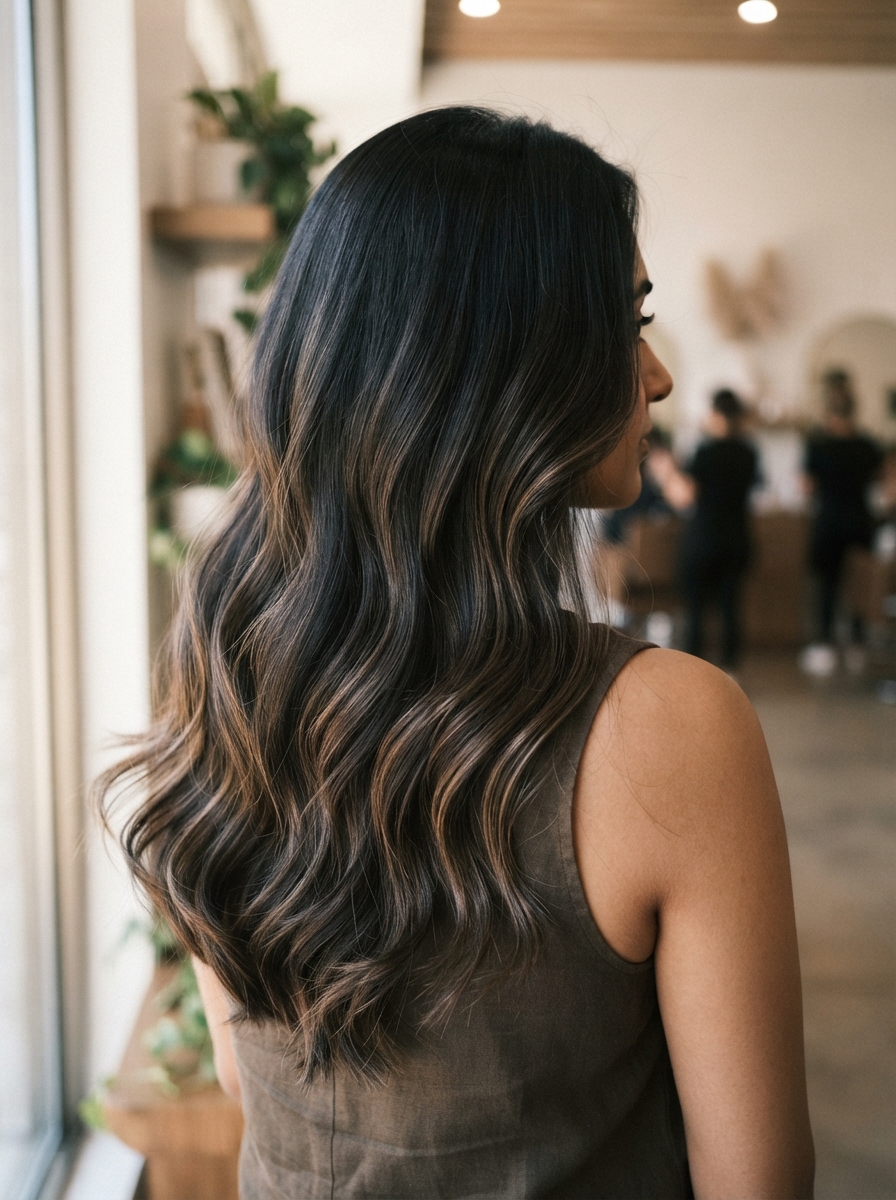
For naturally very dark hair common in Indian, South Asian, and Middle Eastern hair types: espresso balayage adds warmth and dimension without the harsh contrast that lighter highlights create. Pair with a deep conditioning routine — strong dark hair benefits from extra moisture during color processing.
23. Espresso ombre on black hair
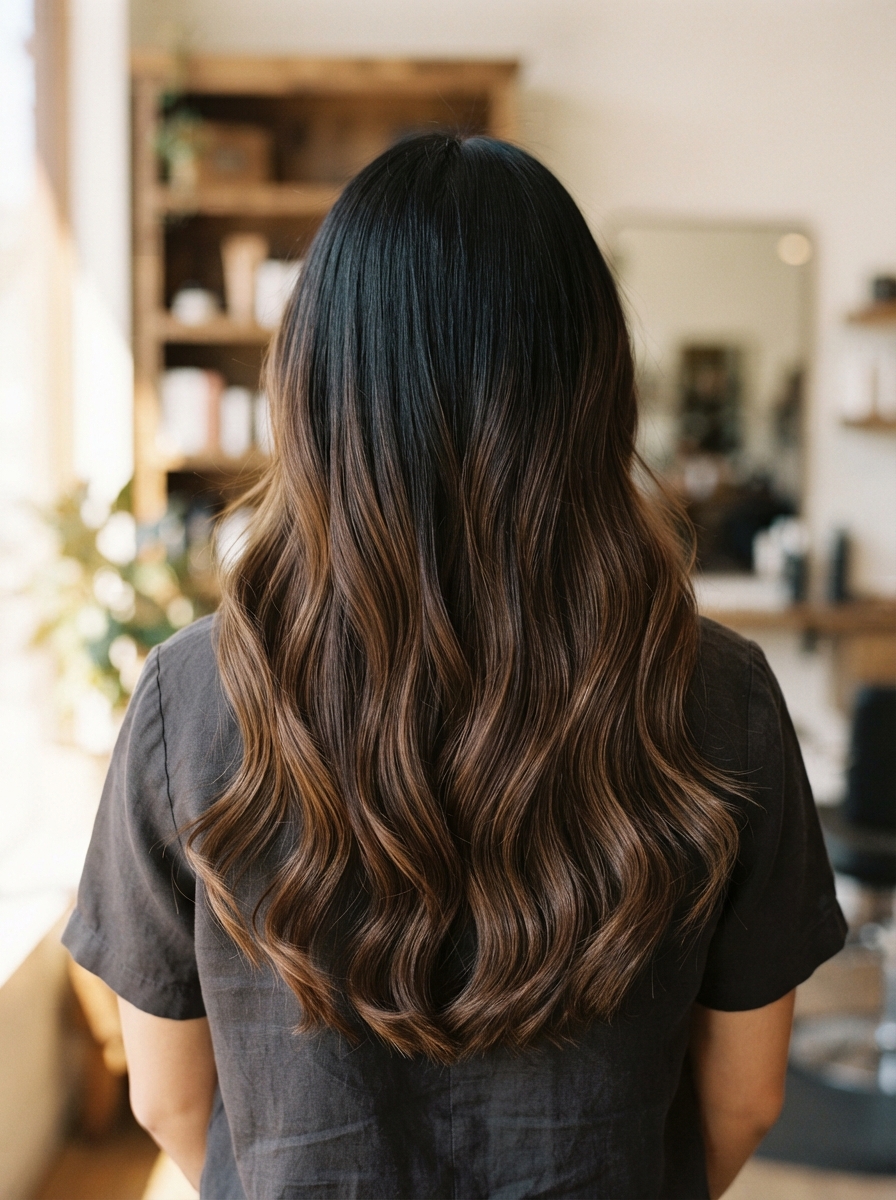
A more dramatic option: gradual lightening from natural black at the roots down to espresso at the ends. Creates a vertical contrast rather than horizontal highlighting. Photographs beautifully but requires more maintenance — about every 8-10 weeks for tip-ups.
How to ask your colorist for espresso highlights
Take this exact language to your appointment:
Bring three reference photos. Espresso reads dramatically differently in different lighting. Three photos of your desired result (ideally all in natural light) protect you from miscommunication. Avoid photos with heavy filters or studio lighting — colorists need to see how the color actually looks.
Use specific words:
- “Espresso base with mocha highlights” — for the warm version
- “Iced espresso with cool tones” — for the sleeker JLo version
- “Espresso balayage” — for the hand-painted soft version
- “Lived-in espresso” — for the low-maintenance grown-out version
- “Espresso melt” — for the seamless root-to-tip transition
Specify maintenance preference upfront. “I want this to look good for 4 months without a touch-up” is critical information. Espresso melt and lived-in espresso are designed for low maintenance; iced espresso and bright highlights need more frequent appointments.
ALWAYS book a gloss with your color appointment. Espresso’s defining quality is the shine. Without a clear or tinted gloss treatment, the color reads as dull. Most salons charge $30-$60 extra for gloss — it’s worth every penny. Stylists confirm this is what creates the “expensive” finish.
Ask about strand testing if you’ve never had highlights before. A small strand test on a hidden section shows you how the color will actually look on YOUR hair before committing to the full process. Most colorists offer this for free.
Discuss maintenance products. Espresso fades into red/brassy tones if not properly maintained. Your colorist will recommend a sulfate-free shampoo, a blue or purple shampoo for cool-toned variants, and a gloss treatment to use at home every 4-6 weeks.
How to maintain espresso highlights at home
The colorist gets you 70% of the way there. Maintenance is the other 30%.
Wash with cool water, not hot. Hot water opens the hair cuticle and accelerates color fade. Cool or lukewarm water keeps espresso looking salon-fresh longer.
Use a sulfate-free shampoo. Sulfates strip color significantly faster than gentler cleansers. Look for shampoos specifically marketed for color-treated hair.
For cool-toned espresso: use blue shampoo weekly. Blue shampoo neutralizes warm/orange tones that develop as espresso fades. Don’t use more than once a week — overuse can leave hair slightly purple-toned.
Apply a gloss treatment every 4-6 weeks. Either at-home (drugstore options work fine) or as a quick salon appointment. The gloss refreshes shine and tones brassiness simultaneously.
Hair oil on the ends after every wash. Espresso’s reflective quality depends on healthy, intact hair fiber. Damaged ends look dull regardless of color. A few drops of argan or jojoba oil on damp ends keeps the shine consistent.
Limit heat tools to 350°F max. Higher heat fades color faster AND damages hair faster. Especially important the first two weeks after a color appointment.
Skip chlorine, salt water, and tap water with high mineral content. All three break down espresso color faster than anything else. Wet your hair with bottled water before swimming so it absorbs less chlorine/salt water. After swimming, wash with clarifying shampoo.
Frequently asked questions
Is espresso hair color trending in 2026?
Yes — espresso is currently the most in-demand brunette shade of 2026, confirmed by colorists, beauty editors, and salon booking data across multiple sources. Marie Claire, Coveteur, Fashion Times, and InStyle have all called espresso the defining brunette trend of the year. Pinterest search volume for espresso hair has surged significantly through spring and into summer 2026.
What’s the difference between espresso and dark brown hair?
Espresso is darker, richer, and more dimensional than standard dark brown. Where standard dark brown reads as flat and one-tone, espresso layers cool and warm tones with subtle ribbons of depth to create reflective shine. The visual difference is dramatic — espresso looks expensive and intentional; flat dark brown looks like a basic dye job.
Can I get espresso highlights on naturally black hair?
Yes, but with adjustments. Espresso highlights on black hair require more careful processing to avoid damaging the hair, and the contrast will be more dramatic than on medium brown hair. Subtle ribbons (idea #19) and underneath-layer placement (idea #21) are the lowest-risk entries. Always work with a colorist experienced with very dark hair, and book a bond-rebuilding treatment as part of your appointment.
What’s “iced espresso brunette”?
Iced espresso is the cool-toned variation of espresso — dark and decidedly cool-toned rather than warm. Created by colorists using multi-tonal techniques like balayage with cool-toned dyes. Jennifer Lopez is the celebrity reference for this shade. Best for cool-undertone skin and women who want a sleeker, more polished finish than warm espresso.
How long do espresso highlights last?
Properly applied espresso highlights last 8-12 weeks before significant fading. Balayage techniques (where the colorist hand-paints the highlights) last longer than foiled highlights because the grow-out is invisible. Lived-in and espresso-melt variations specifically are designed to look good for 4+ months without retouching.
Will espresso highlights damage my hair?
Modern coloring techniques are significantly gentler than past versions, especially when paired with bond-rebuilding treatments. Espresso highlights involve less lift (less peroxide) than blonde highlights, which means less damage to the hair fiber. With proper at-home care (sulfate-free shampoo, gloss treatments, limited heat), espresso-highlighted hair stays healthy.
What skin tones look best in espresso?
Espresso is one of the most universally flattering hair colors — it works on cool, warm, and neutral skin undertones with the right variation. Cool undertones: choose iced espresso or frosted chestnut. Warm undertones: choose warm espresso with caramel or mocha ribbons. Neutral undertones: almost any version works.
How much does espresso highlighting cost?
Pricing varies dramatically by region and salon, but expect $150-$400 for a full espresso color service with highlights and gloss treatment at most salons. Major metro areas trend higher. The price reflects the multi-step process: base color, balayage or highlights, toning, gloss, and finishing.
Can I do espresso highlights at home?
For the first time: strongly recommended to see a professional. Espresso requires multi-tonal layering that’s difficult to execute at home, and getting the warm/cool balance wrong creates a flat or muddy result. After a professional appointment, at-home gloss treatments and root touch-ups are completely doable.
Does espresso work for women over 40?
Yes — espresso is one of the most flattering hair colors for women over 40 specifically. The richness adds youthful dimension; the gloss treatment makes hair look healthier; and the subtle ribbons of light catch the eye upward, which is exactly what mature faces benefit from. Pair with face-framing highlights for the most flattering effect.
![4 Best Locking Gel for Dreads [Ultimate Guide]](https://magicalassam.com/review/wp-content/uploads/2022/06/Best-Locking-Gel-for-Dreads.jpg)