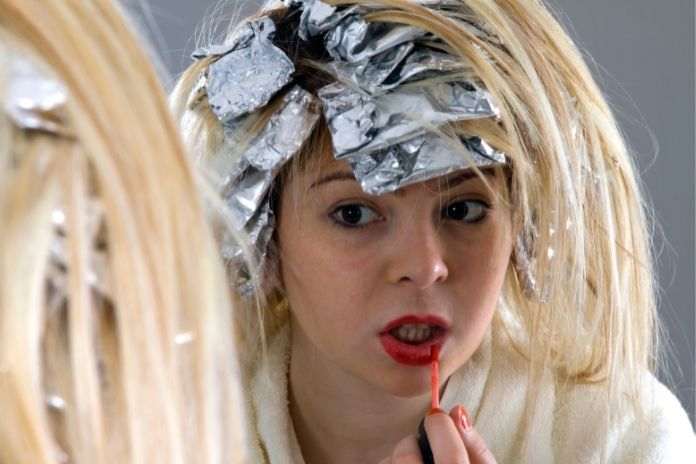
Dyeing your hair costs $50–$150+ for a single color at a salon, or $5–$45 for an at-home kit, depending on the salon’s location, the stylist’s experience, the technique used, and the length and condition of your hair. More involved techniques like double-process color, balayage, or ombre cost more in both settings, and current market pricing shows salon color has climbed further into the $60–$180+ range in 2026.
Key facts
- A single-process salon color averages $50–$100+, with budget chains like Supercuts starting around $35–$45 and current 2026 market averages landing closer to $60–$150.
- At-home hair dye kits cost $5–$45+ depending on brand and whether a toner is needed.
- Double-process color costs $175+ at a salon versus $50–$75 at home.
- Ombre hair costs $130–$200 on average; full highlights at a high-end salon can reach $350.
- Hair dye longevity ranges from 1–5 shampoos for temporary dye up to 6–8+ weeks for permanent dye.
What affects the cost of dyeing your hair?
Four main factors determine the cost: the salon’s location, the stylist’s experience, the type of dye and technique used, and the length and condition of your hair. Starting with virgin, untreated hair is easier and cheaper for a stylist to work with than hair that already has box-dye buildup, which can take more than one session to fix. It’s generally recommended to have your hair professionally dyed at least a few times before relying on at-home methods regularly, since a stylist can guide you toward the right dye type and correct mistakes.
How much does it cost to dye your hair at a salon?
A single color done at a salon costs $50–$150 on average. Current 2026 salon pricing shows single-process color running as high as $55–$180 in many markets, reflecting the higher end of this range. The exact price depends on the salon’s location, how much hair you want colored, and whether you add highlights or lowlights — higher-end salons charge more than budget chains like Supercuts, which starts single-process color around $35–$45.
How much does it cost to dye your hair at home?
At-home hair dye costs $5–$45+ depending on the brand and whether you also need a toner. A basic box of dye alone costs about $5–$20, including the dye, instructions, and typically a pair of gloves. At-home color is cheaper than salon color, but many stylists note the savings aren’t always worth it if the result misses the mark, since fixing an at-home mistake at a salon can cost $150 to $500 or more — often far exceeding what a professional color would have cost the first time.
How much does double-process hair coloring cost?
Double-process hair coloring costs $175+ at a salon or $50–$75 at home. Double process is a technique in which the hair is first lightened (all over or in sections) before a new color is applied to the lightened hair. Doing it at home requires a bleach kit, a lightening serum, and a hair color toner and developer, and it generally takes longer to apply than single-process color because of that extra lightening step.
How much does ombre hair cost?
Ombre hair costs $130–$200 on average. Ombre is a coloring technique — also called “two-tone” or “suntan” hair color — that starts with a dark base and gradually lightens through the ends of the hair. If your hair was recently dyed a dark color, getting ombre can cost more, since the existing dye has already penetrated the hair and complicates the lightening process; more elaborate hand-painted versions of this technique can run $150 to $350 or more depending on length and salon tier.
How much do highlights cost?
Highlights typically cost $75–$115, though full highlights at a high-end salon can run up to $350. The total cost depends on how much hair you want highlighted and the salon’s location. Highlights differ from ombre in that color is added in sections throughout the hair rather than transitioning gradually from root to tip.
How long does hair dye last?
How long hair dye lasts depends on the type: temporary dye lasts only 1–5 shampoos, semi-permanent lasts 8–10 shampoos, demi-permanent lasts 20–24 shampoos, and permanent dye lasts about 4–6 weeks before visible fading, with touch-ups typically needed every 6–8 weeks to maintain full color and gray coverage.
What are the different types of hair dye?
| Dye type | How long it lasts | Notes |
|---|---|---|
| Temporary | 1–5 shampoos | Not recommended for porous or damaged hair, which can end up looking dull |
| Semi-permanent | 8–10 shampoos | Doesn’t penetrate the hair shaft; good for covering gray, blending, or refreshing permanent color |
| Demi-permanent | 20–24 shampoos | Recommended only if you’re committed to a color, since it takes longer to wash out |
| Permanent | 4–6 weeks before fading, touch-ups every 6–8 weeks | Contains ammonia, mixed with a developer to penetrate the hair cuticle; offers the highest level of gray coverage |
| Bleach | Permanent | Needed to lighten hair past 2–3 shades; can be applied all-over, to ends only, or in sections for highlights |
| Henna | 4–6 weeks | Natural dye option |
Temporary and semi-permanent dyes coat the hair rather than penetrating the hair shaft the way permanent dye does. Permanent dye’s ammonia content, combined with a developer, is what allows it to penetrate the hair cuticle — the outer layer of the hair shaft — for longer-lasting color.
What hair dye techniques are available and what do they cost?
| Technique | Starting price | What it is |
|---|---|---|
| Single process color | $35+ | One application, can add gray coverage or go 2–3 shades darker, plus shine |
| Double process color | $100+ | Hair is lightened first, then a new color is applied to the lightened hair |
| Ombre | $150+ | Dark base gradually lightening through the ends; saturates the entire strand, unlike balayage |
| Reverse ombre | $150+ | Dark color blended from the ends upward, resulting in dark ends and light roots |
| Sombre | $100+ | “Subtle ombre” — a gentler transition, typically from light brunette into blonde |
| Tip color | $25+ | Dye applied only to the ends without blending upward, creating a stark contrast — suited to short hair |
| Root touch-up | $30+ | Color applied only along the roots to blend with growing-out hair; takes under an hour |
Single-process color generally costs less than double-process color, since double process requires an extra lightening step before the new color is applied.
What developer strength should I use when dyeing at home?
You can generally use up to 40-volume developer safely on light brown or blonde hair, and 40-volume developer is also recommended for very dark hair. If your hair has heavy orange or yellow tones after bleaching and won’t lift any lighter, stop bleaching rather than continuing to process it, and consult a stylist before attempting to correct it further.
Frequently asked questions
Should I dye my hair at home or go to a salon?
It depends on your risk tolerance and hair condition: at-home dye is cheaper ($5–$45+) but results may not match what you had in mind, while a salon costs more ($50–$150+) but a stylist can fix mistakes and recommend the best dye type for your hair. If you do go the at-home route, ask a stylist beforehand for advice on which type of dye will look best on your hair.
What should I do if my hair still has old box dye in it?
Tell your stylist before your appointment, since remnants of old box dye make the color process harder to control and often can’t be fully corrected in a single session. Coming in with virgin, untreated hair is easier and cheaper for a stylist to work with than hair with existing dye buildup.
How many shades lighter or darker should I go?
A common recommendation is to go at least two shades darker than your current hair color for a natural-looking result; blonde hair may need to go 4–6 shades lighter to achieve a noticeably different look. Waiting until the color has fully processed, then rinsing and drying it, lets you see the true result before deciding if it’s right.
What’s the difference between ombre and balayage?
Ombre saturates the entire strand of hair with a gradual dark-to-light transition, while balayage highlights stay closer to your natural hair color and are hand-painted rather than applied all the way through the strand. This makes ombre a more dramatic, noticeable result compared to the subtler blending of balayage.
Can I lighten my hair without bleach?
You can generally lighten hair up to 2–3 shades without bleach, but lightening further typically requires bleach or another chemical treatment. If you want to reverse a bleach job because of too much damage, expect to spend about $45 on the supplies needed to lift the color, and check with your stylist first to assess the damage.
How much does a root touch-up cost and how long does it take?
A root touch-up starts around $30 at a salon and takes under an hour, since color is applied only along the roots rather than the entire head. This makes it one of the cheapest and fastest salon coloring services compared to full single- or double-process color.
Are 2026 hair coloring prices higher than a few years ago?
Yes — current salon pricing commonly runs $55–$180 for single-process color and $150 to $350 or more for full highlights or balayage at premium salons, both higher than the $50–$100 and $130–$200 figures typical of a few years ago. Location still drives significant variation, with average hair color pricing across the U.S. ranging roughly from the $70s in lower-cost states to over $150 in major metro areas.
![4 Best Locking Gel for Dreads [Ultimate Guide]](https://magicalassam.com/review/wp-content/uploads/2022/06/Best-Locking-Gel-for-Dreads.jpg)