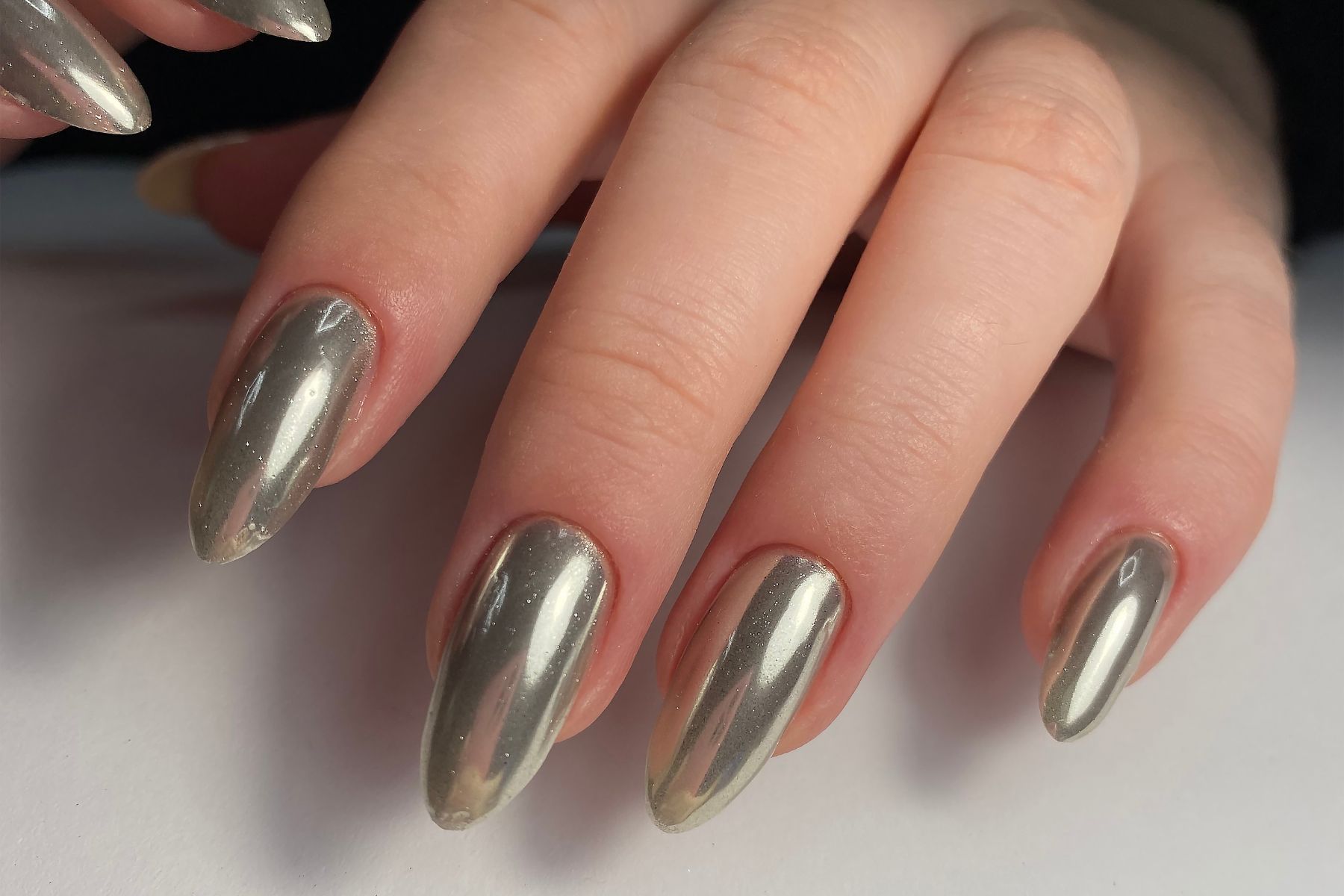
The plain white french tip is a classic, but it’s had a serious upgrade — and once you’ve seen what people are doing with the humble french manicure now, the bare version starts to feel a little empty.
Modern french tips add florals, color, glitter, chrome, tiny accents, and completely reinvented tip shapes, all while keeping the clean, recognizable french base. It’s the perfect middle ground: more interesting than a plain french, more wearable than full nail art.
Here are 27 ways to take a french tip way beyond basic, sorted by the kind of design you’re after.
Why the French Tip Got a Glow-Up
It’s the most recognizable manicure there is. Everyone knows the french tip, which means any design built on it reads as intentional and polished rather than random.
It’s endlessly customizable. The tip is a blank canvas — change the color, the shape of the line, add something at the base or on an accent nail. Infinite variation on one familiar structure.
It keeps the elegance. Even loaded with design, a french tip stays clean and put-together in a way full nail art sometimes doesn’t. You get personality without losing polish.
It scales to any occasion. A floral french works for a wedding. A glitter french works for a night out. A tiny-heart french works for everyday. Same base, different energy.
Most versions are beginner-friendly. If you can do a basic french, you can do most of these — they’re small additions on top of a technique you already know.
Floral French Tips (5 Designs)
The most popular upgrade, and a genuine wedding and spring favorite.
1. Single Flower Accent French
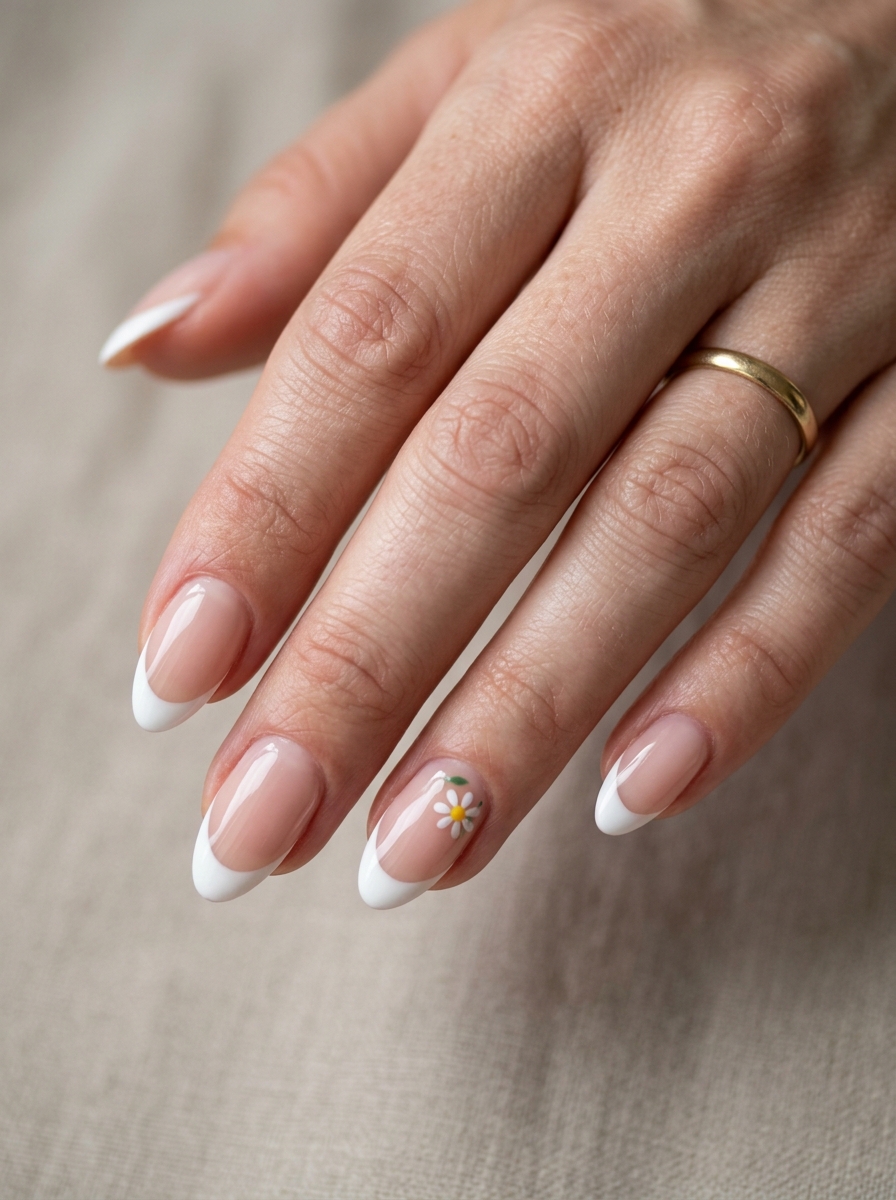
A classic french with one small flower on the ring finger. The most requested designed french there is. DIY: moderate
2. Daisy French
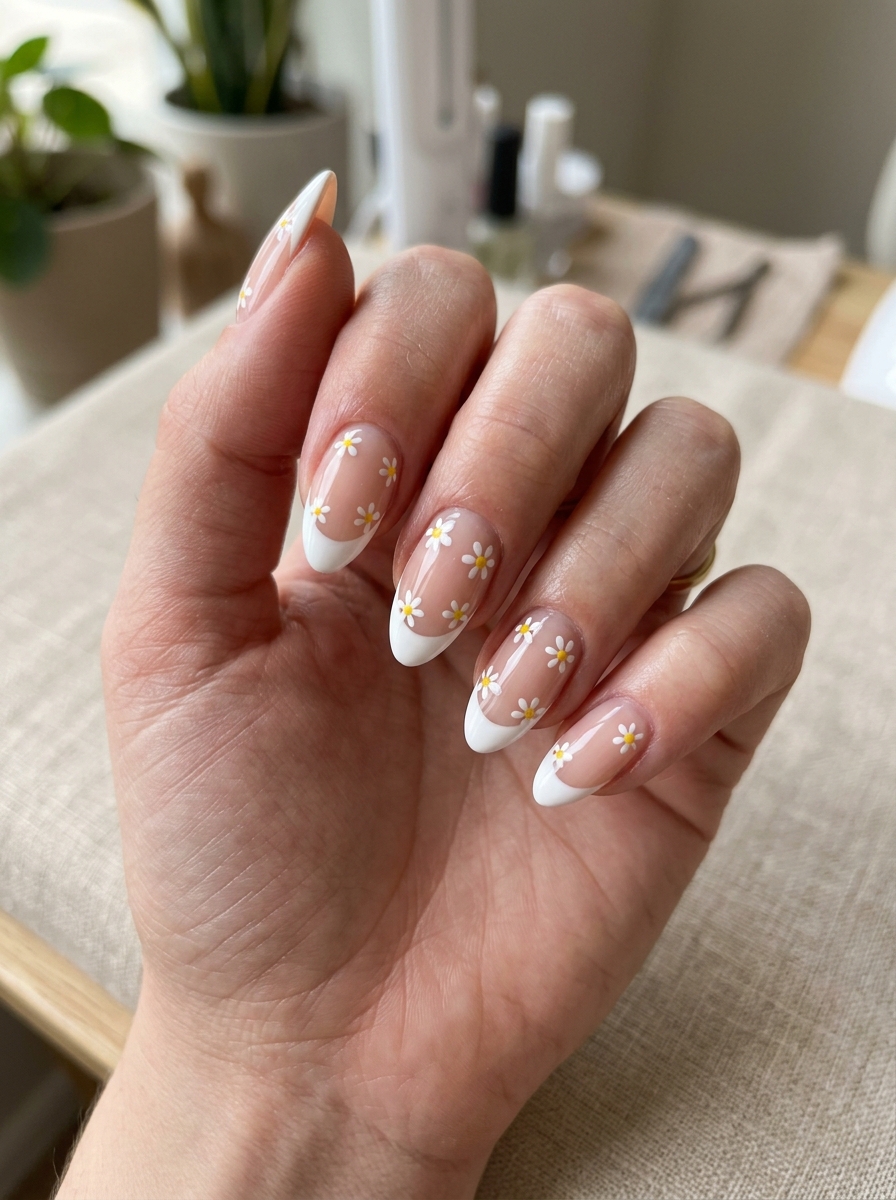
Tiny white daisies with yellow centers scattered near the tips. Fresh and cheerful. DIY: yes, five dots per flower
3. Wildflower French
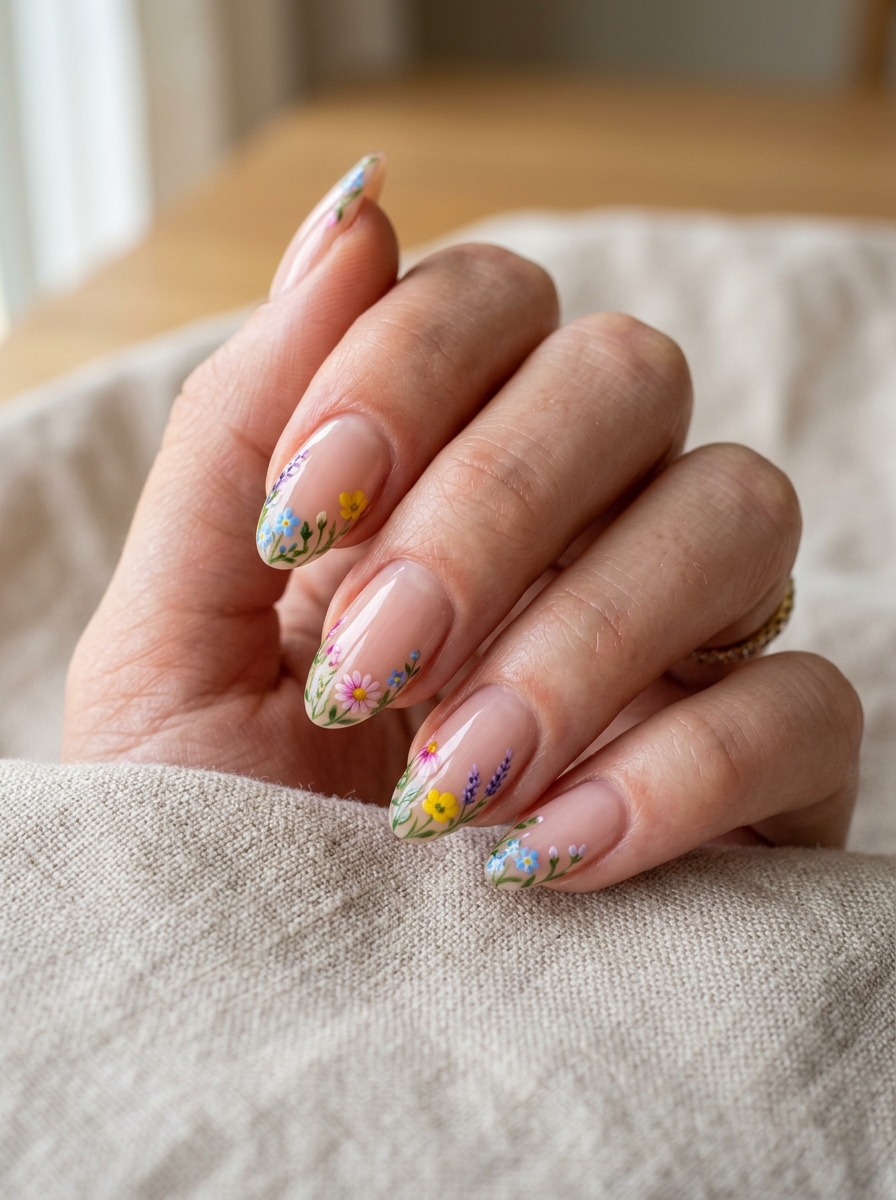
Delicate mixed wildflowers along the smile line. Detailed but beautiful. DIY: moderate
4. Cherry Blossom French
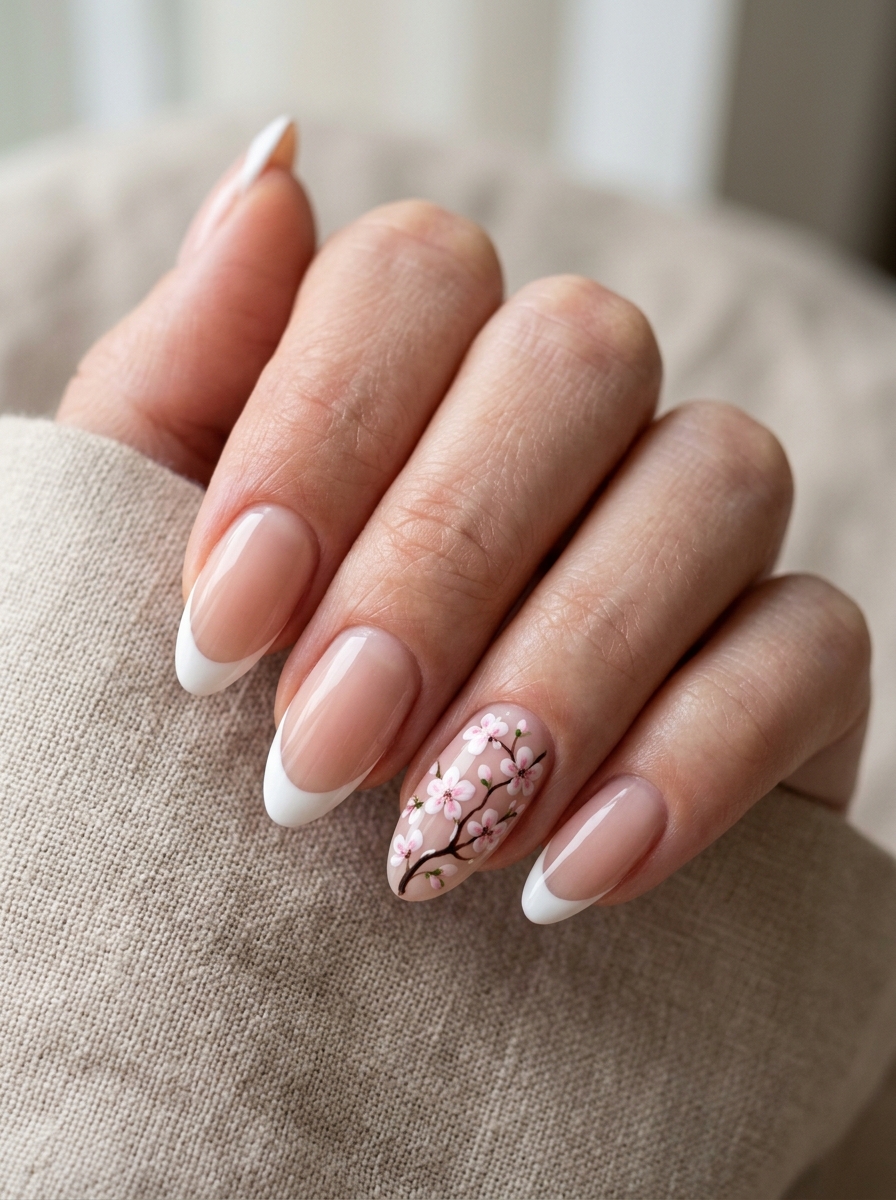
Soft pink blossoms with fine branch detail on an accent nail. Elegant and seasonal. DIY: moderate
5. Pressed Flower French
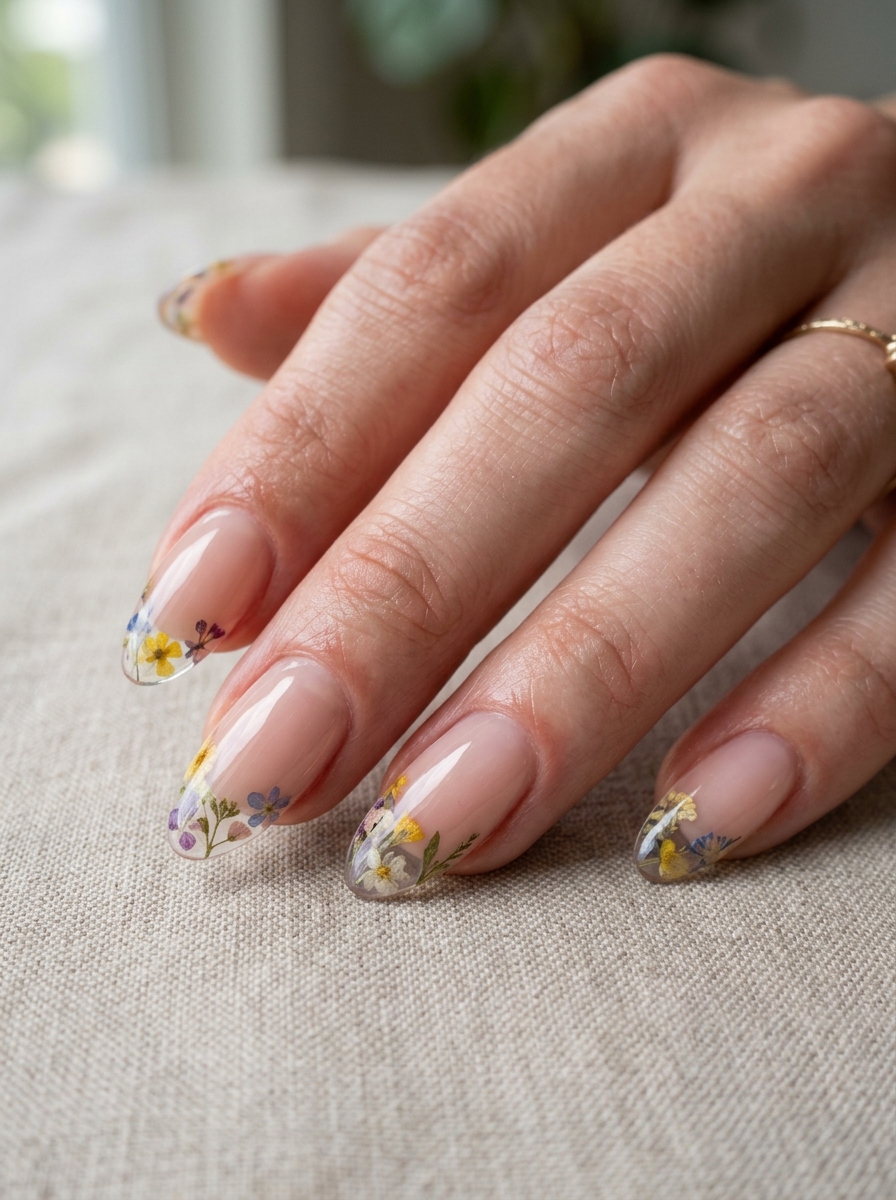
Real or faux dried flowers set under the tip in clear top coat. The cottagecore version. DIY: yes, fiddly
Colored & Creative Tips (6 Designs)
Reinventing the tip itself — color, shape, and structure.
6. Swirl French
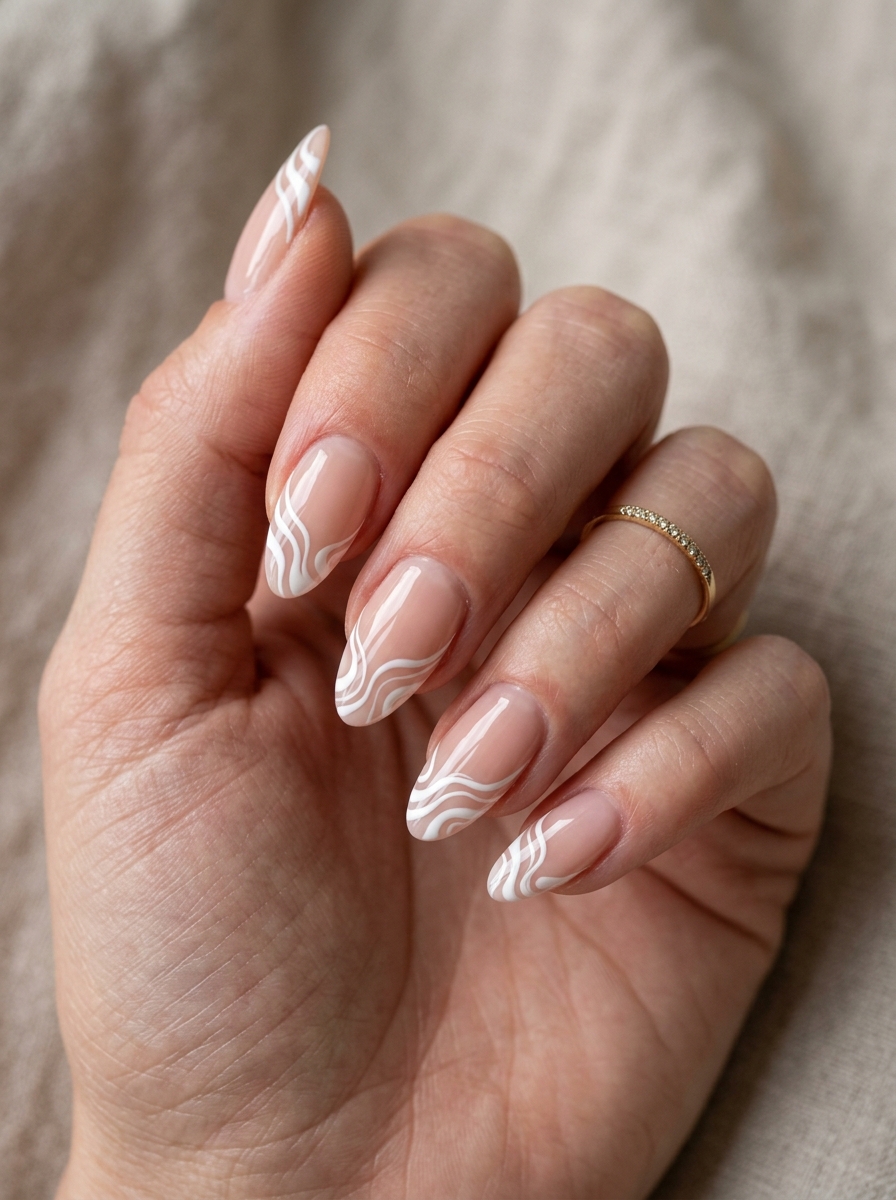
A wavy or swirled tip line instead of a clean smile. Modern and playful. DIY: yes, freehand
7. Two-Tone French
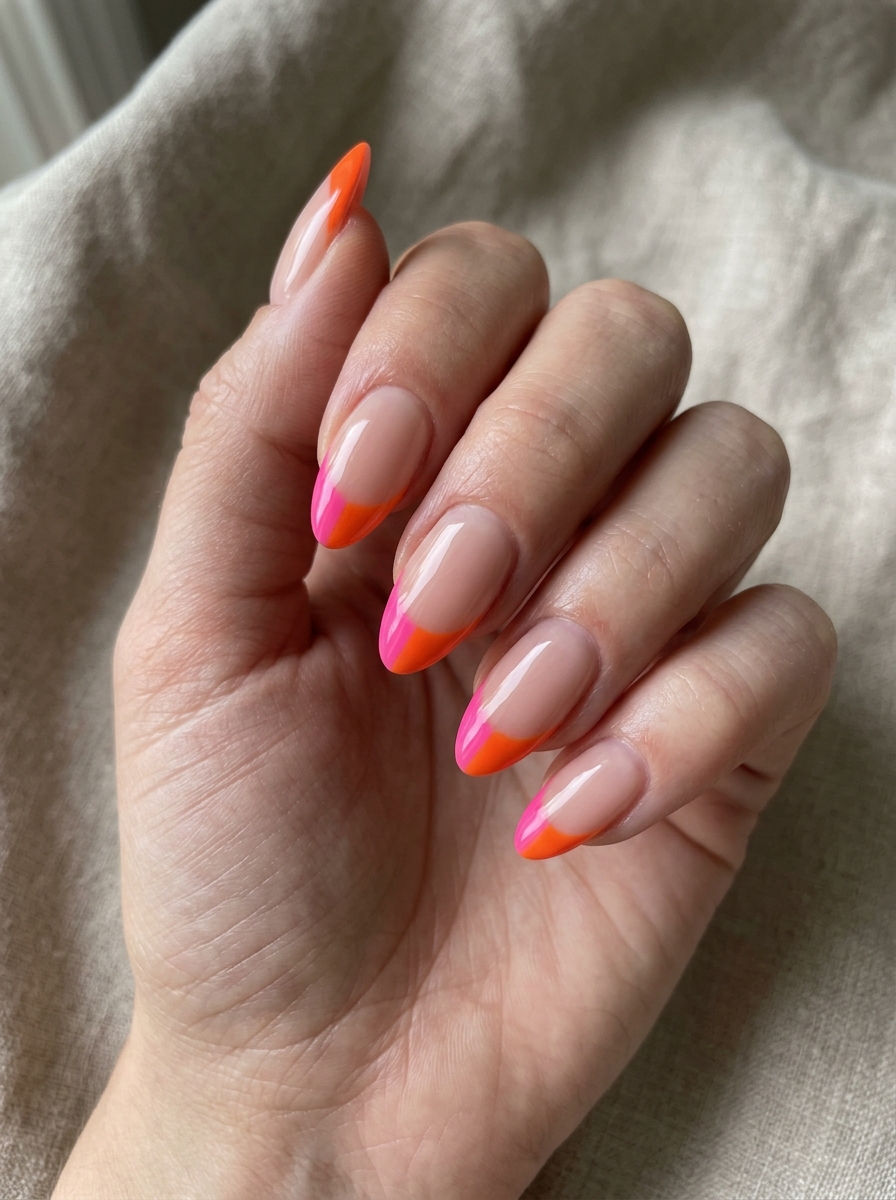
A tip in two colors split down the middle, or one color layered over another. Graphic and current. DIY: yes
8. Ombré French
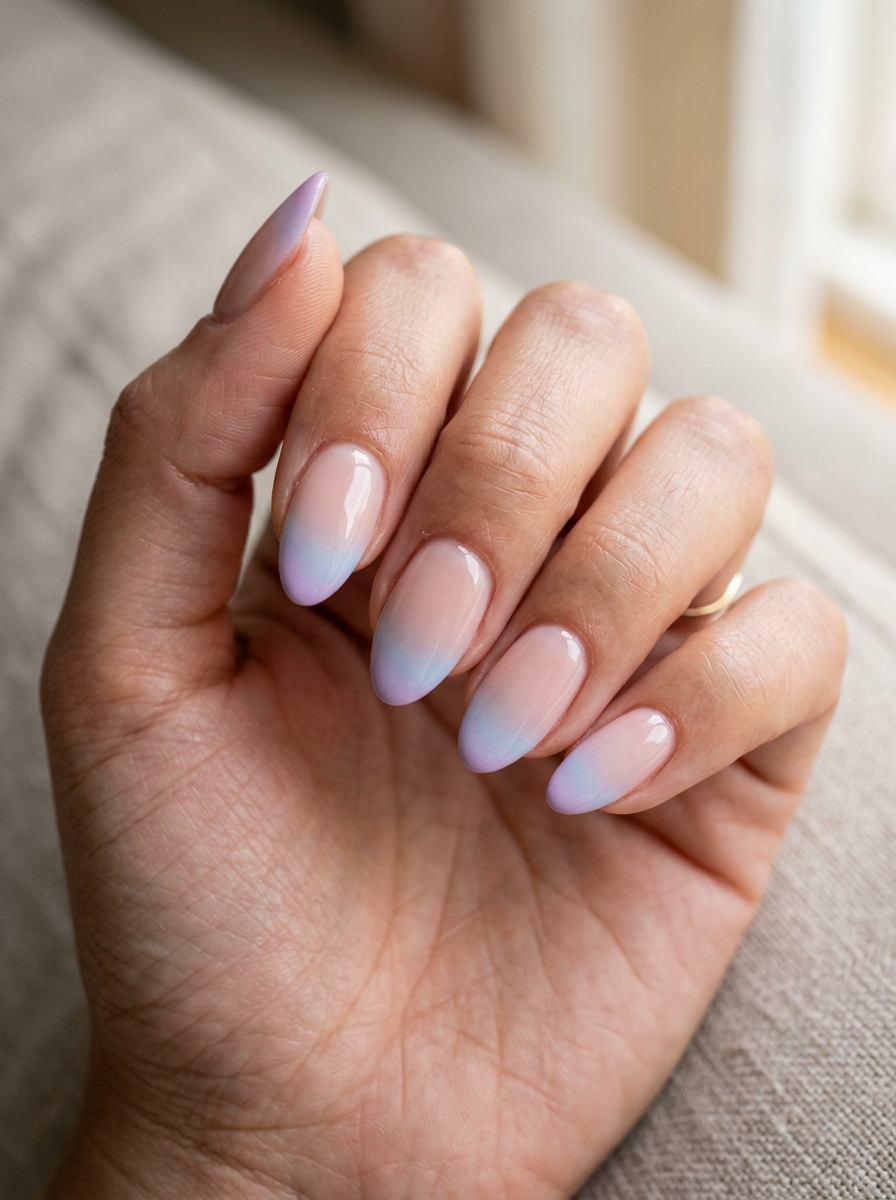
A tip that fades from one color into another. Soft, dimensional. DIY: sponge
9. Geometric French
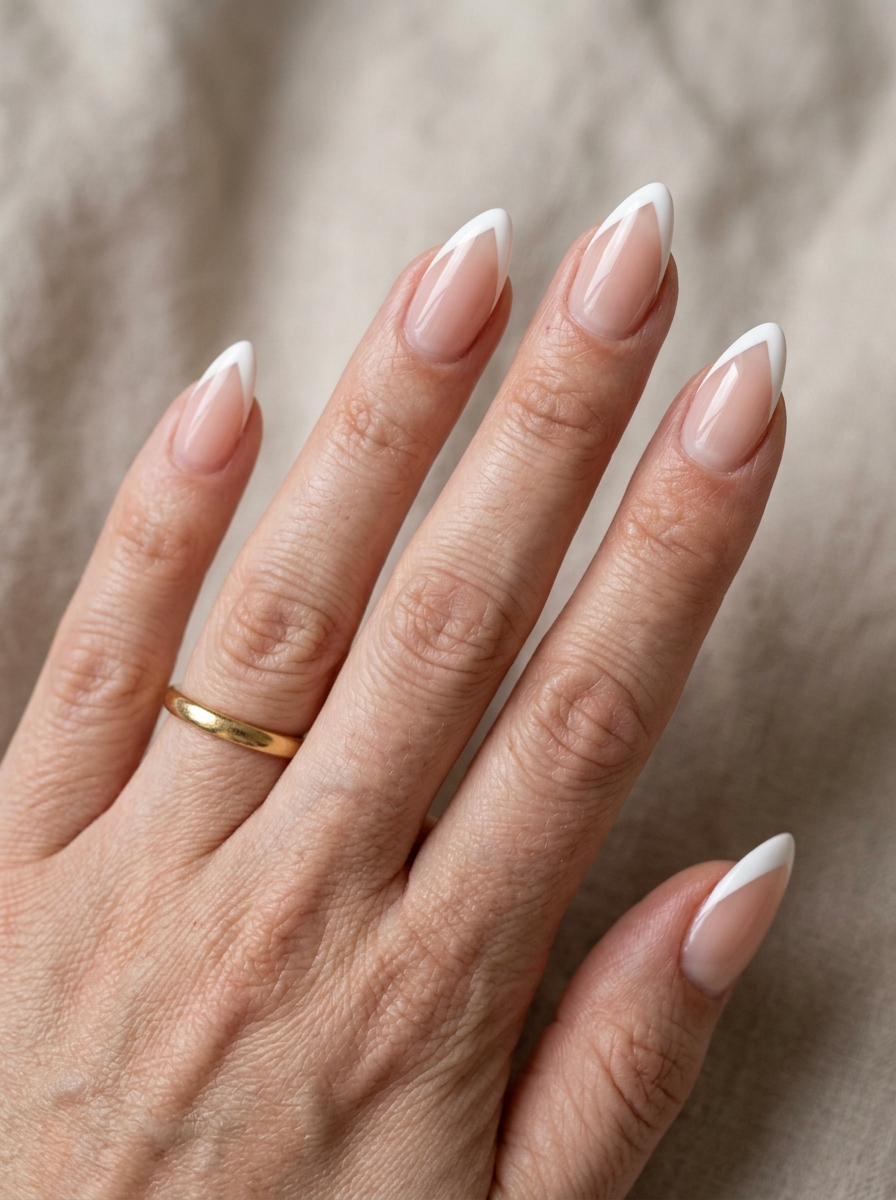
A french where the tip line is angular — a chevron, a diagonal, a zigzag. Bold and modern. DIY: yes, with tape
10. Double-Line French
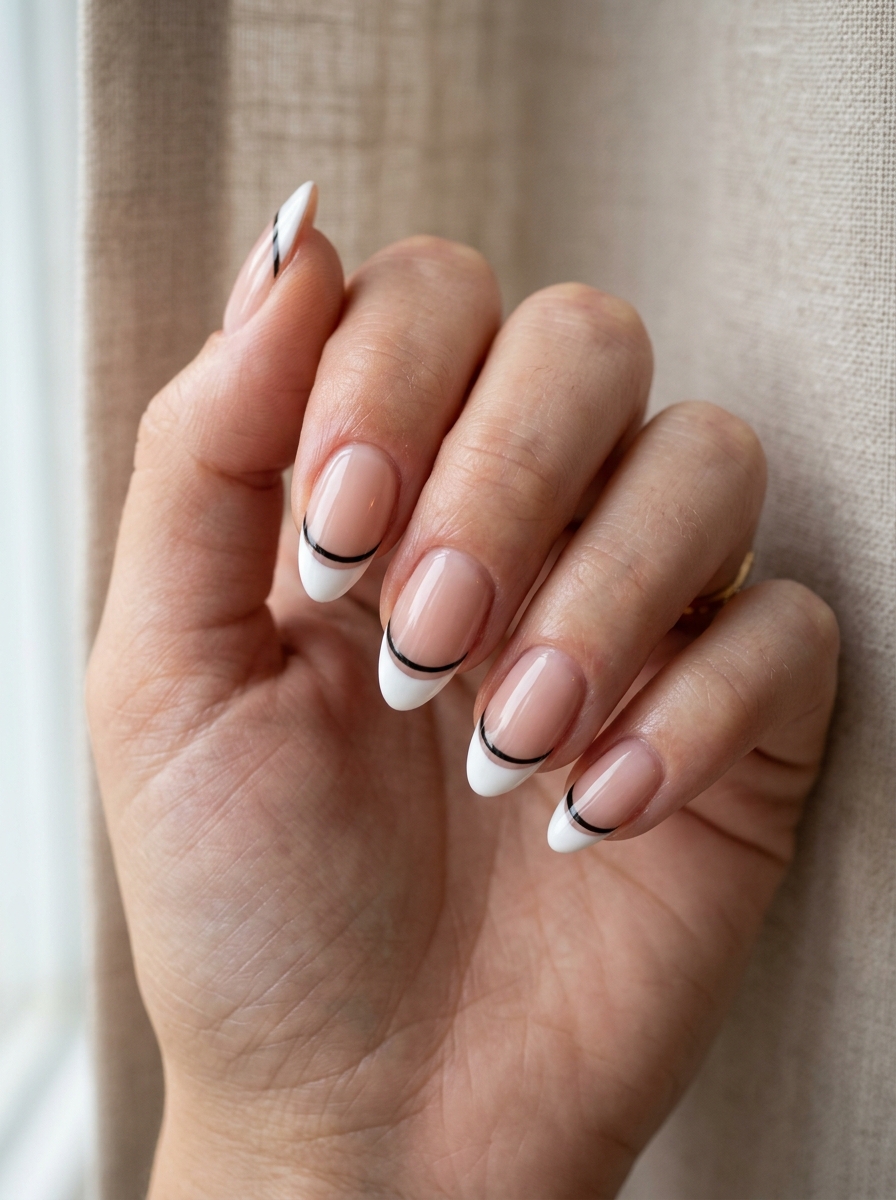
The tip color with a thin second line of contrast just below it. Subtle detail, big payoff. DIY: yes, striping tape
11. Reverse French
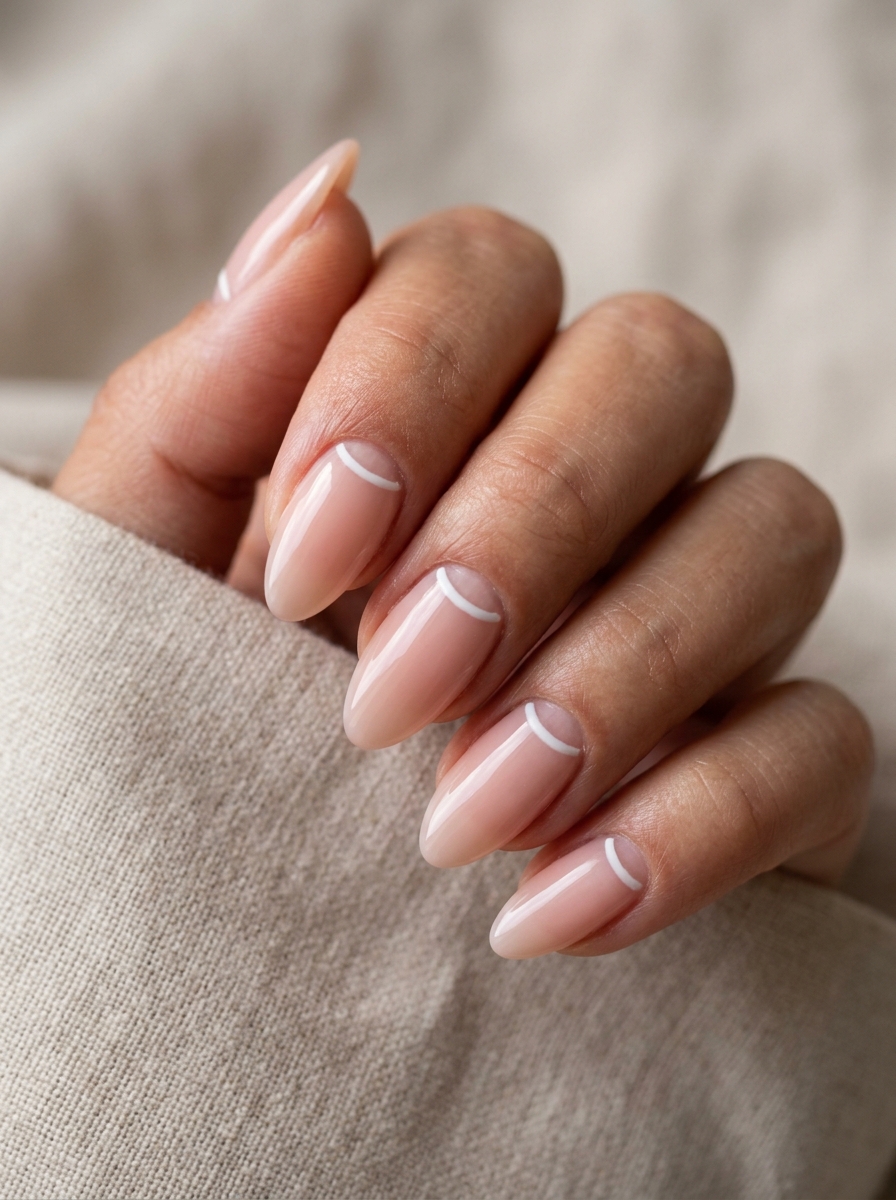
The design at the base of the nail (the cuticle) instead of the tip. Unexpected and chic. DIY: yes
Glitter & Chrome (5 Designs)
Where the finish carries the design.
12. Glitter Tip French
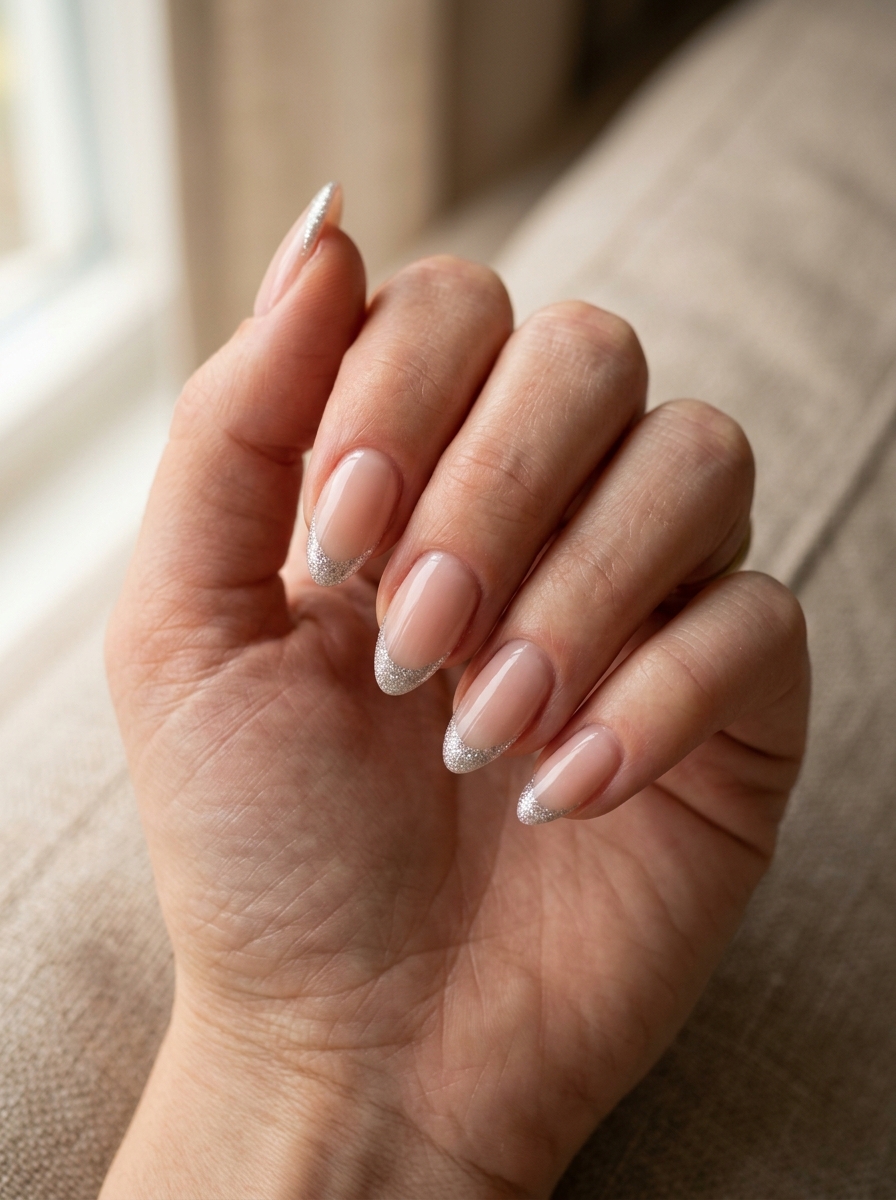
The tip in fine glitter instead of solid color. Subtle sparkle, very wearable. DIY: yes
13. Chrome French
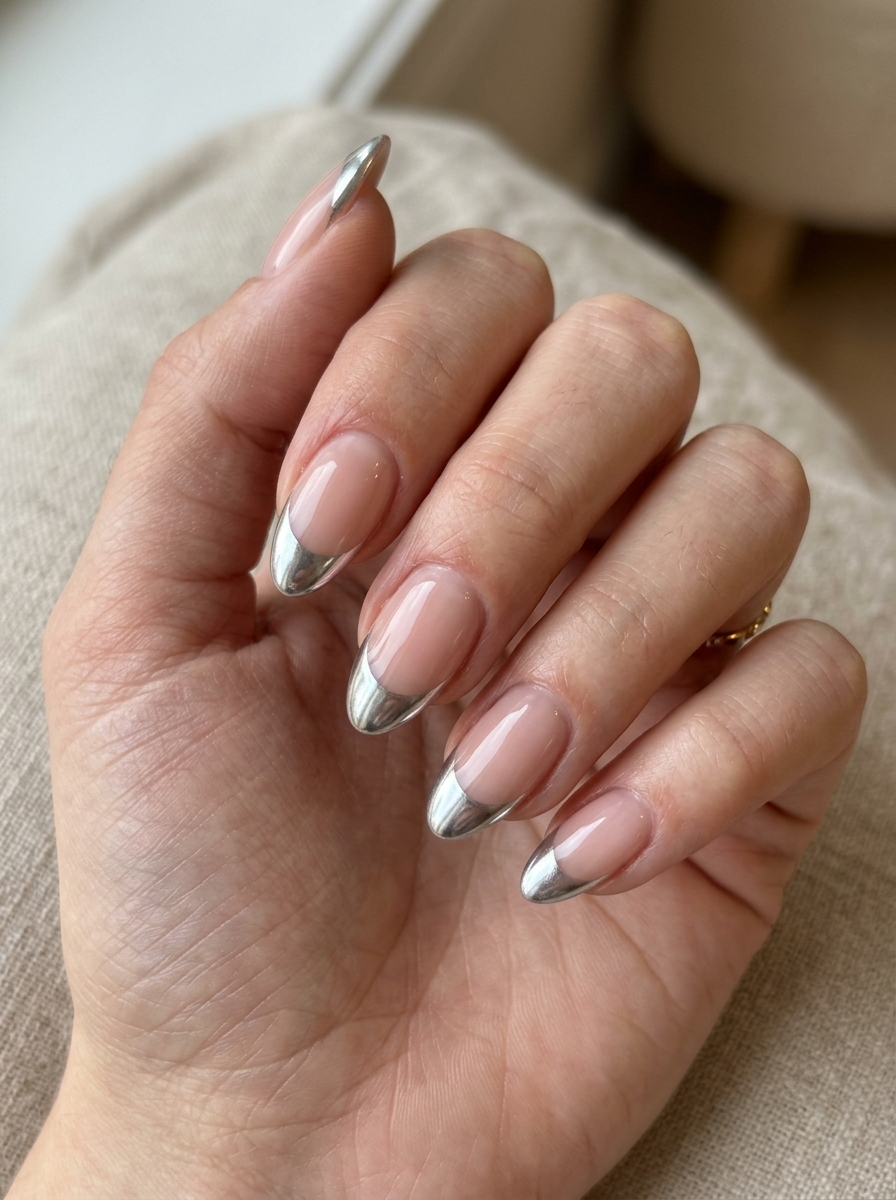
A mirror-chrome tip on a nude base. High-shine and modern. DIY: gel kit required
14. Gold Foil French
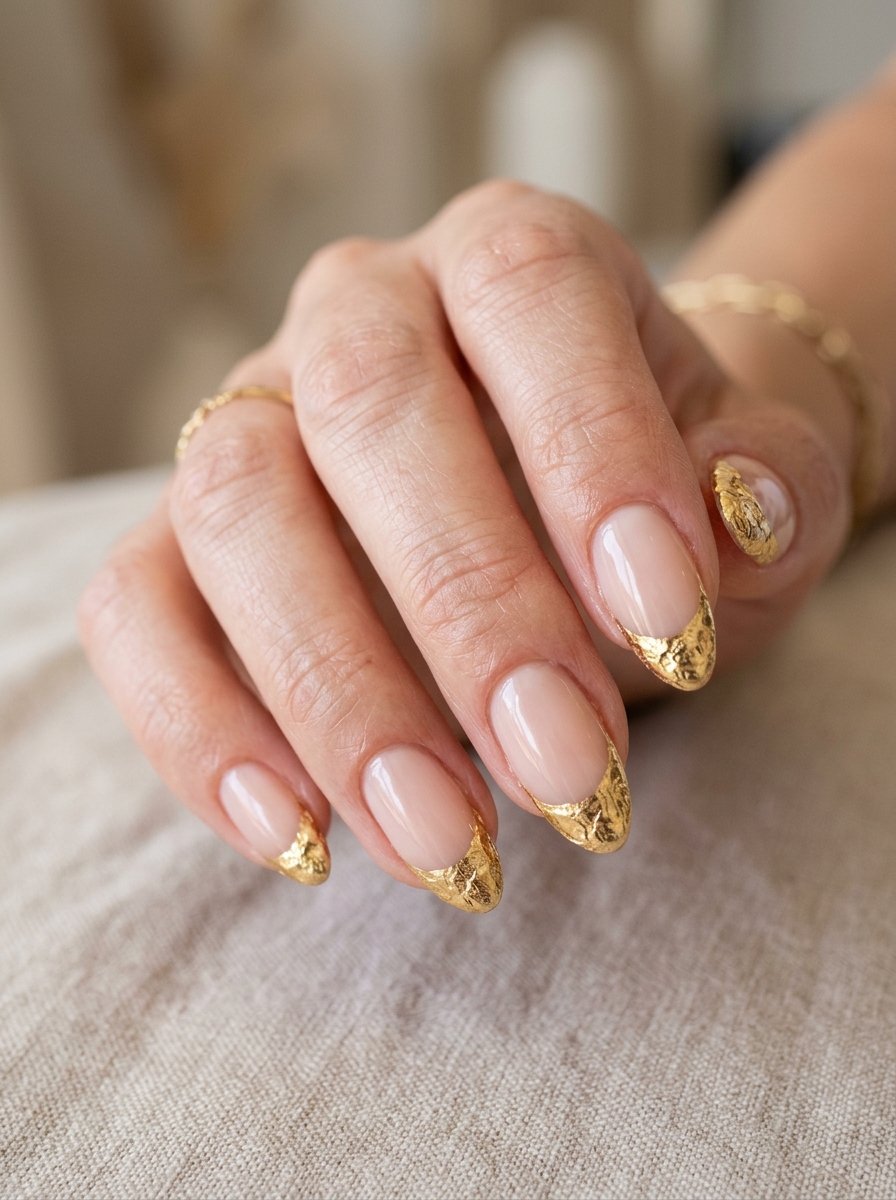
The tip in crinkled gold foil for texture. Luxe and eye-catching. DIY: yes, with foil
15. Rhinestone French
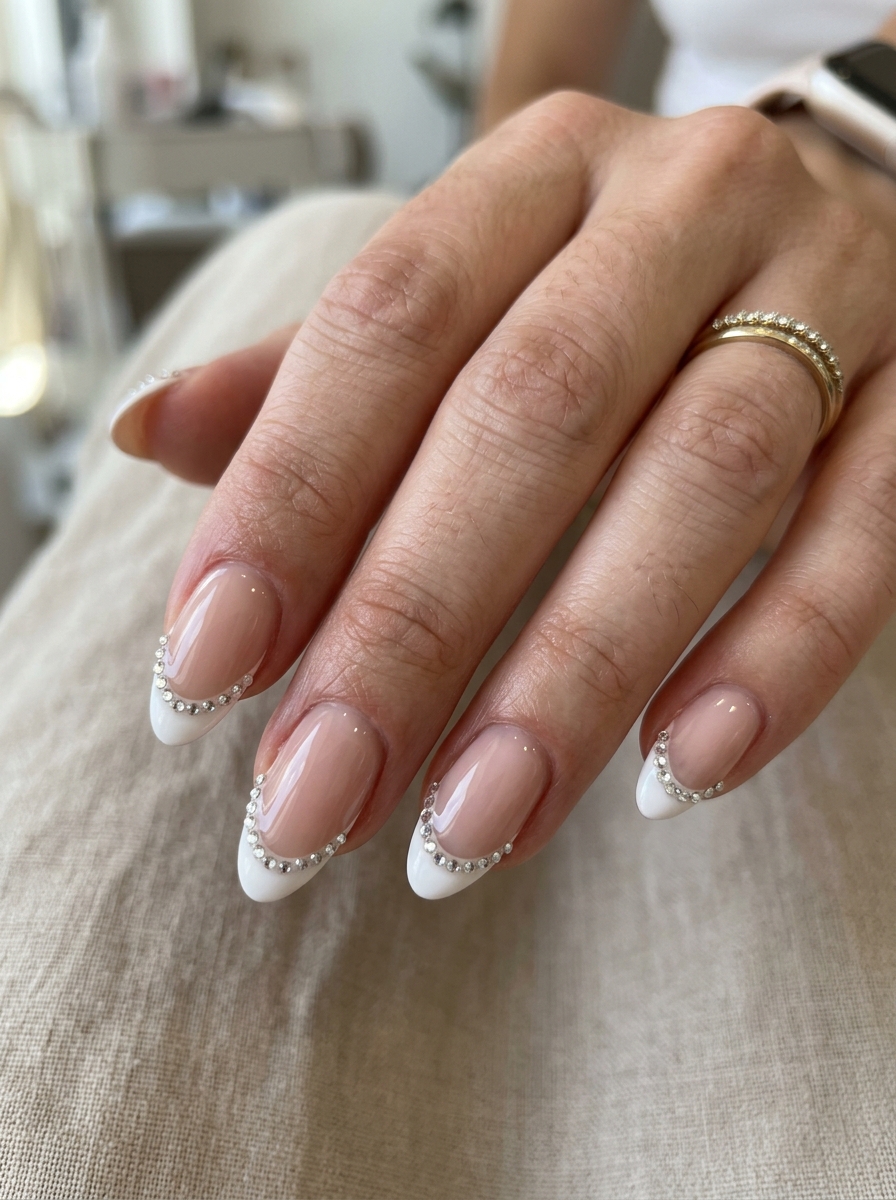
The smile line lined with tiny rhinestones. Full glam. DIY: yes, with flatback gems
16. Glazed French
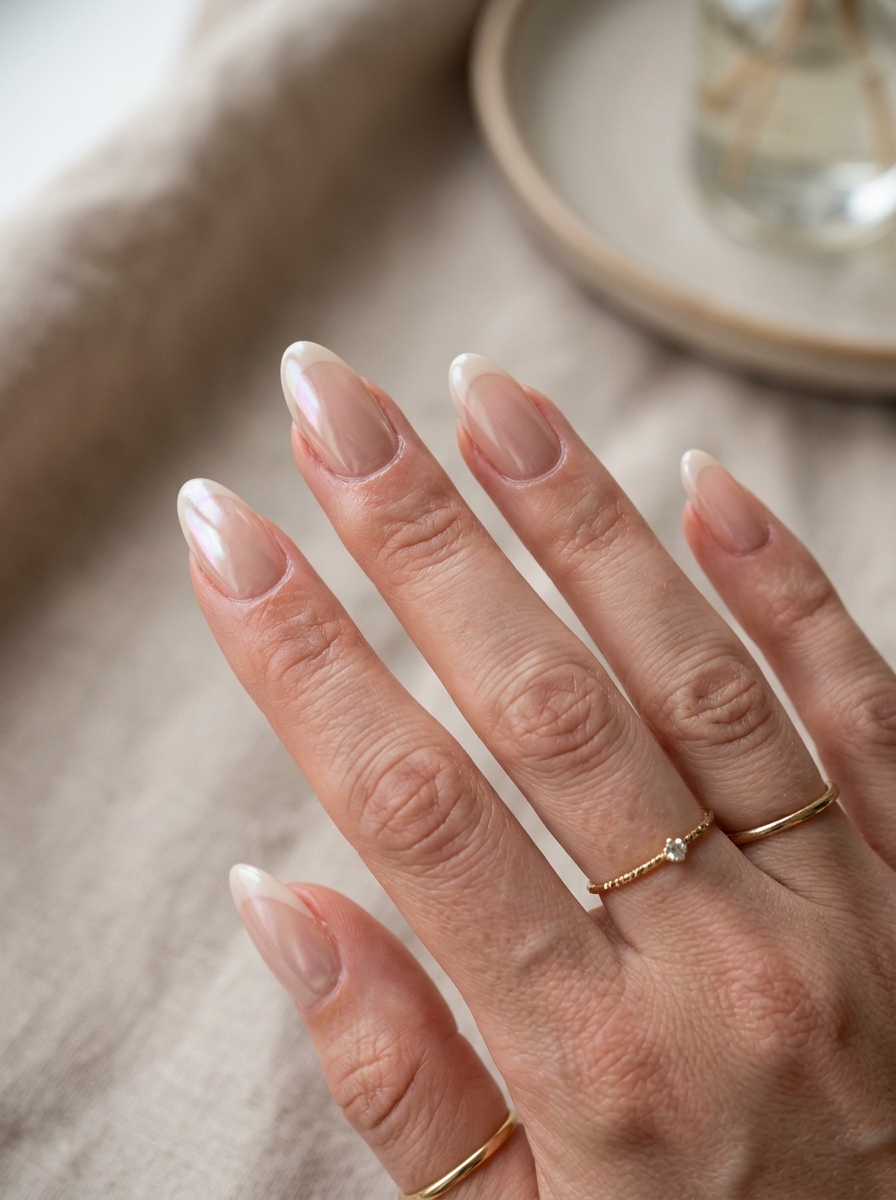
The pearl “glazed donut” finish with a subtle tip. Soft and expensive-looking. DIY: gel kit
Cute & Playful Accents (6 Designs)
Small motifs that add personality without taking over.
17. Micro Heart French
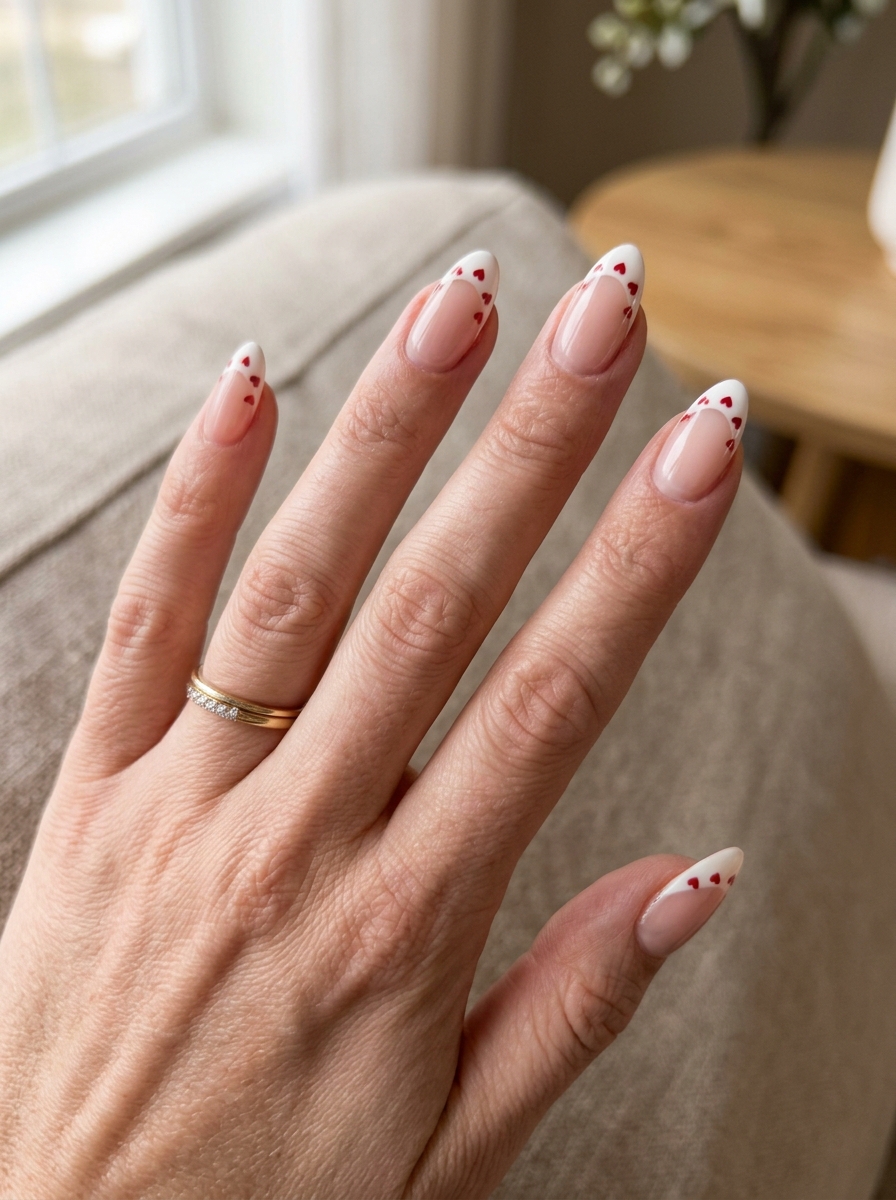
Tiny hearts scattered near the tips. Sweet without being childish. DIY: yes
18. Star Tip French
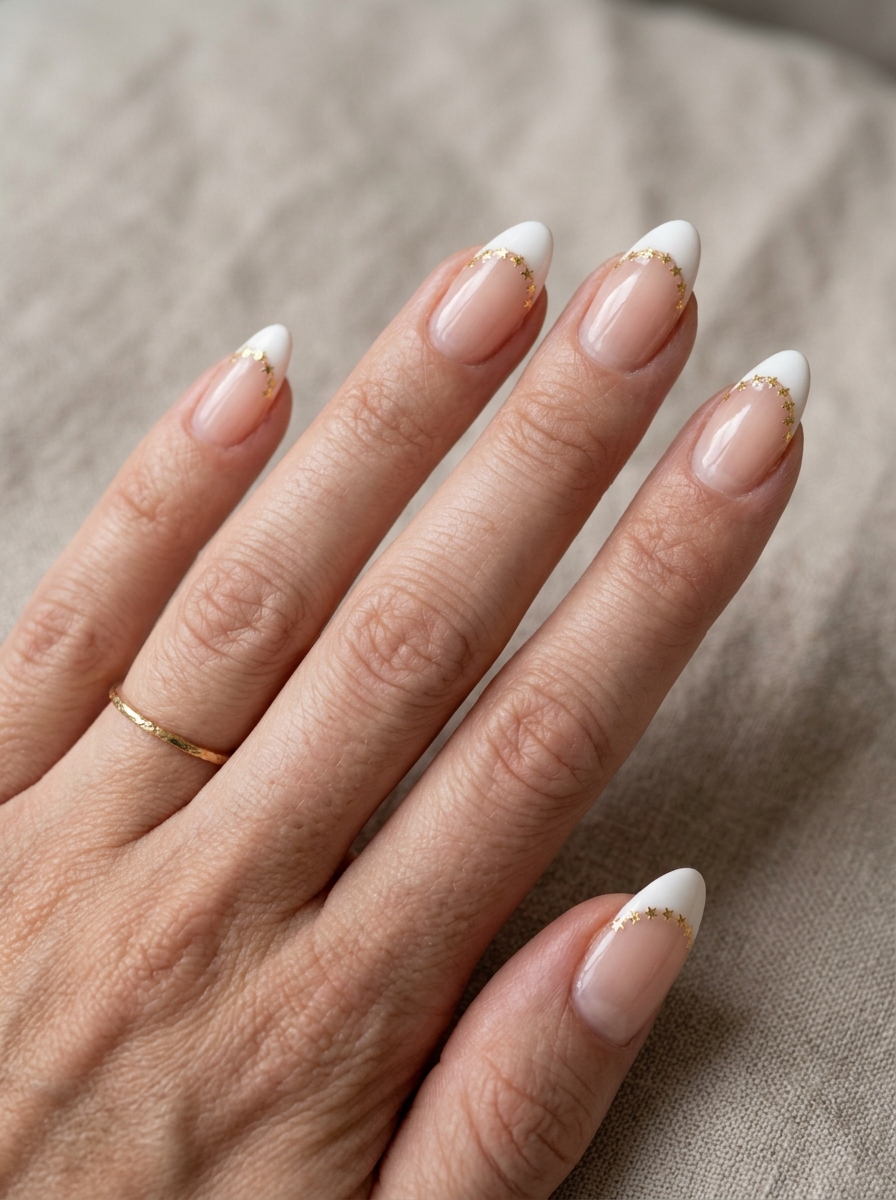
Tiny stars replacing or lining the tip. Celestial and delicate. DIY: yes
19. Bow French
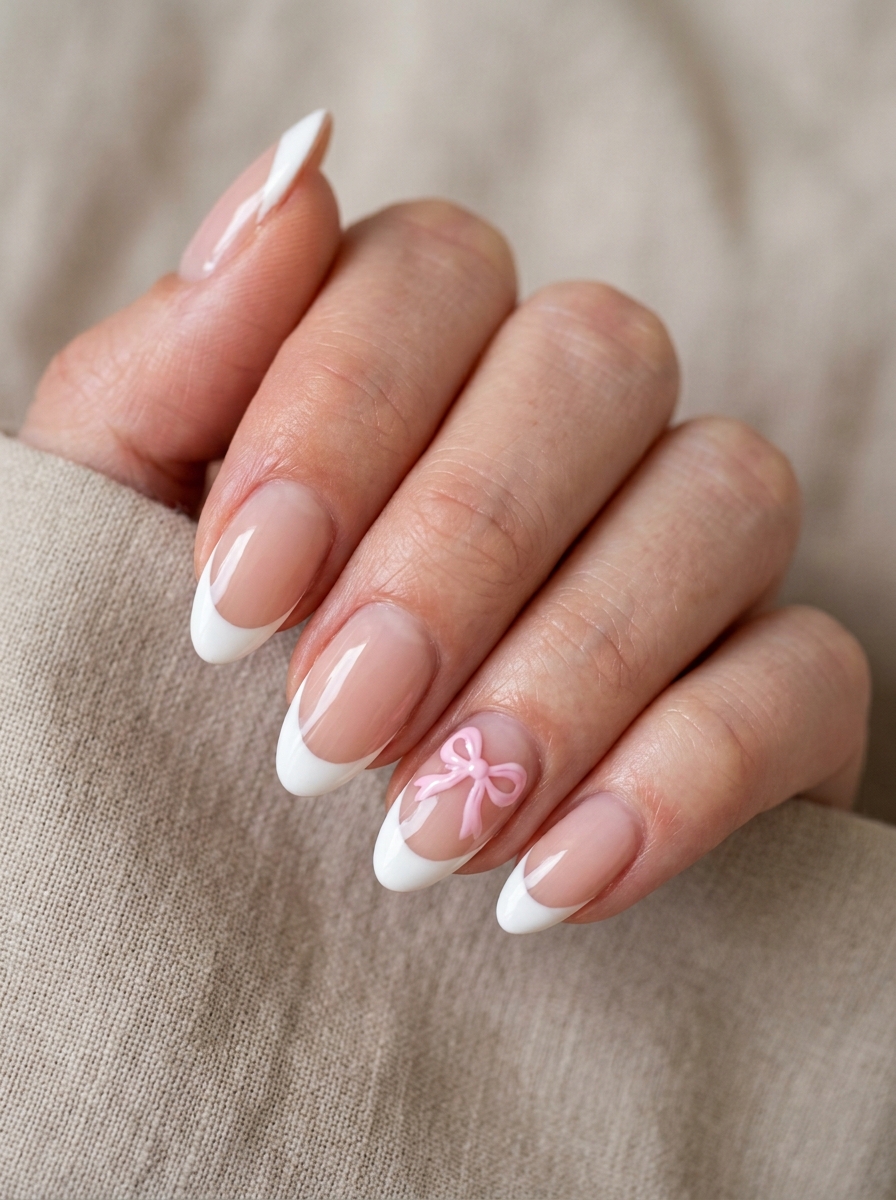
A small bow at the base of the accent nail. The coquette version, very on-trend. DIY: moderate
20. Polka Dot French
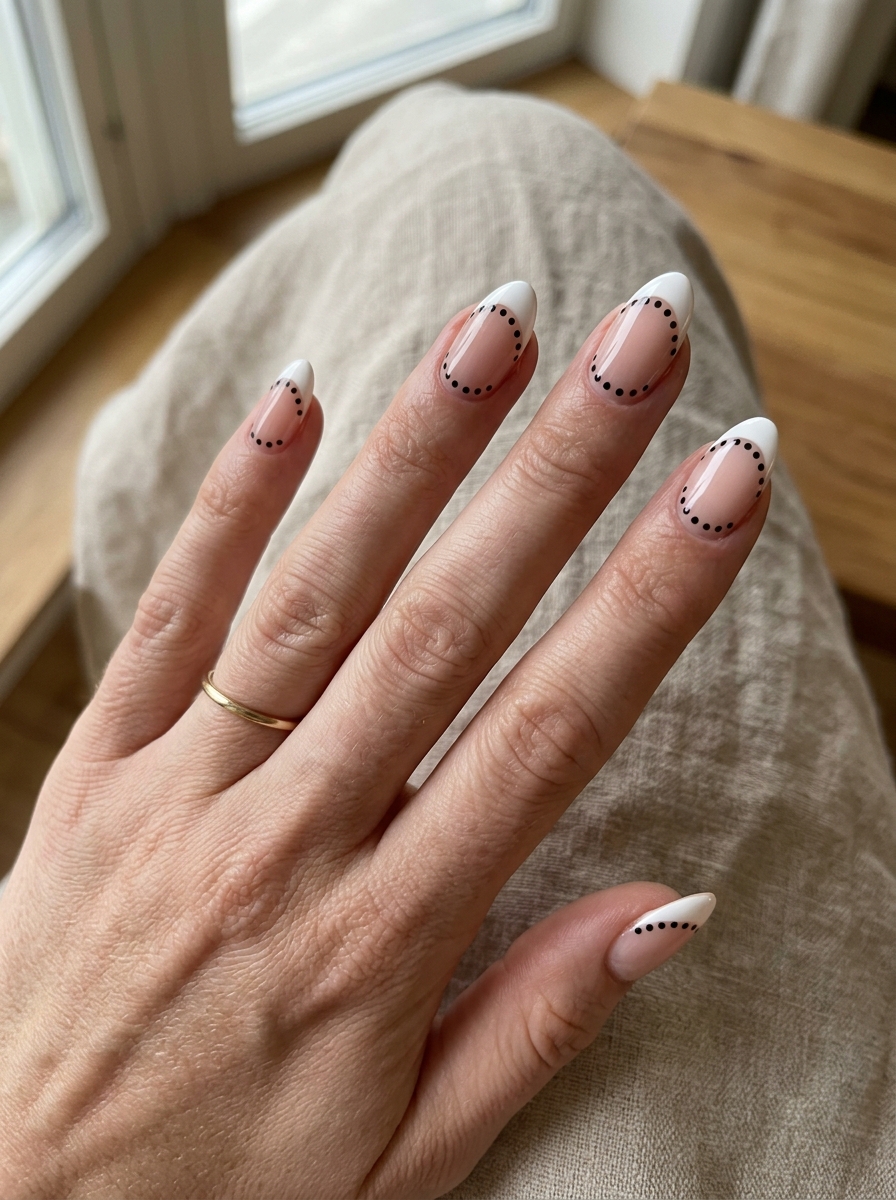
Tiny dots along the smile line in a contrast color. Retro and cheerful. DIY: yes, dotting tool
21. Butterfly Accent French
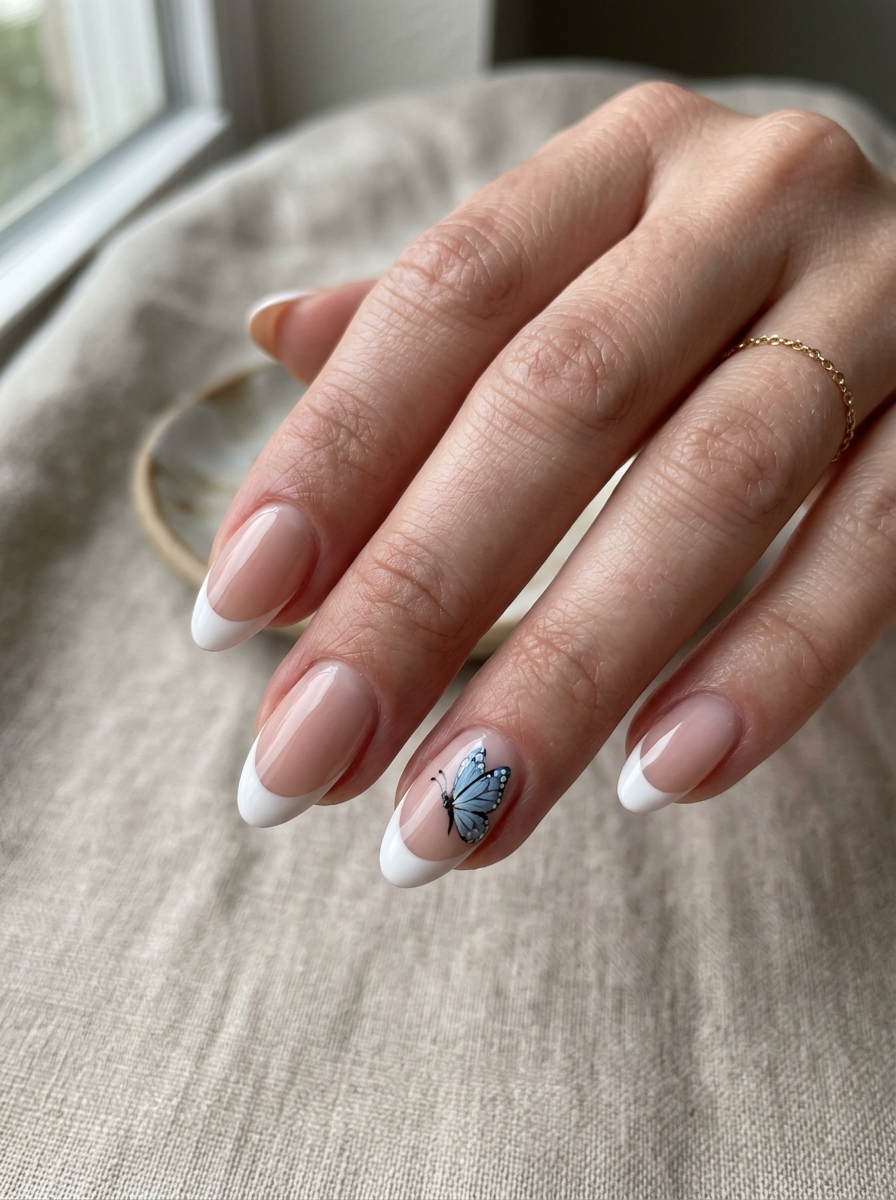
A small butterfly on one nail with a classic french on the rest. Whimsical. DIY: moderate
22. Fruit Accent French
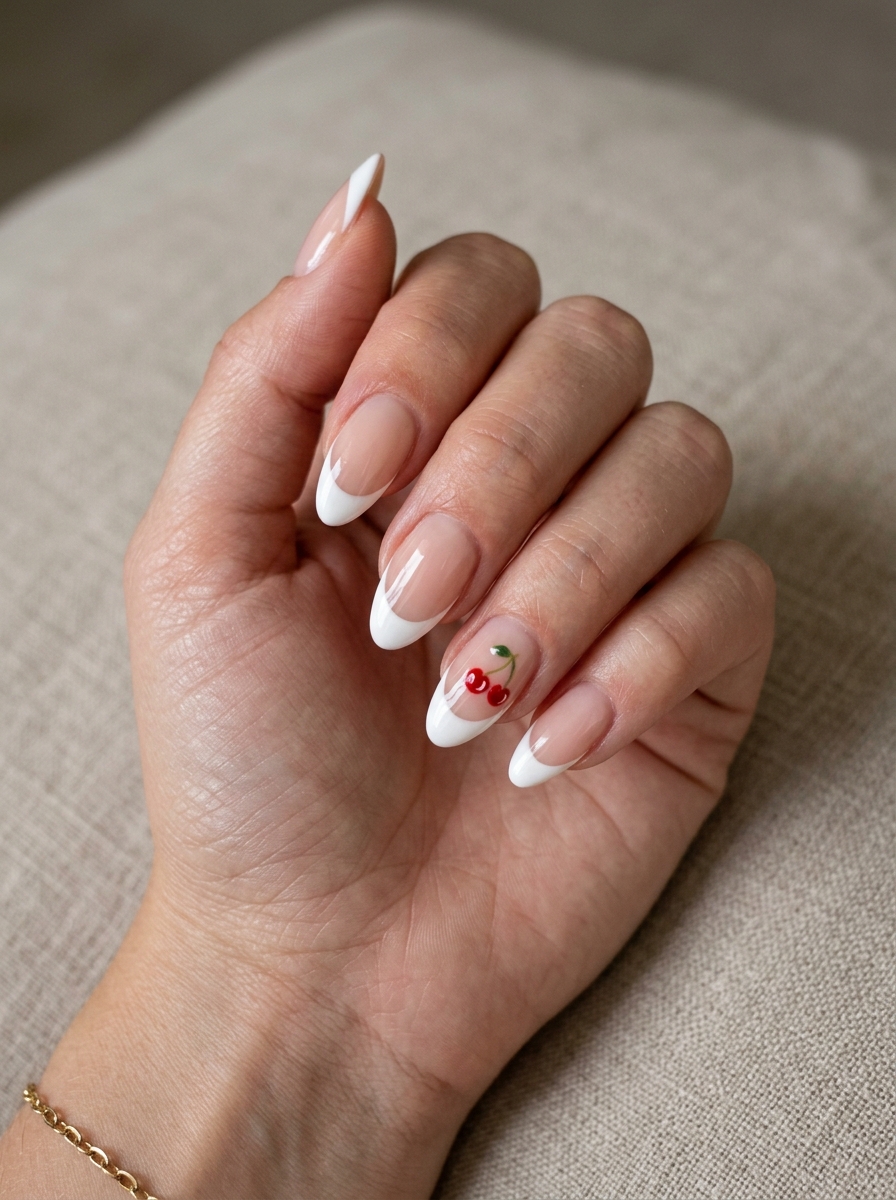
A tiny cherry, lemon, or strawberry on the accent nail. Summery and fun. DIY: yes
Elegant & Minimal (5 Designs)
Subtle upgrades for anyone who wants refined, not loud.
23. Gold Line French
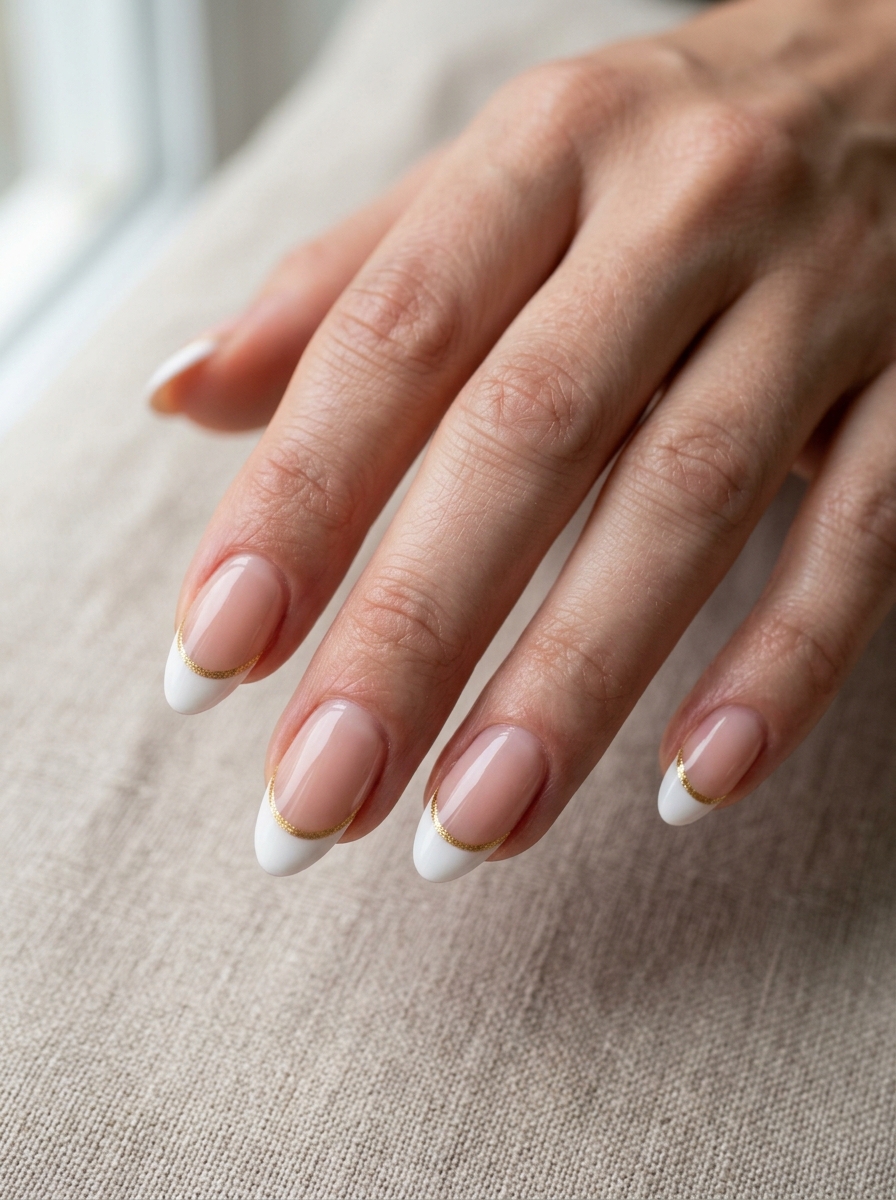
A classic white tip with a thin gold line where the tip meets the nail. The most elegant tiny upgrade. DIY: yes, striping tape
24. Micro Pearl French
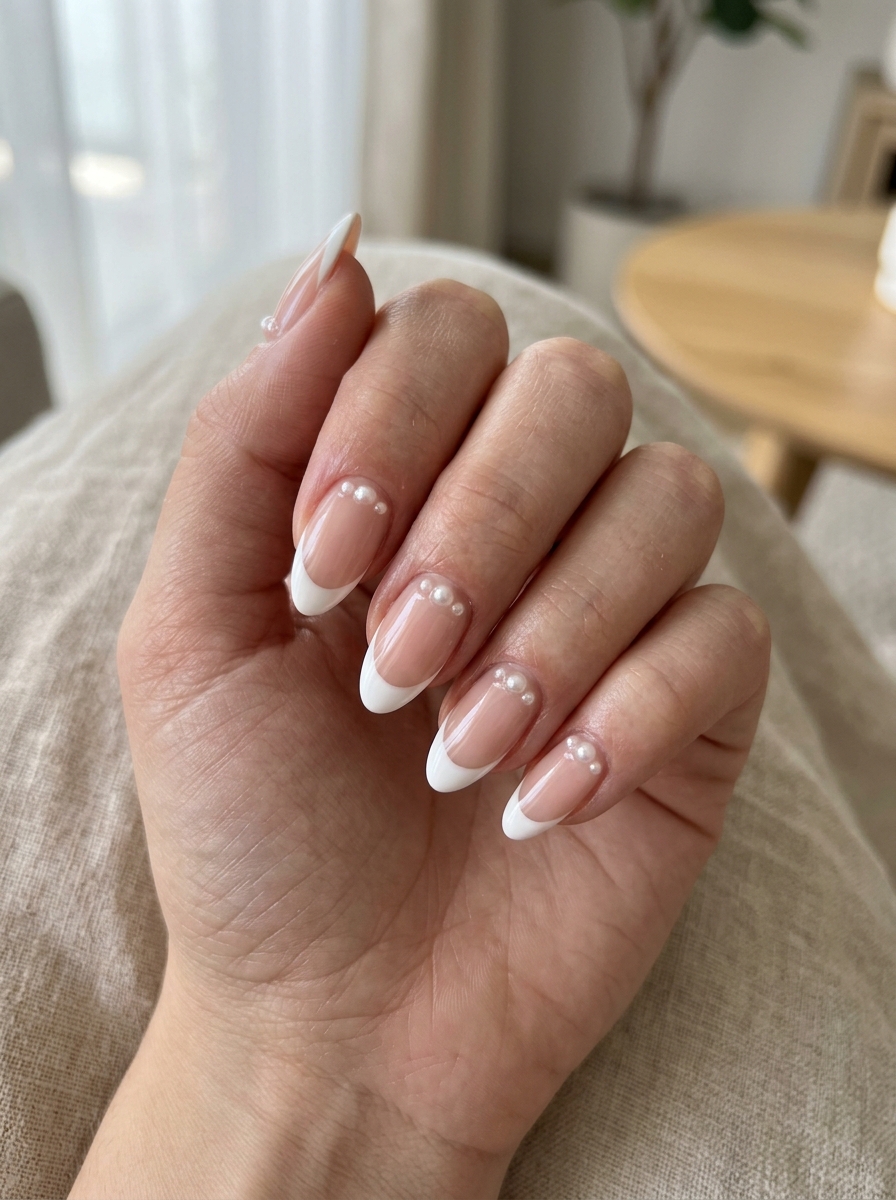
A classic french with two or three tiny pearls near the cuticle. Bridal and refined. DIY: yes
25. Negative Space French
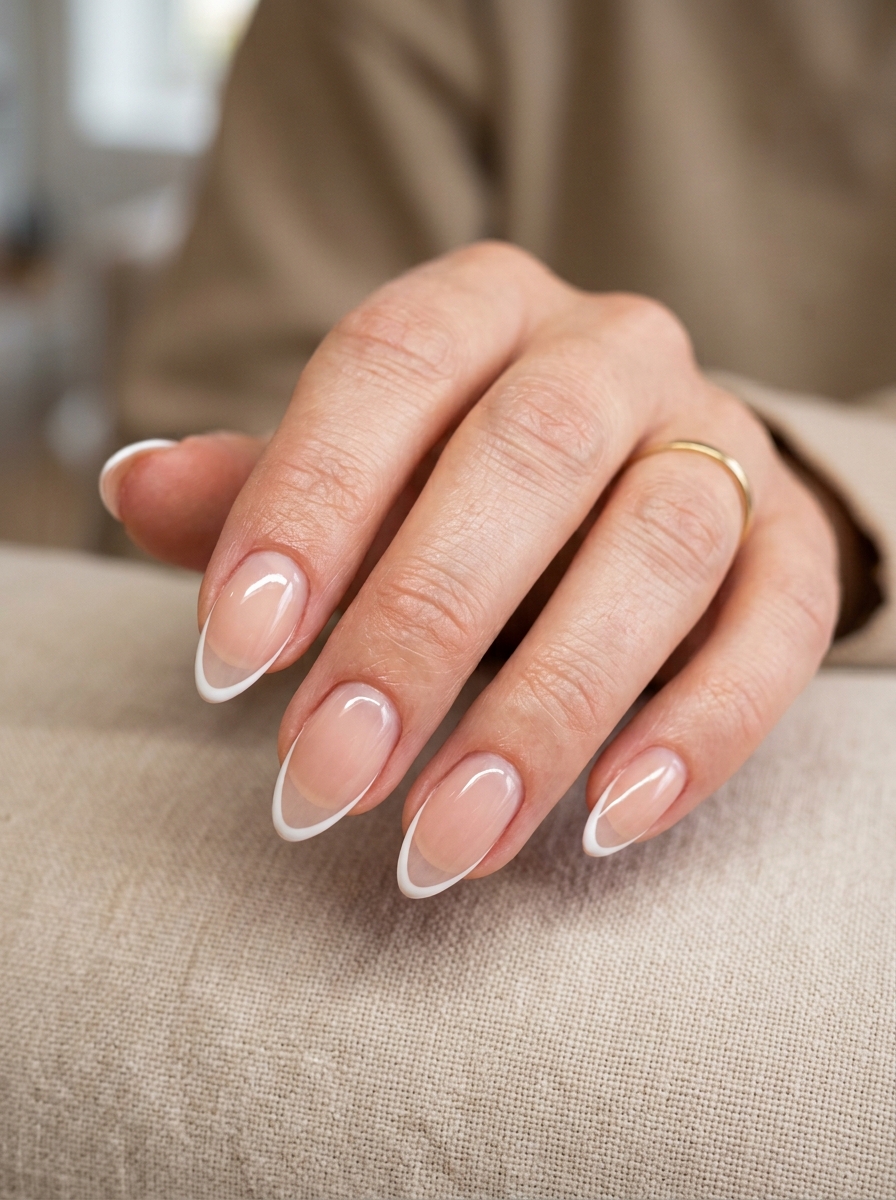
The tip outlined but left as bare nail inside. Modern and minimal. DIY: moderate
26. Thin Metallic French
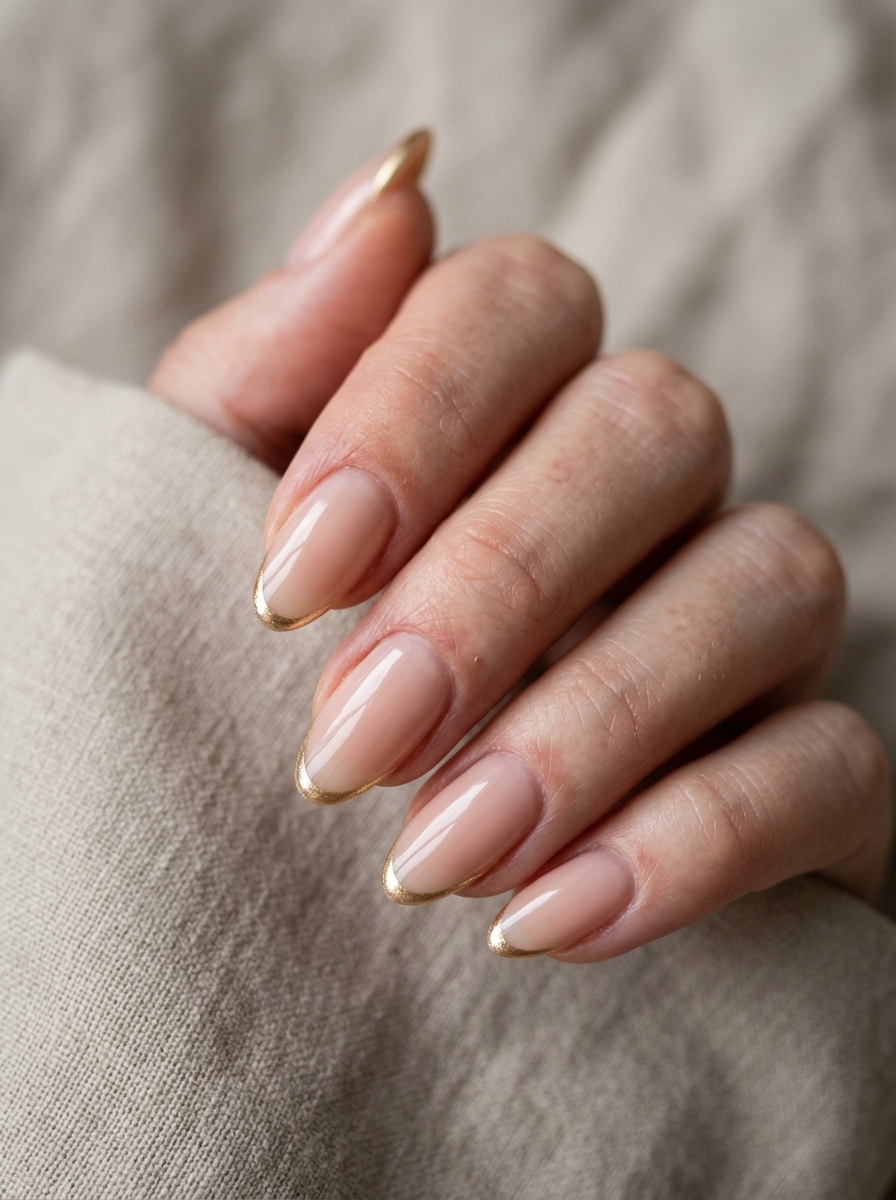
A hairline tip in silver or gold instead of white. Delicate and current. DIY: yes
27. Tonal French
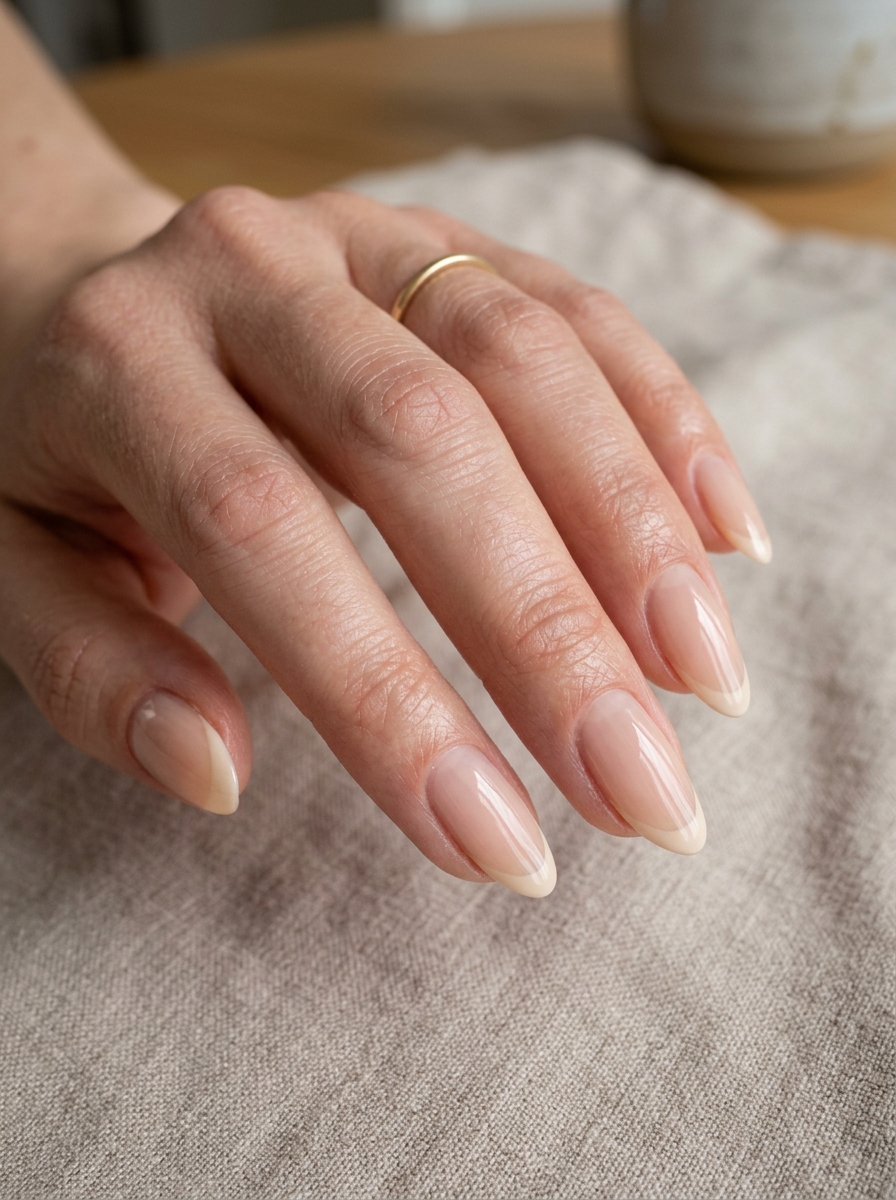
The tip a shade or two different from the base — nude on nude, cream on beige. Barely there, very chic. DIY: yes
Choosing the Right Nail Shape
The shape changes how a designed french reads.
Almond — the most flattering all-purpose shape, and the tapered point makes the smile line elegant. Works with every design here.
Coffin — the most surface area, best for detailed designs like florals and multiple accents.
Square and squoval — cleanest for geometric and graphic french designs. Straight edges suit angular tip lines.
Round — the most natural and practical, best for short nails and simple accents.
Oval — softer than almond, flattering, and good for floral and delicate designs.
If you’re unsure, almond suits the widest range of these designs.
How to DIY a Designed French Tip
Start with a clean french base. Use french tip guides or a small angled brush for the smile line. Thin coats and a steady hand beat one thick pass.
Add the design after the base dries. Whether it’s a flower, a heart, or glitter, let the french fully dry first so you don’t smudge it.
Tools that help:
- A dotting tool for hearts, dots, and flower centers
- A fine detail brush for florals and linework
- Striping tape for lines and geometric edges
- French tip guides for the base
- Flatback gems and foil for the glam versions
- A good top coat to seal everything
Clean up as you go with a small brush dipped in remover — tidy edges are what separate a good designed french from a messy one.
For the chrome, glazed, and detailed floral versions, press-ons or a salon will get a cleaner result than freehand if you’re not confident.
FAQ
What is a french tip with a design?
A french manicure — the classic pale base with a colored tip — with an added element like a flower, glitter, a heart, chrome, or a reinvented tip shape. It keeps the recognizable french structure while adding personality.
Are designed french tips hard to do?
Most aren’t. If you can do a basic french, you can do most of these, since they’re small additions on top of a technique you already know. Florals and detailed linework are the harder end; hearts, dots, glitter, and gold lines are beginner-friendly.
What’s the most popular french tip design?
A single floral accent on the ring finger with a classic french on the rest is the most requested. Swirl tips, gold-line french, and chrome tips are also extremely popular right now.
What nail shape is best for a designed french tip?
Almond is the most flattering and versatile. Coffin gives the most room for detailed designs, and square or squoval suits geometric tip shapes best.
Can you do a designed french on short nails?
Yes. Keep the design small — a single accent, a thin line, or subtle glitter — and it looks clean and intentional at short length.
How do I keep the french line neat?
Use french tip guide stickers or a small angled brush, apply thin coats, and clean up any mistakes with a small brush dipped in remover before it dries. Neat edges are the whole difference.
![7 Best Liquid Latex for Nails [2026 Review]](https://magicalassam.com/review/wp-content/uploads/2022/05/Best-Liquid-Latex-for-Nails.jpg)