The Spring 2026 runways made one thing clear about hair this year: the accessory IS the look. From sparkling headbands at Simone Rocha to scarf-tied ponies at Toteme, designers signaled that the simplest hair upgrade now starts at the crown. Headbands specifically have moved past “bad hair day cover-up” into intentional styling territory. They’re being worn the way you’d wear earrings — not to hide hair, but to elevate it.
The 2026 versions are different from 2023’s stiff, plastic-shaped padded bands that pushed hair back too sharply. Today’s headbands rest naturally, almost blending into the hair instead of sitting on top of it. The fabric allows a slight softness around the hairline, which keeps everything from looking too structured. It feels like part of your hairstyle rather than an added piece, and that’s what makes it look effortless instead of styled.
The 23 looks below are sorted by headband type — padded styles for polish, silk scarves for relaxed elegance, crochet for handmade texture, embellished for evening events, and bandana-style for casual cool girl energy. Save the ones you love.
The “how to keep a headband from sliding” section near the end is what most headband guides skip — and what actually determines whether you wear yours once or every day.
The 5 rules for headband styling that actually works
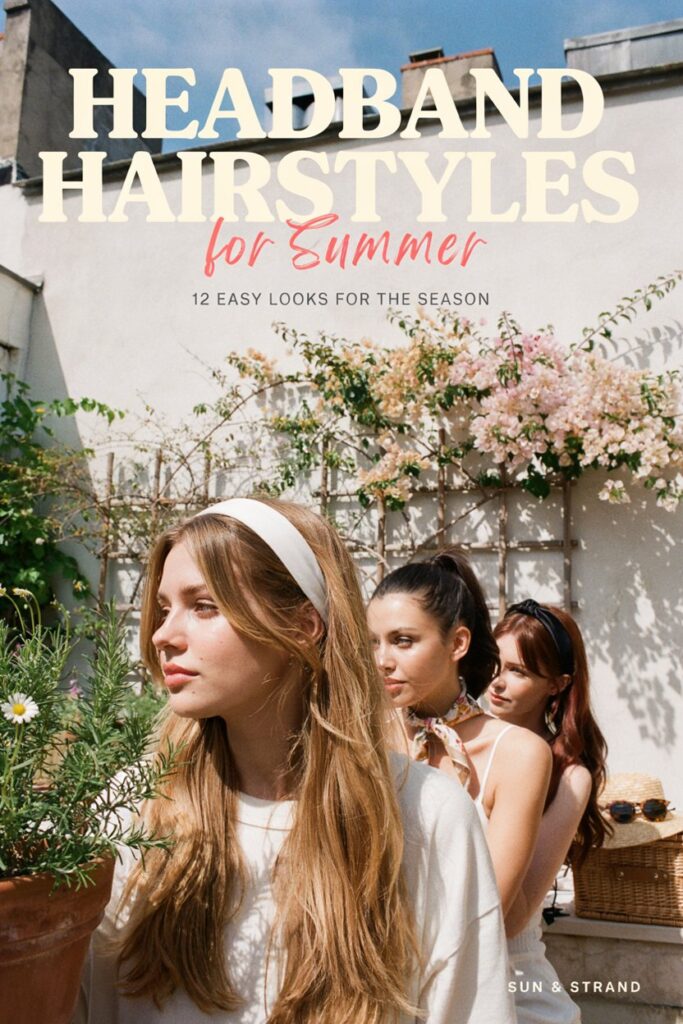
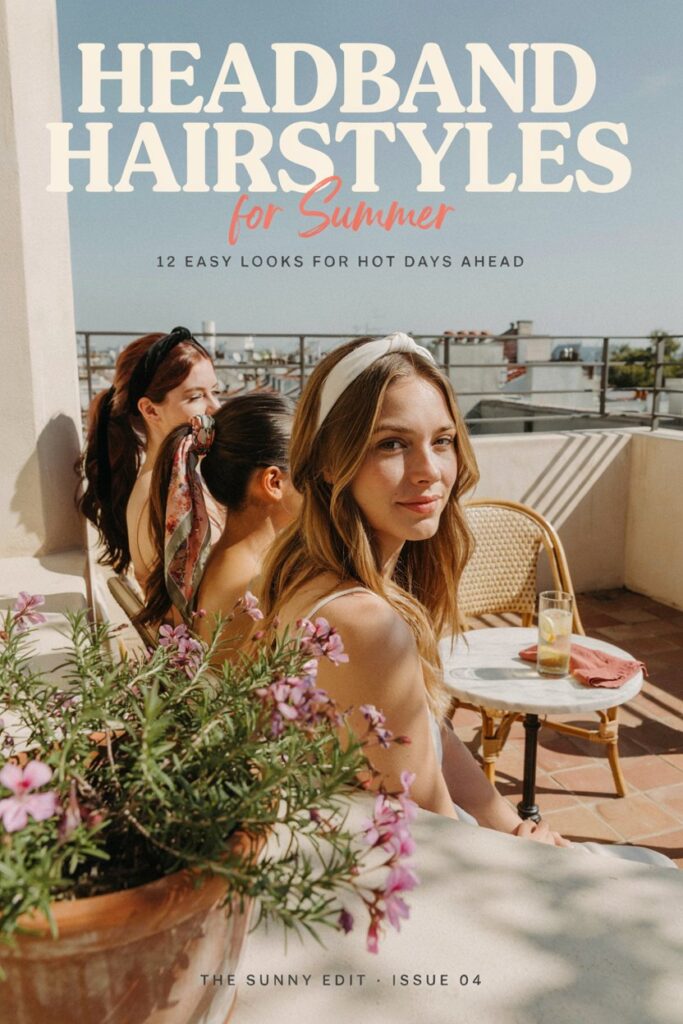
Before the looks, five rules that separate intentional headband styling from “wearing a headband”:
Rule 1: The headband should match your outfit’s energy. A satin headband with a t-shirt and jeans reads as overdressed. A bandana with a structured blazer reads as costume-y. Match formality: casual outfit = soft fabric or crochet headband; polished outfit = padded or embellished; evening = sparkle or velvet.
Rule 2: Don’t fight your natural hairline. Position the headband 1-2 inches behind your hairline (not crammed against it). Pulling the headband too far forward creates that “trying too hard” tension at the temples. Sitting it slightly back creates the “casually thrown on” effect.
Rule 3: Pull pieces forward intentionally. A perfectly slicked-back headband look is dated. The 2026 version has 2-4 wispy pieces pulled out near the temples or sideburns. This breaks the harsh line and reads as effortless rather than try-hard.
Rule 4: Match metal tones to your jewelry. If your headband has any hardware (gold buckle, silver detail, pearl embellishment), match it to your earrings, necklace, and other jewelry. Mixed metals on headbands specifically read as accidental rather than intentional.
Rule 5: Avoid the “I just bought this” look. Brand-new stiff headbands read as obvious accessories. Wear your headband 2-3 times before any important event so it softens slightly to the shape of your head. The break-in matters.
Now the looks.
Padded headband styles
The polished, structured category. Padded headbands sit cleanly on the head and read as intentional accessory rather than functional hair tool.
1. Wide black padded headband with loose waves
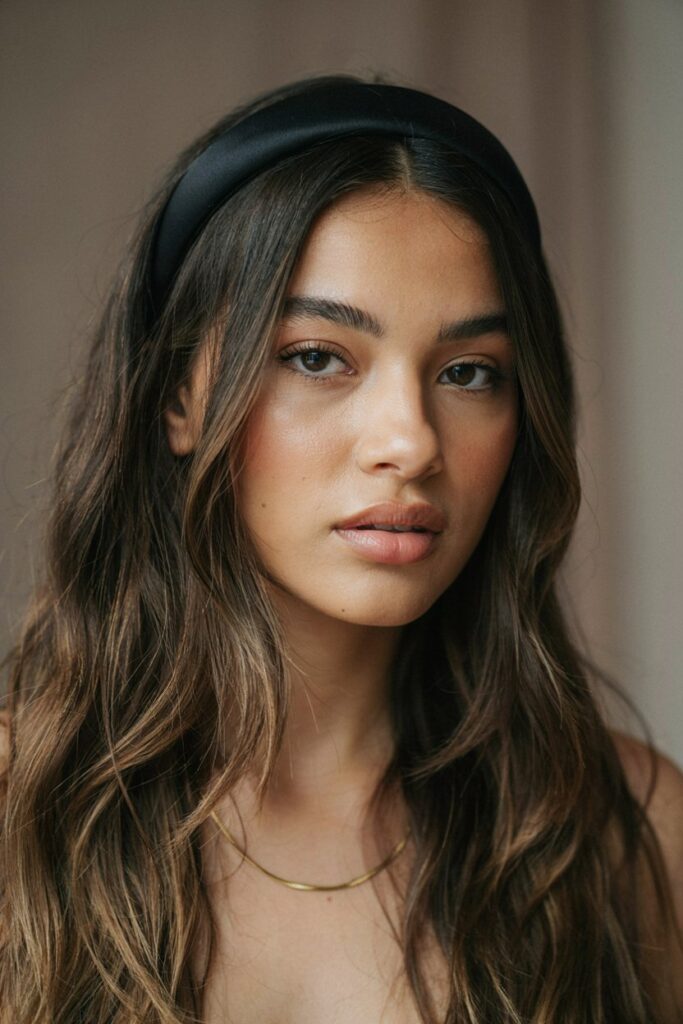
The 2026 reference look. A 1.5-2 inch wide black satin or velvet padded headband worn with loose, beachy waves. The sleek band frames the face while the long lengths stay soft and touchable. Universally flattering across every face shape and skin tone.
2. Cream or ivory padded headband
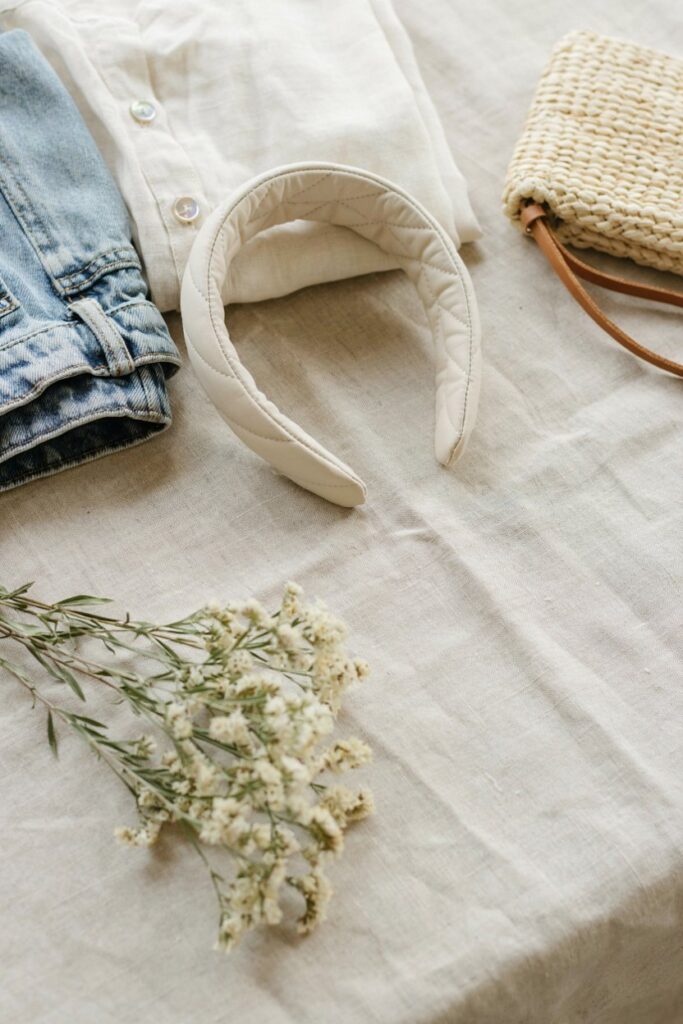
The neutral version of #1. Particularly stunning for spring and summer outfits. Pairs beautifully with linen, denim, and floaty summer dresses. Reads as quietly luxurious — the “I shop at upscale boutiques” energy.
3. Tortoiseshell padded headband
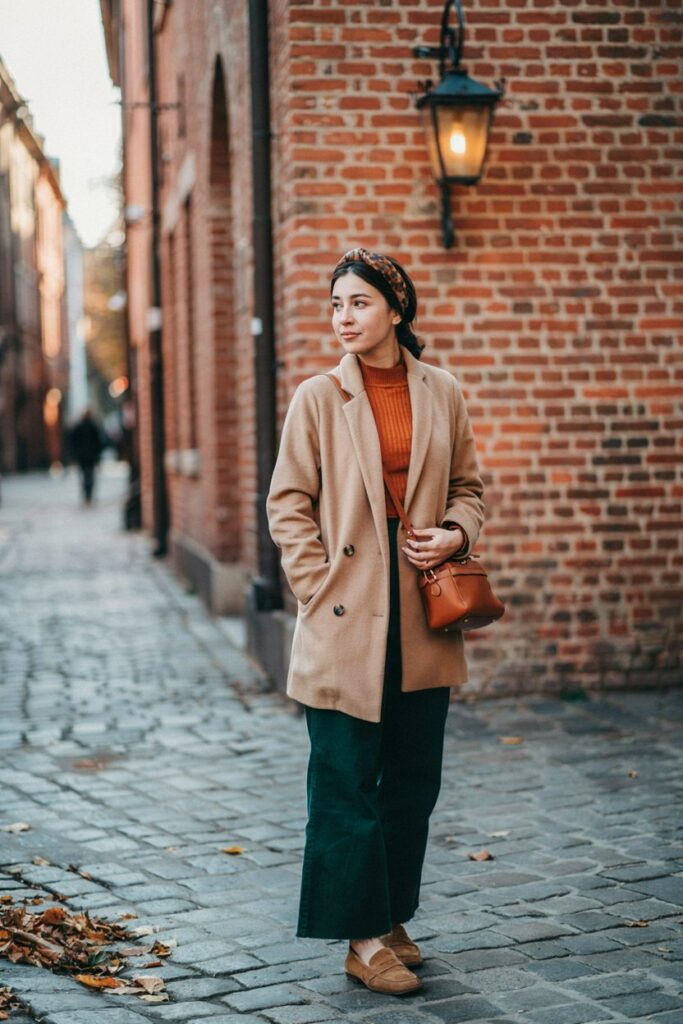
A medium-width headband in tortoiseshell pattern (brown, amber, and black). Adds visual interest without competing with the outfit. Particularly current for fall transitions and outfits with warm tones (burnt orange, mustard, deep green).
4. Velvet padded headband for evening
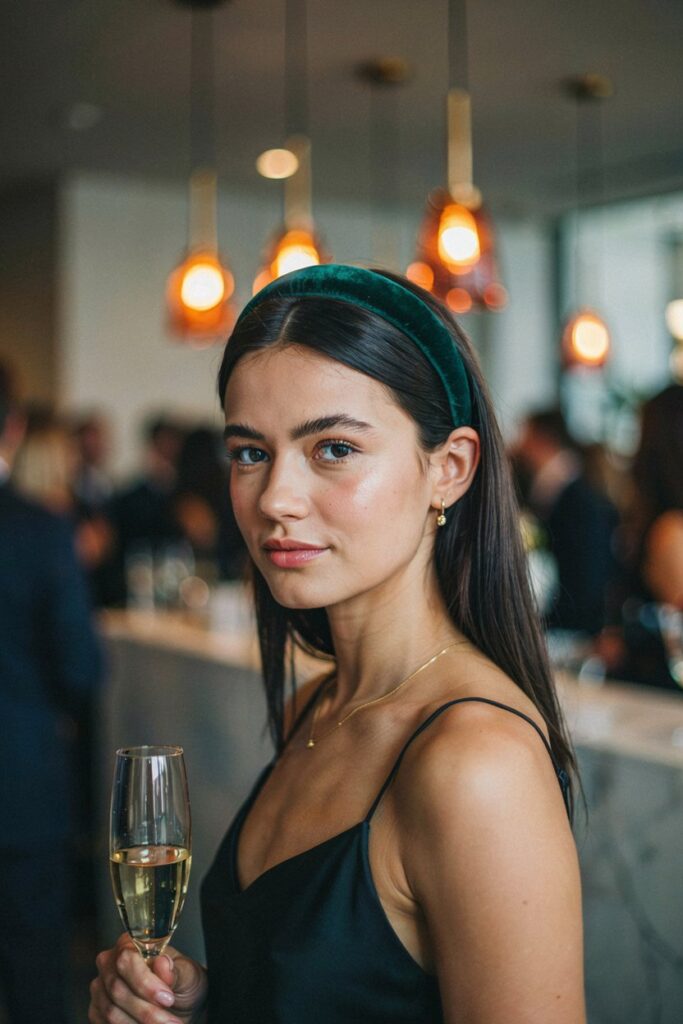
A jewel-tone velvet headband (deep emerald, sapphire blue, burgundy) worn with sleek straight hair or a low bun for evening events. The velvet texture catches reception lighting beautifully. Particularly stunning for cocktail attire and date nights.
5. Padded headband with low ponytail
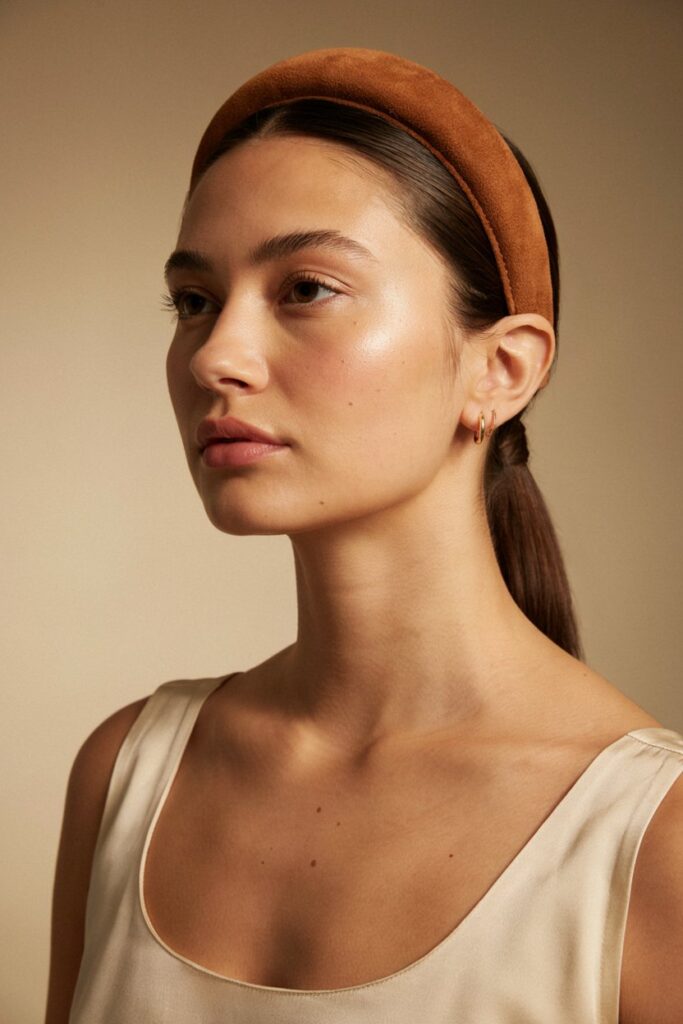
A wide padded headband paired with a sleek low ponytail at the nape of the neck. The combination is editorial and polished — equally appropriate for the office, dinner dates, and dressy events. The headband fills the visual space that hair-up styles often leave bare.
Silk scarf headband styles
The relaxed elegance category. Silk scarves tied as headbands have become 2026’s secret weapon — relaxed but elevated, with infinite variation through tying techniques.
6. Silk scarf tied at the crown
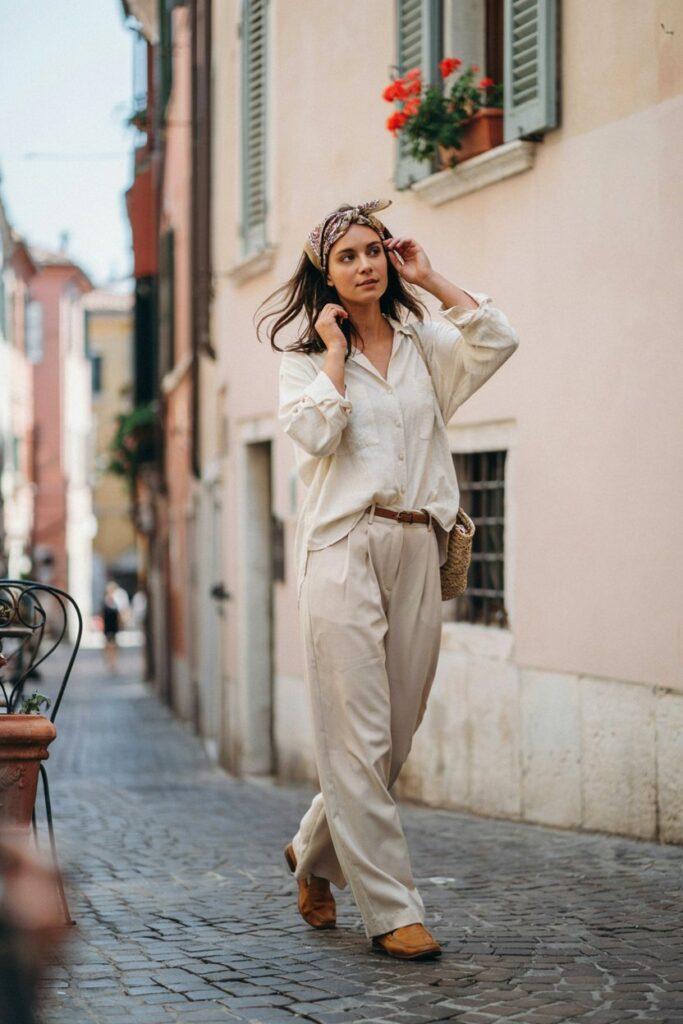
A square silk scarf folded into a thin band and tied at the top of the head with the ends visible. Reads as effortless and slightly bohemian. Best in floral or paisley prints for daytime; solid colors for evening.
7. Silk scarf wrapped around a low bun
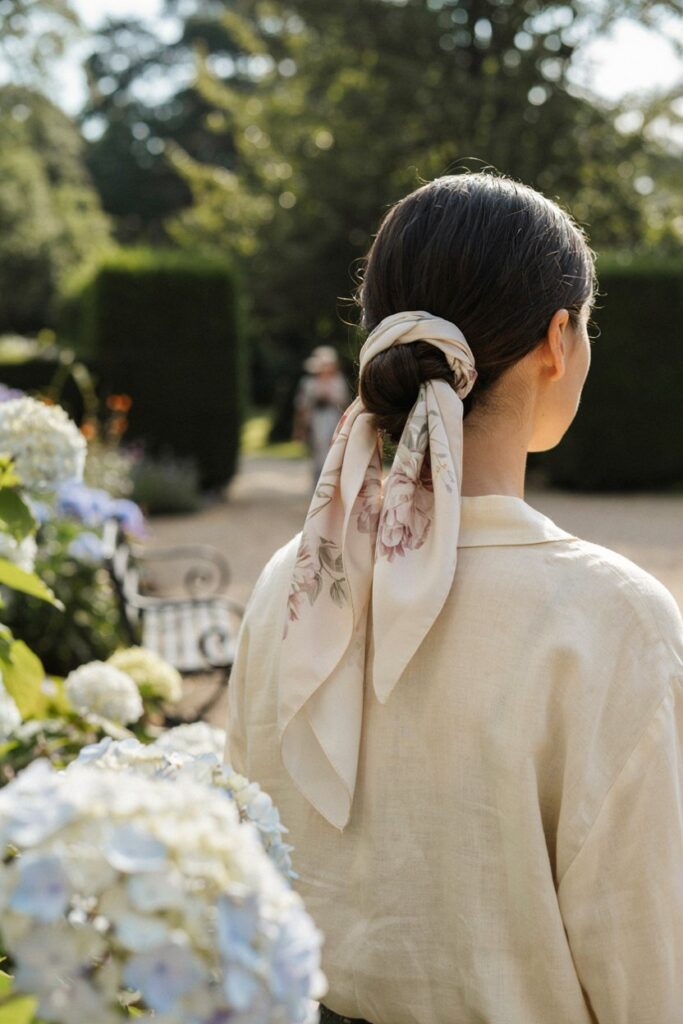
A silk scarf wrapped around the base of a low bun, with the ends either tied or trailing free. Particularly stunning for garden events, weddings as a guest, and brunch outfits. The scarf can match or contrast with the outfit.
8. Silk scarf as a thin headband (relaxed)
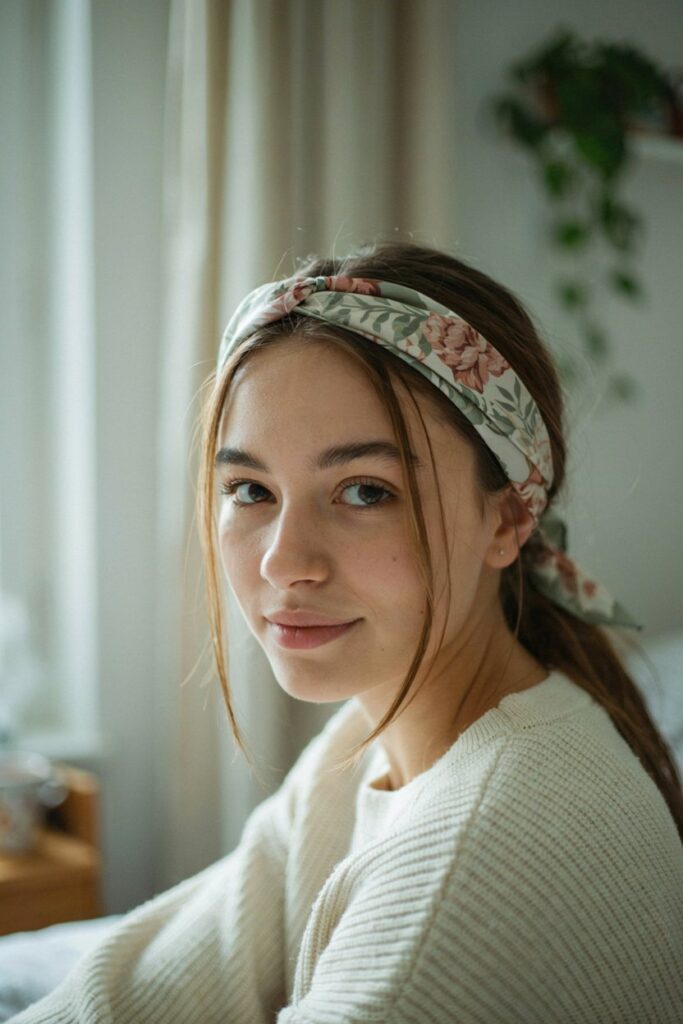
A long silk scarf folded multiple times into a thin band and tied at the back of the head, with the knot hidden under the hair. The scarf becomes part of the hairstyle rather than an obvious accessory. Particularly current for casual everyday styling.
9. Silk scarf in a ponytail
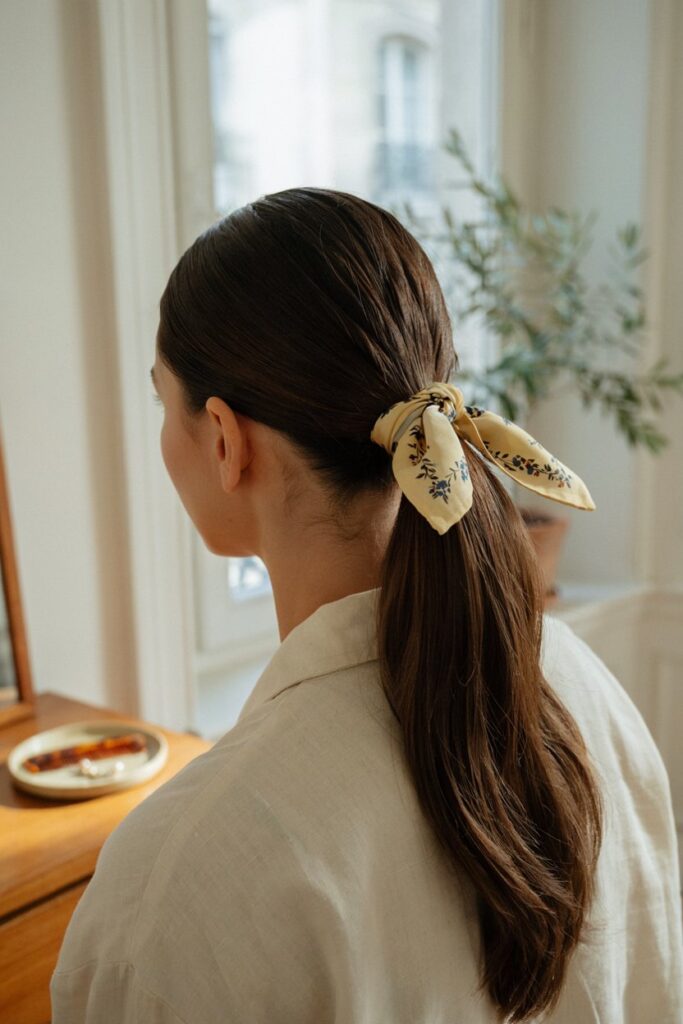
A square silk scarf folded into a thin band, tied into a ponytail with the ends visible (rather than using a hair elastic). The scarf doubles as the hair tie. Practical AND chic.
Crochet and textured headbands
The artisanal, handmade aesthetic category. Crochet remains one of summer’s defining textures, and headbands are where it shines.
10. Cream crochet wide headband
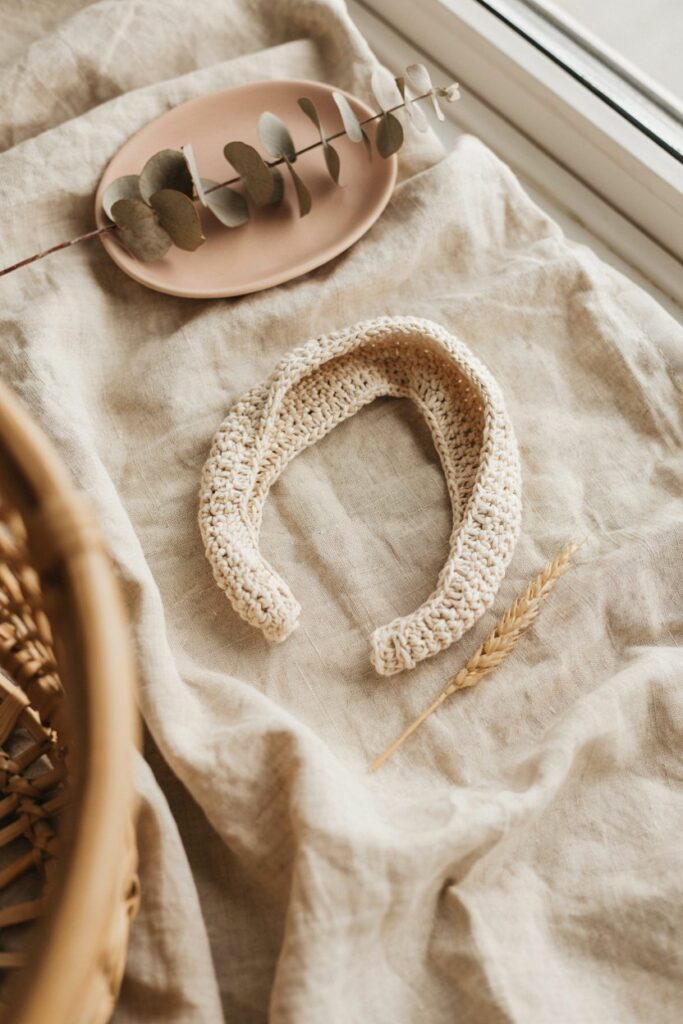
A wide handcrafted crochet headband in cream or natural beige. The textured fabric pairs beautifully with linen dresses, summer blouses, and beachy outfits. Reads as relaxed and artisanal rather than overly styled.
11. Multi-color crochet headband
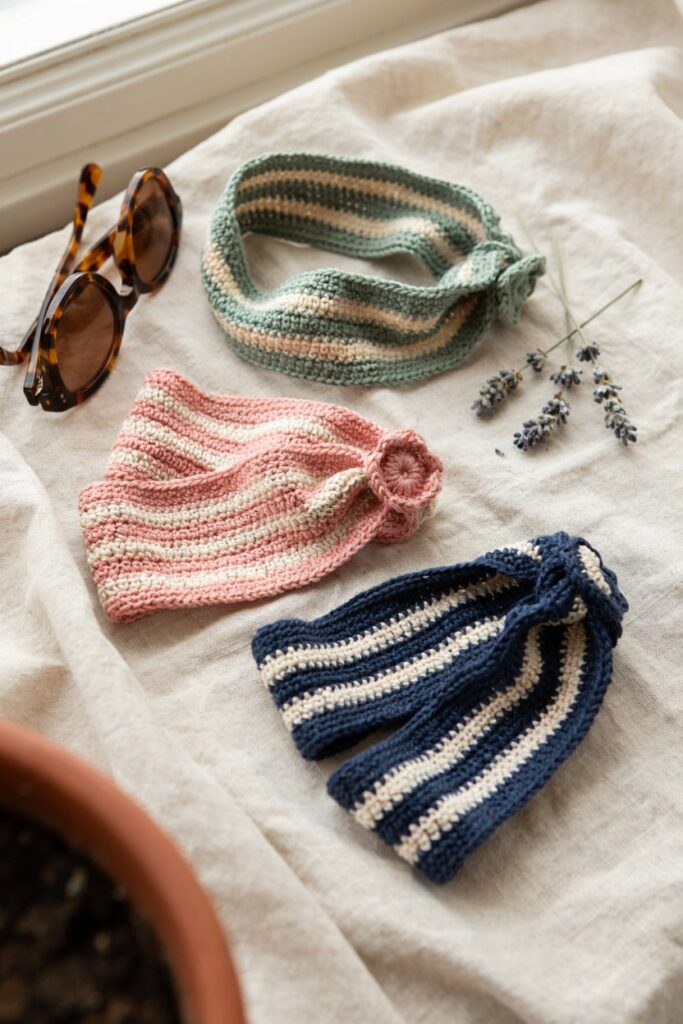
A crochet headband in a playful color combination (sage + cream, dusty pink + ivory, navy + cream stripes). Adds personality without overwhelming the outfit. Best for casual outfits and lighter summer styling.
12. Knitted woolen headband (for cooler weather)
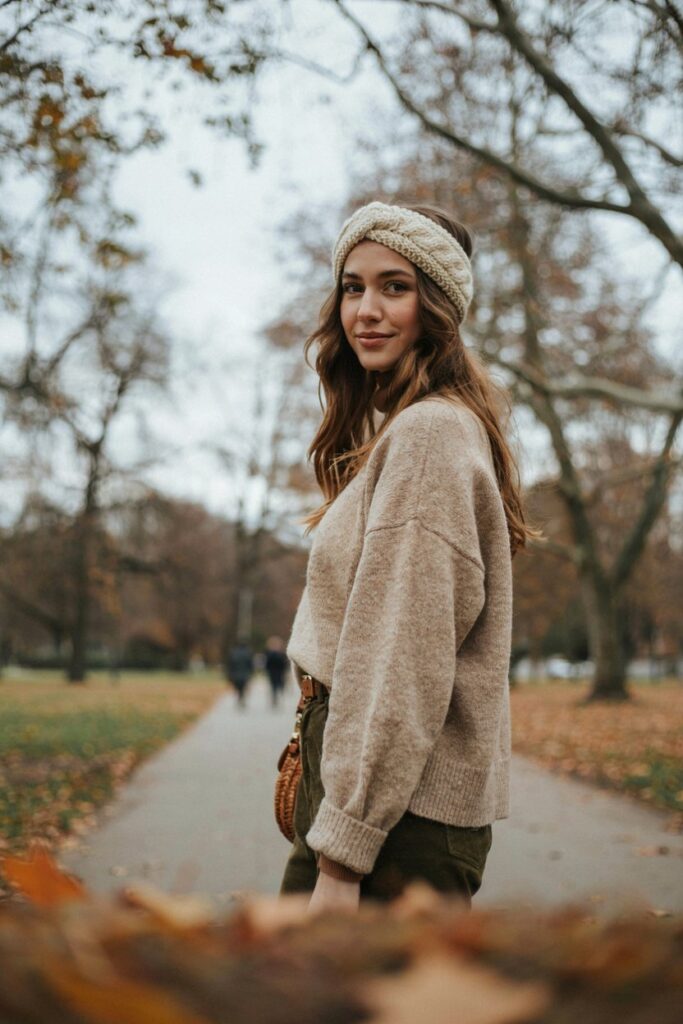
A chunky knit headband in cream, oatmeal, or muted tones for fall and winter. Combines style with practical warmth around the ears. Particularly current for outdoor events in transitional seasons.
13. Braided fabric headband
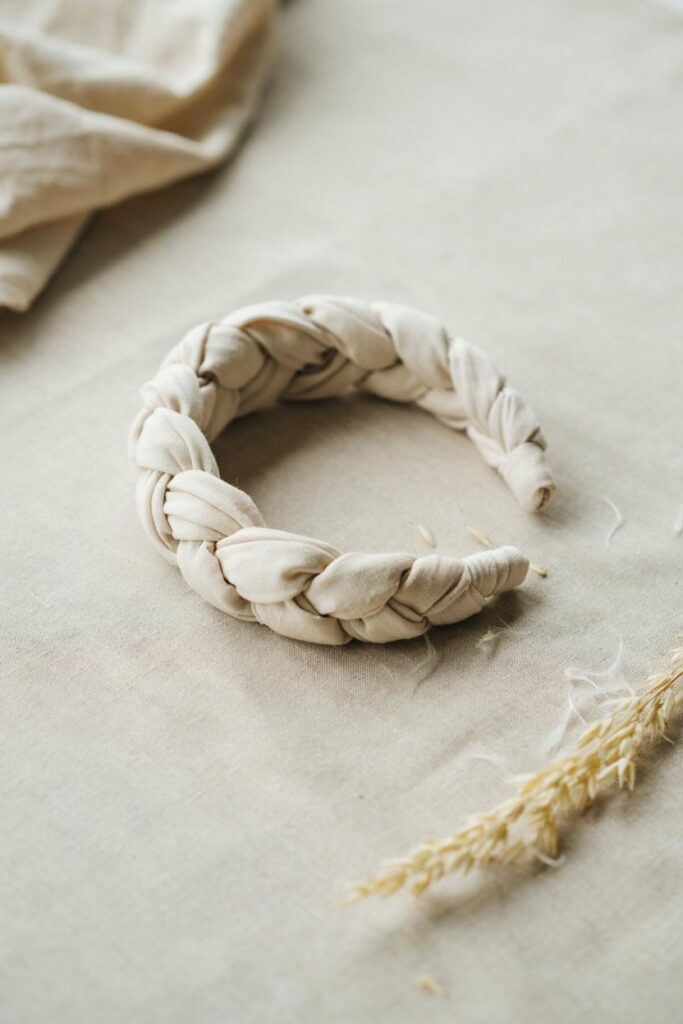
A headband with intentional braided or twisted fabric construction — adds dimension and texture without obvious embellishment. Particularly beautiful in neutral tones (cream, beige, soft brown).
Embellished and sparkle headbands
For dressier events and evening wear. The Spring 2026 runways (Simone Rocha specifically) made sparkle headbands a definitive trend.
14. Pearl-encrusted headband
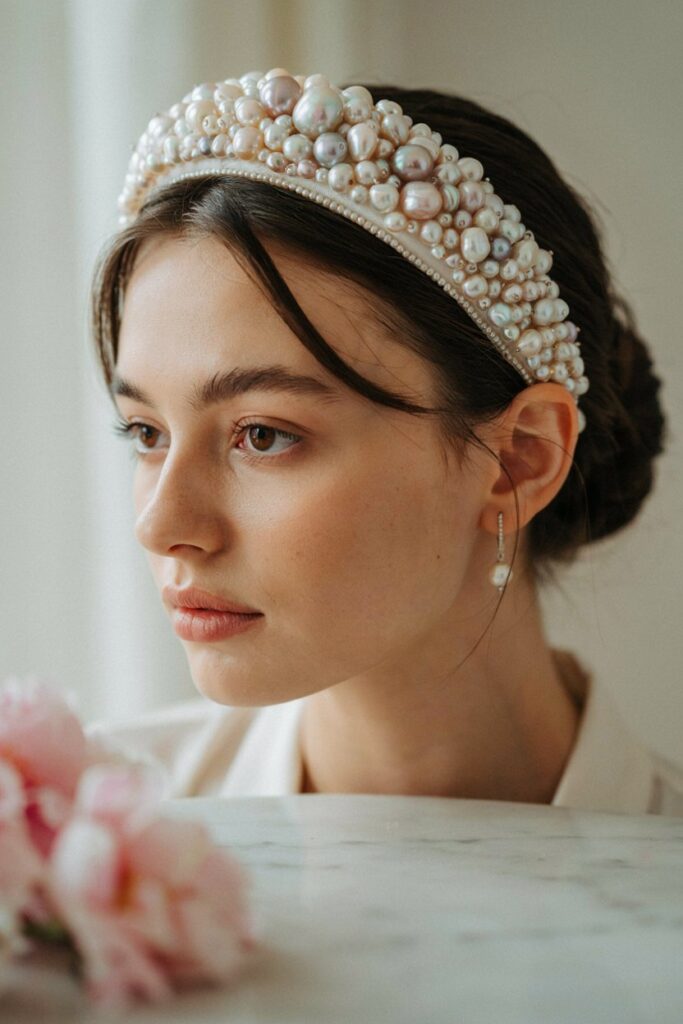
A wide headband covered in freshwater pearls or pearl beading. Particularly stunning for weddings (as a guest), engagement parties, and evening events. References the broader pearl trend defining 2026 wedding beauty.
15. Rhinestone or crystal headband
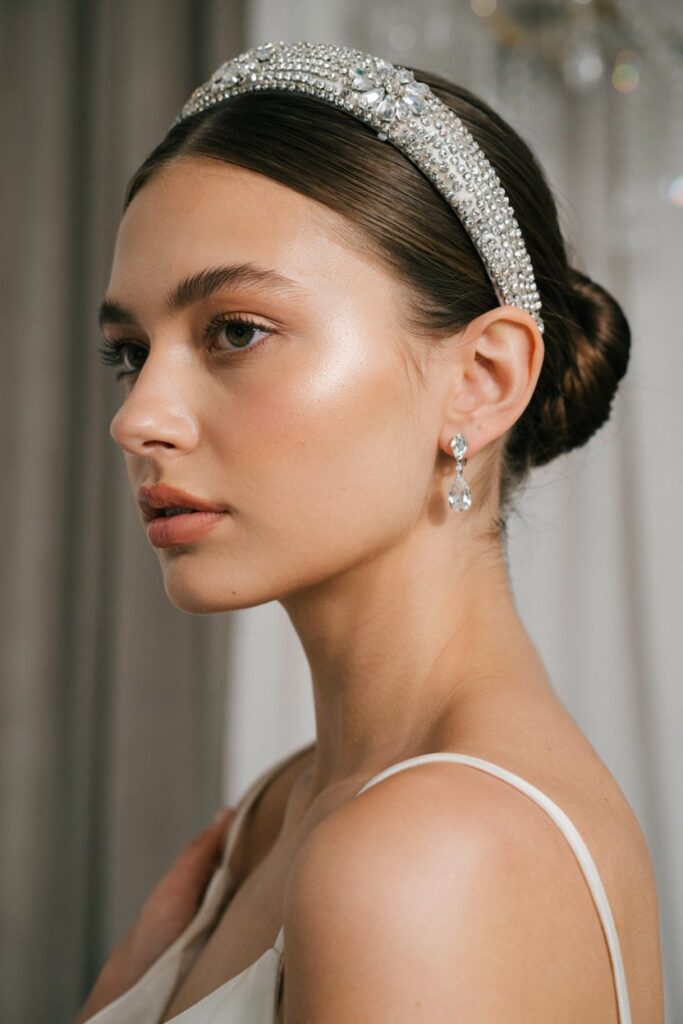
A sparkling crystal-embellished headband for true evening drama. Best worn with sleek straight hair or low chignons. Particularly stunning for galas, prom (for older teens), and formal cocktail events.
16. Beaded headband (boho elegant)
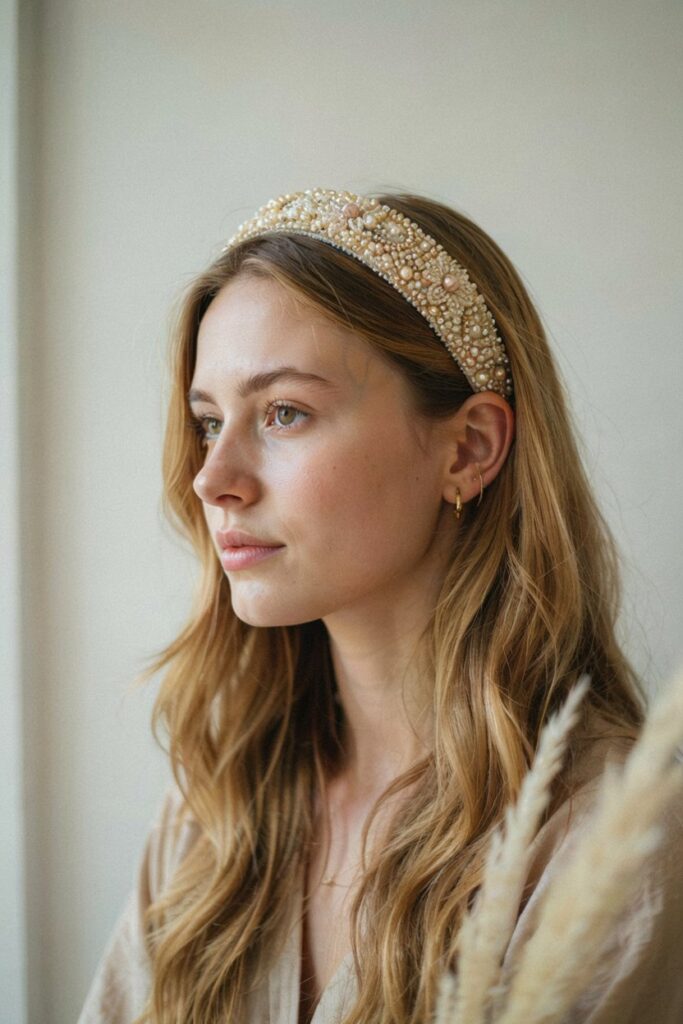
A headband with beaded detail throughout — typically smaller, more delicate than rhinestones. Can be worn for daytime or evening depending on the bead color. Particularly current in cream and pastel tones for 2026.
17. Floral fabric headband (3D flowers)
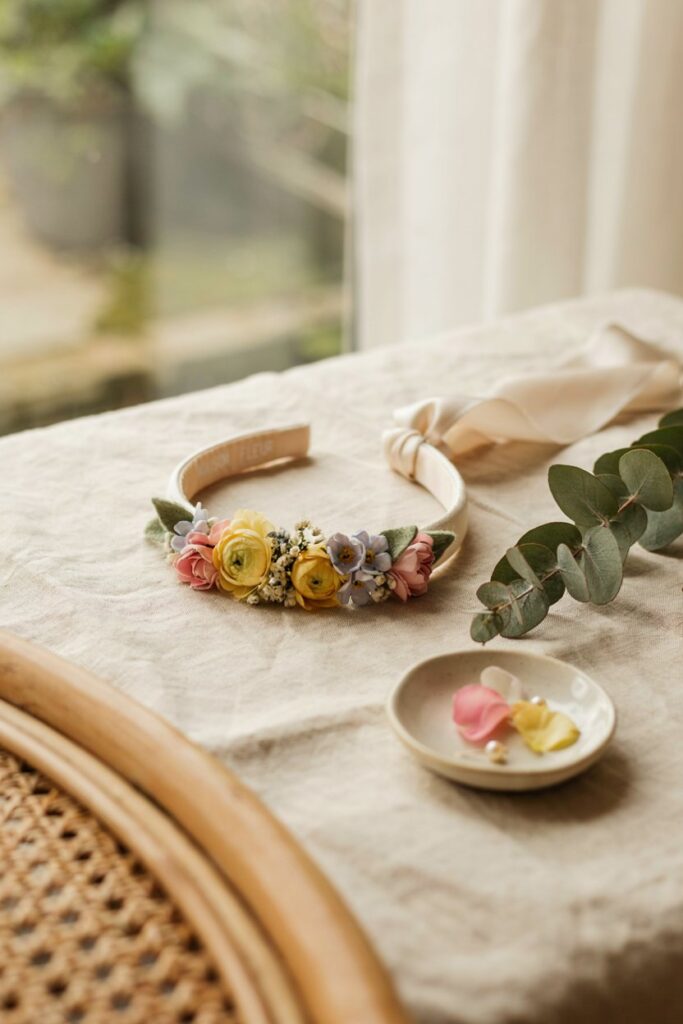
A headband with small fabric flowers attached — the romantic, garden-party version. Particularly stunning for spring and summer weddings as a guest, daytime parties, and floral-themed events.
Bandana-style headbands
The casual cool-girl category. Bandanas tied as headbands surged on Pinterest in 2026 and continue to grow.
18. Classic paisley bandana (folded thin)
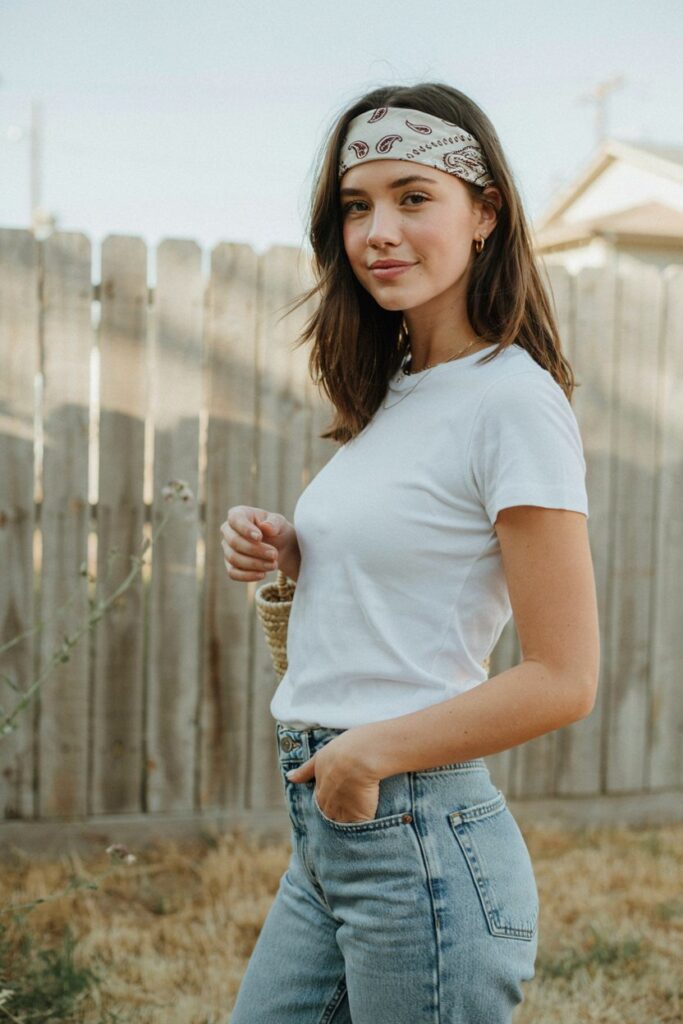
The reference bandana look. A traditional paisley-printed bandana folded into a thin band and tied at the back of the head. Casual, slightly retro, instantly cool. Pairs with denim, white tees, and summer dresses.
19. Bandana tied at the top of the head
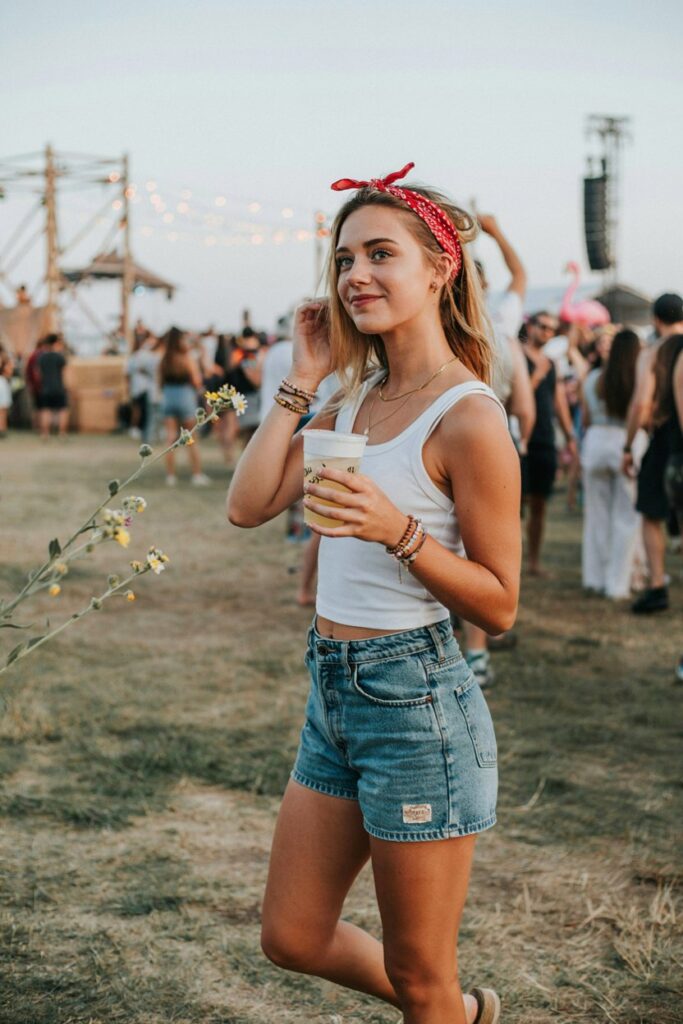
A bandana folded into a thin band and tied with a small knot at the top of the head — the ends sticking up slightly. Playful and youthful. Particularly stunning for festival outfits, vacation styling, and casual summer events.
20. Bandana as headband over a low ponytail
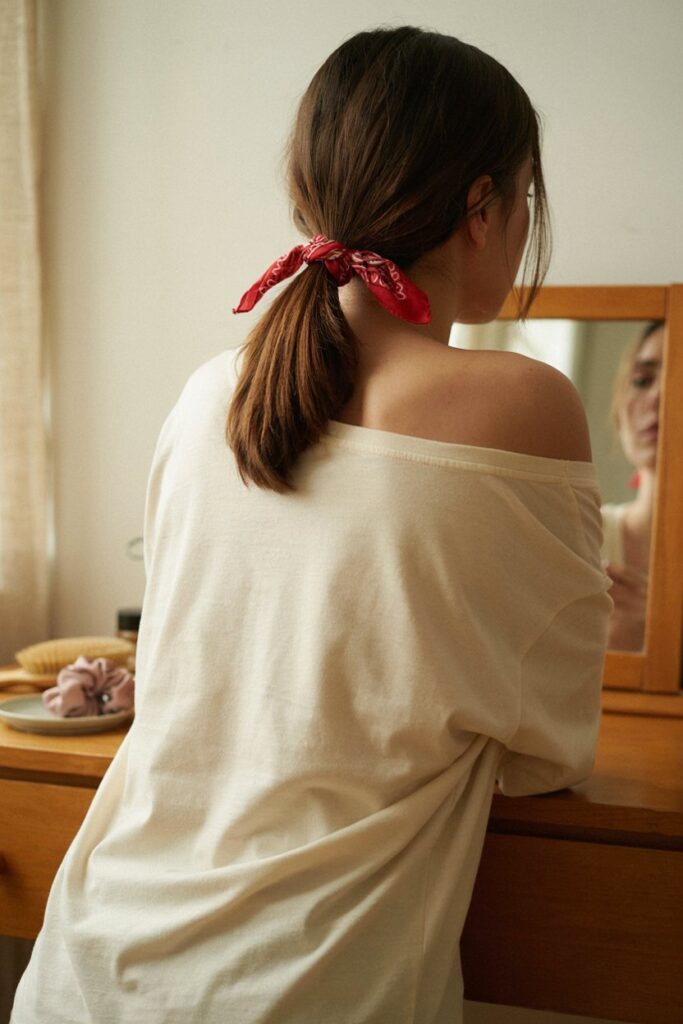
A bandana folded thin and tied around a low ponytail or messy bun. The pattern adds visual interest to an otherwise simple hair-up look. Particularly easy and casual.
Headband styles for different hair types
The specific advice for matching headband to hair texture:
21. Fine hair: padded headbands with grip
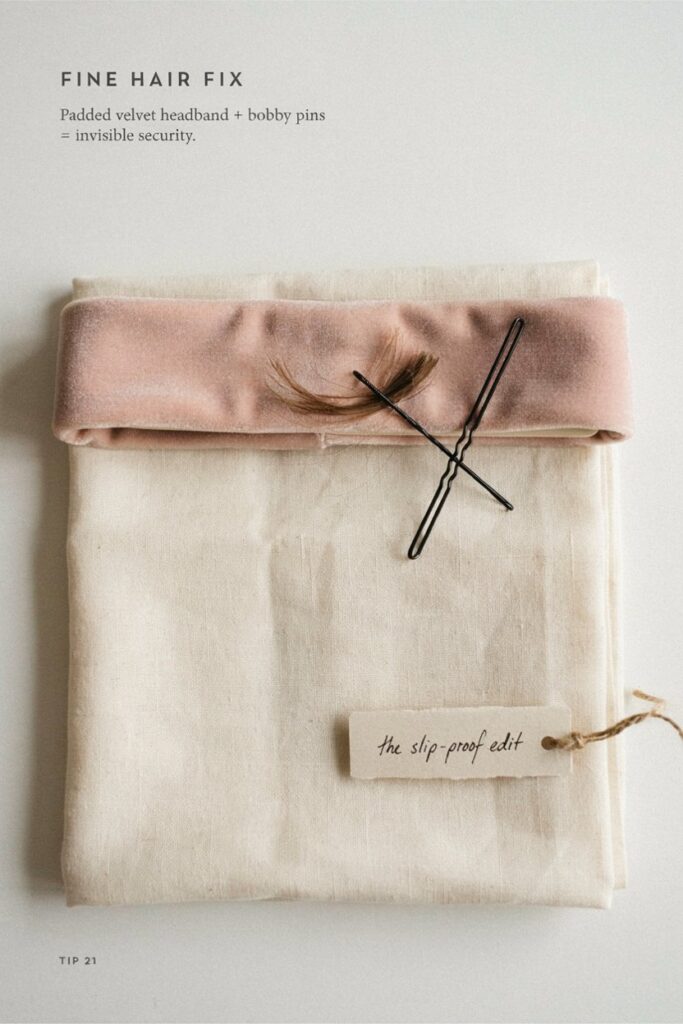
Fine hair tends to slip out from under headbands quickly. The fix: padded headbands with a slightly grippy inner surface (velvet, suede, or silicone-backed). Avoid all-satin headbands (too slippery). Add bobby pins on either side of the headband for invisible security.
22. Thick hair: wide soft fabric headbands
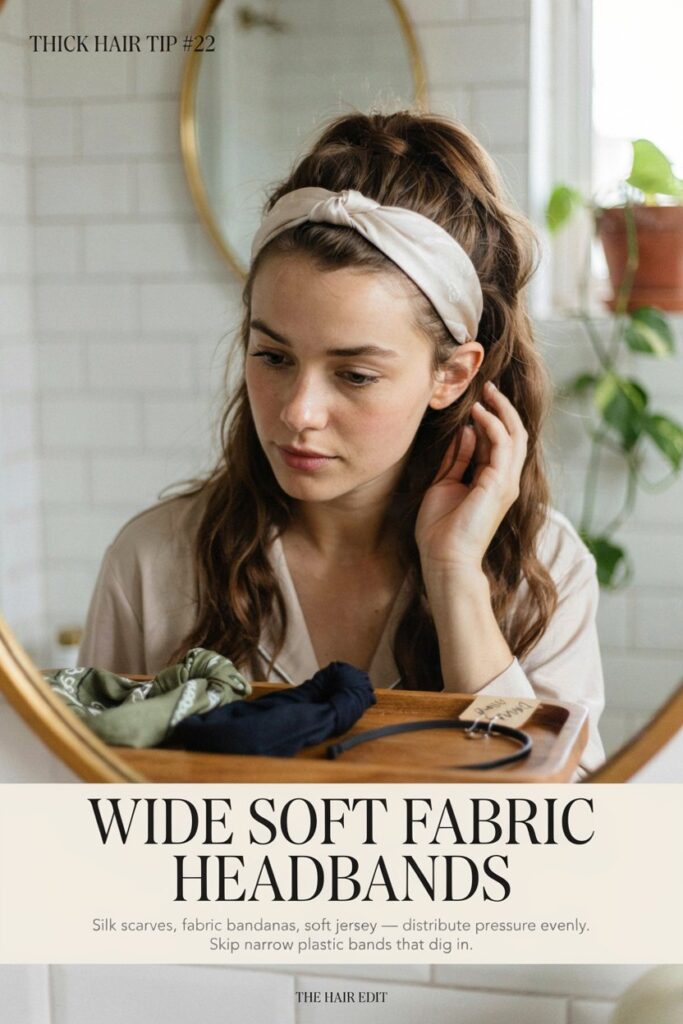
Thick hair can overwhelm thin headbands and cause tension headaches with stiff structured bands. The fix: wide soft fabric headbands (silk scarves, fabric bandanas, soft jersey headbands) that distribute pressure evenly. Avoid narrow plastic headbands — they create pressure points and slide.
23. Curly and textured hair: silk scarves and soft wraps
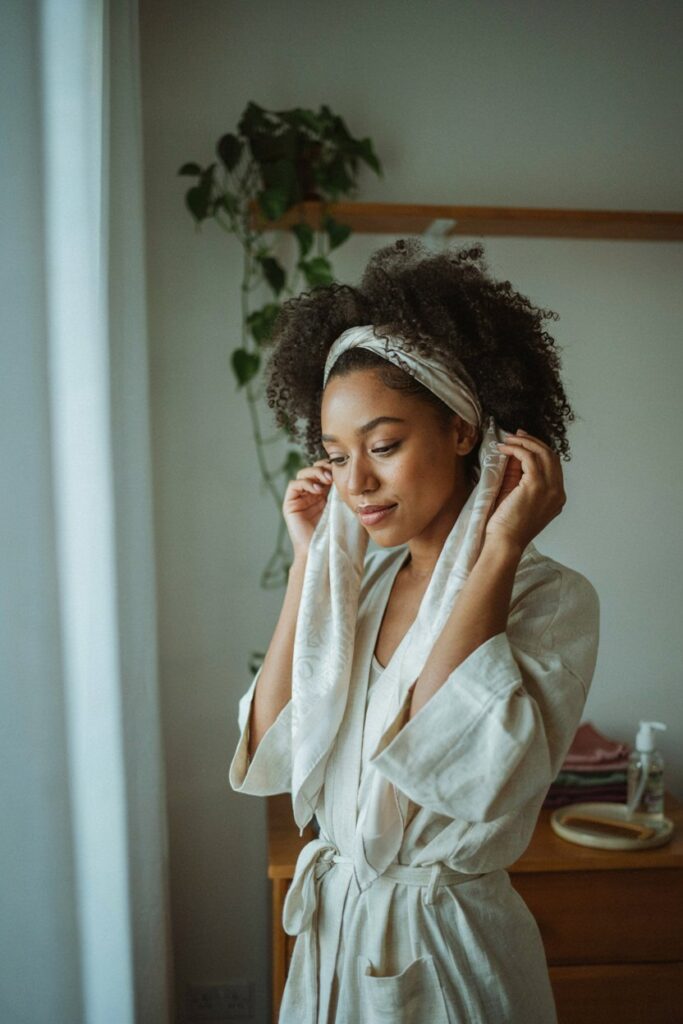
Curly hair (Type 3 and Type 4) benefits from silk and satin scarves that don’t create friction or absorb moisture from curls. Standard square silk scarves are the most versatile: they double as headband, head wrap, hair tie, ponytail holder, and scrunchie. Particularly protective for curls that have surpassed wash day.
Where to buy the trending headbands
The specific places to find quality headbands:
For padded headbands ($15-$60): Anthropologie, Lele Sadoughi (designer reference), Madewell, Free People, JCrew, Etsy (handmade), Amazon (budget options).
For silk scarves ($30-$300): Hermès (luxury), Anthropologie, Madewell, Banana Republic, secondhand silk scarves on Etsy and Depop (vintage finds are particularly beautiful).
For crochet headbands ($20-$80): Etsy is the strongest source for handmade crochet pieces. Anthropologie carries them seasonally. Independent crochet artists on Instagram often take custom orders.
For embellished and pearl headbands ($25-$150): Lele Sadoughi (designer reference), J.Crew, Anthropologie, Etsy (handmade pearl pieces), wedding-specific boutiques.
For bandanas ($5-$25): Vintage and thrift stores have the best paisley patterns. Modern brands include Madewell, Free People, and Levi’s. Etsy has hand-dyed and screen-printed options.
Budget under $20: Amazon carries every category at lower price points. Quality varies significantly — read reviews focused on durability and fit before buying.
Investment piece ($100+): A high-quality silk scarf or designer padded headband will last decades and elevate every outfit. The Lele Sadoughi pieces specifically have become the reference for “the chic padded headband” since 2023.
How to keep a headband from sliding all day
The techniques nobody else explains:
Use bobby pins as invisible anchors. After positioning the headband, slide a bobby pin into the inside edge of the headband (where it meets your hair) on each side. The bobby pins disappear into your hair and lock the headband in place. The most effective trick.
Apply a small amount of texturizing spray to clean hair BEFORE putting on the headband. Slippery, freshly-washed hair causes headbands to slide. Texturizing spray adds grip. Particularly important for fine hair.
Use silicone-backed headbands. Some headbands have a small strip of silicone or rubber on the inner edge — completely invisible from the outside, dramatically improves grip. Worth seeking out specifically for thin or slippery hair.
Position the headband at the natural crown. The crown of your head (where the skull naturally tapers) is the most secure position. Headbands placed too far forward (over the forehead) or too far back (near the nape) slide. Crown position is biomechanically the most stable.
Choose the right width for your hair type. Fine hair = narrow to medium-width headbands (under 2 inches). Thick hair = medium to wide headbands (2-3 inches). Curly hair = wide soft headbands (3+ inches) that don’t crush curls.
Break in stiff headbands. New padded headbands are often too stiff and don’t conform to the head. Wear them at home for 2-3 hours before any important event so they soften to your head shape.
Check positioning every 1-2 hours. Even with all the techniques above, headbands shift slightly throughout the day. A quick check in the mirror and gentle re-positioning is normal and not a sign of failure. The goal is “minimal adjustment,” not “zero adjustment.”
For all-day wear (8+ hours): Use a “double anchor” technique — bobby pin on each side PLUS one in the center back, hidden in hair. Three-point security ensures the headband won’t move regardless of activity level.
Frequently asked questions
Are headbands in style for 2026?
Yes — headbands are firmly trending for 2026, particularly after the Spring 2026 runway shows where designers like Simone Rocha and Toteme featured headbands as defining accessories. Padded headbands, silk scarves, and crochet styles are the most-saved variations on Pinterest. The 2026 versions are softer and more relaxed than the stiff 2023 versions.
What kind of headband is best for fine hair?
Padded headbands with a slightly grippy inner surface (velvet, suede, or silicone-backed) work best for fine hair. Avoid all-satin headbands (too slippery) and very wide headbands (they overwhelm fine hair). Add bobby pins on either side for invisible security. Width: under 2 inches typically works best.
How do you wear a headband without it sliding?
Three techniques: 1) Apply texturizing spray to hair before putting on the headband (adds grip), 2) Use bobby pins as invisible anchors on either side of the headband, 3) Position the headband at the natural crown of your head (not too far forward, not too far back). The crown is biomechanically the most stable position.
Can I wear a headband to a wedding as a guest?
Yes — pearl, crystal, or embellished headbands are particularly appropriate as wedding guest accessories in 2026. Match the formality to the event (more embellishment for evening, simpler for daytime). Avoid: anything that competes with the bride’s accessories or veil. A neutral-tone pearl or crystal headband is universally appropriate.
What headband styles work for curly hair?
Silk scarves and soft fabric headbands work best for curly hair because they don’t create friction or absorb moisture from curls. Standard square silk scarves are particularly versatile — they double as headband, head wrap, hair tie, ponytail holder, and scrunchie. Avoid stiff structured headbands that crush curls.
How do you tie a silk scarf as a headband?
Three popular methods: 1) Fold the scarf into a thin band, place across the crown, tie at the back of the head (knot hidden in hair), 2) Place the folded scarf at the top of the head with ends visible, knot at the crown, 3) Wrap the folded scarf around a low ponytail or bun and tie the ends. YouTube tutorials show specific techniques in detail.
Are padded headbands out of style for 2026?
No — padded headbands remain firmly in style but the 2026 versions are softer, more relaxed, and rest more naturally on the head than the stiff 2022-2023 versions. The new generation has more flexible inner construction so they don’t sit awkwardly high or push hair back too sharply. Look for “soft padded” specifically when shopping.
Can older women wear trending headband styles?
Absolutely — headbands are particularly flattering on women over 40, 50, and 60. They add polish to mid-length and short cuts, distract from hairline concerns, and instantly elevate any outfit. The most flattering options for older women: padded headbands in neutral tones, silk scarves, and pearl embellished pieces. Avoid: anything that reads as teen-coded (heavy bandanas, hyper-trendy patterns).
Why do headbands give me a headache?
Three causes: 1) The headband is too tight (loosen by gently stretching the band overnight), 2) The headband sits in the same pressure point all day (rotate positioning slightly every few hours), 3) Your hair is too thick for the headband width (switch to a wider, softer fabric headband that distributes pressure). Pain-free headband wear is achievable for every hair type with the right fit.
Where do I buy quality headbands online?
For padded headbands: Anthropologie, Lele Sadoughi, Madewell, Free People. For silk scarves: Hermès (luxury), Anthropologie, vintage on Etsy and Depop. For crochet: Etsy is the strongest source. For embellished: J.Crew, Lele Sadoughi, wedding-specific boutiques. Amazon carries every category at budget prices but quality varies — read reviews carefully.
![4 Best Locking Gel for Dreads [Ultimate Guide]](https://magicalassam.com/review/wp-content/uploads/2022/06/Best-Locking-Gel-for-Dreads.jpg)