The anti-minimalist dinner party guide — bold layers, vintage clashes, and the rules that keep it elegant, not chaotic.
Minimalist dinner parties had a long run. Beige linen tablecloths, three sad votives, a single white orchid in the middle. They looked nice in photos but felt like eating in a showroom. In 2026, maximalism is back — and dinner parties are the front lines.
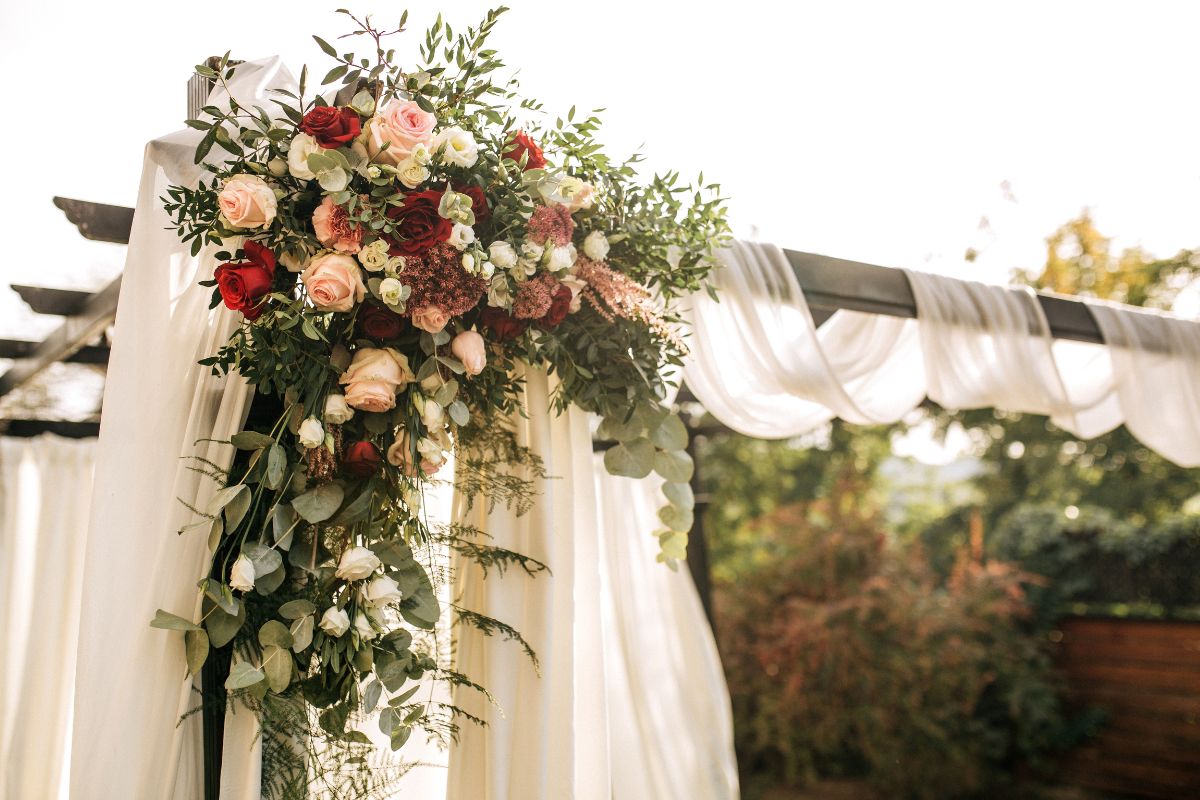
A maximalist dinner party isn’t a chaotic free-for-all. It’s a curated layering of texture, color, pattern, and dimension — done with enough intention that it reads collected, not cluttered. Velvet napkins on patterned chargers. Mismatched vintage plates that share a color story. Tall taper candles in mismatched brass holders. A florist’s-eye floral arrangement that doesn’t apologize for its height.
This post is the complete guide. 12 bold decor picks that turn any dinner party into a maximalist showpiece — what to buy, how to layer them, and the rules that separate “elegantly maximalist” from “Pinterest fail.” Plus the table-setting order, lighting strategy, and the things to leave off the table no matter how beautiful they look in isolation.
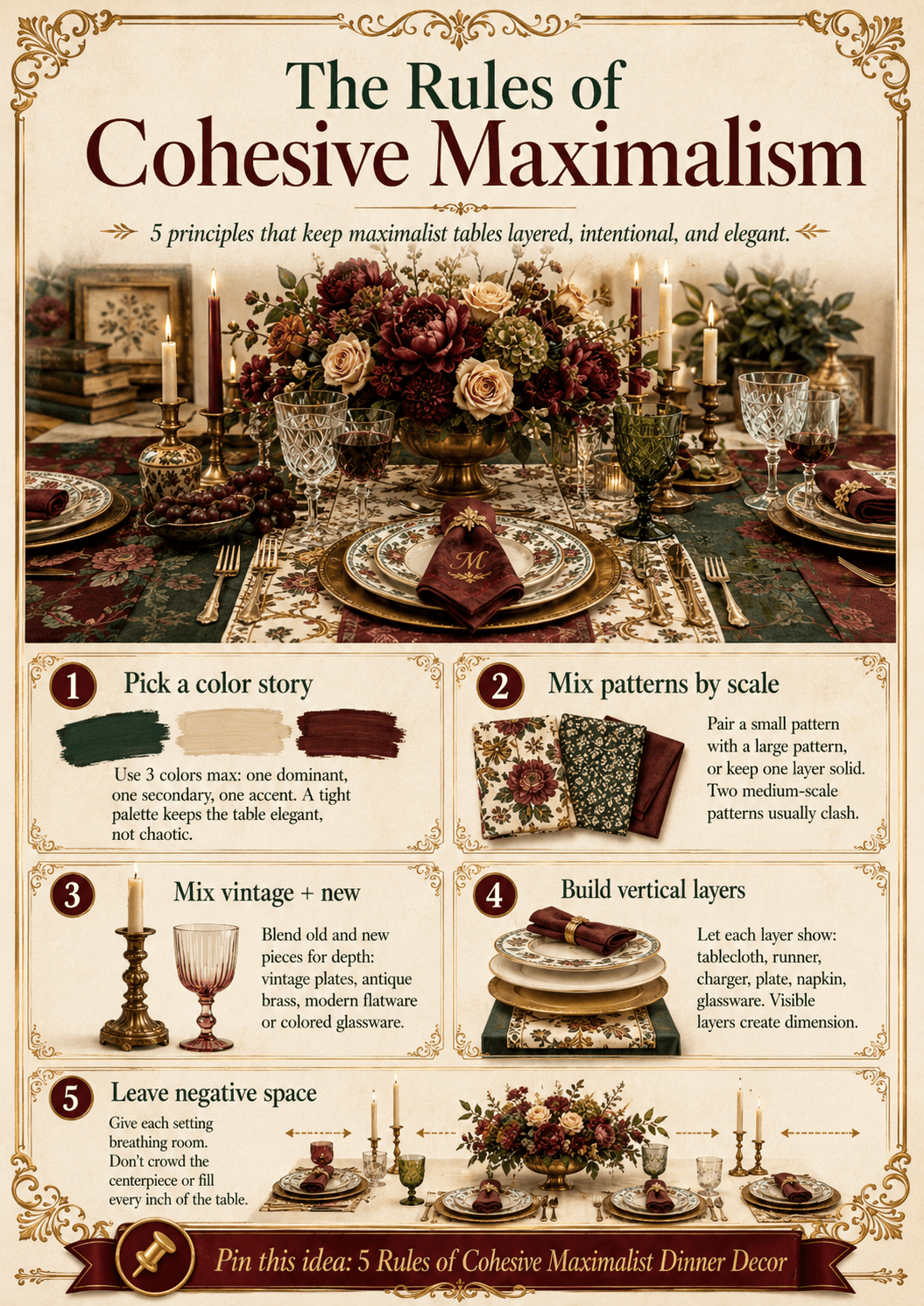
The Rules of Cohesive Maximalism
Maximalism without rules is just a mess. These five principles separate “intentional layering” from “I dumped my whole cabinet on the table.”
Rule 1: Pick a color story (3 colors max). Pick three colors that ground the table. Two anchors (a dominant + a secondary) and one accent. Every piece on the table should fit somewhere in that palette. The cohesion is what makes it elegant; ignoring this rule is what makes it chaotic.
Rule 2: Mix patterns by scale, not by category. If your tablecloth has a small pattern, your napkins should have a large one (or be solid). Pattern + pattern works when one is small-scale and one is large-scale. Two medium-scale patterns at the same size will fight each other.
Rule 3: Vintage + new beats all-new or all-vintage. A fully vintage table reads grandma. A fully new table reads catalog. The magic is mixing — antique brass candlesticks with new colored glassware, vintage plates with modern flatware. The contrast adds depth.
Rule 4: Build vertical layers. Maximalist tables work in vertical layers — tablecloth (lowest), runner, chargers, plates, napkin, glassware (tallest). Each layer should be visible. Skip a layer and the table loses dimension.
Rule 5: Don’t skip negative space. Yes, even maximalist tables need breathing room. Leave space between place settings, don’t crowd the centerpiece, and resist the urge to fill every inch. Density without negative space = chaos.
📌 Pin this idea:
The 12 Bold Decor Picks
Build a maximalist dinner party from these 12 pieces. Most can be sourced affordably (vintage shops, secondhand, marketplace). All photograph beautifully.
1. Layered Tablecloths (Printed + Solid Undercloth)
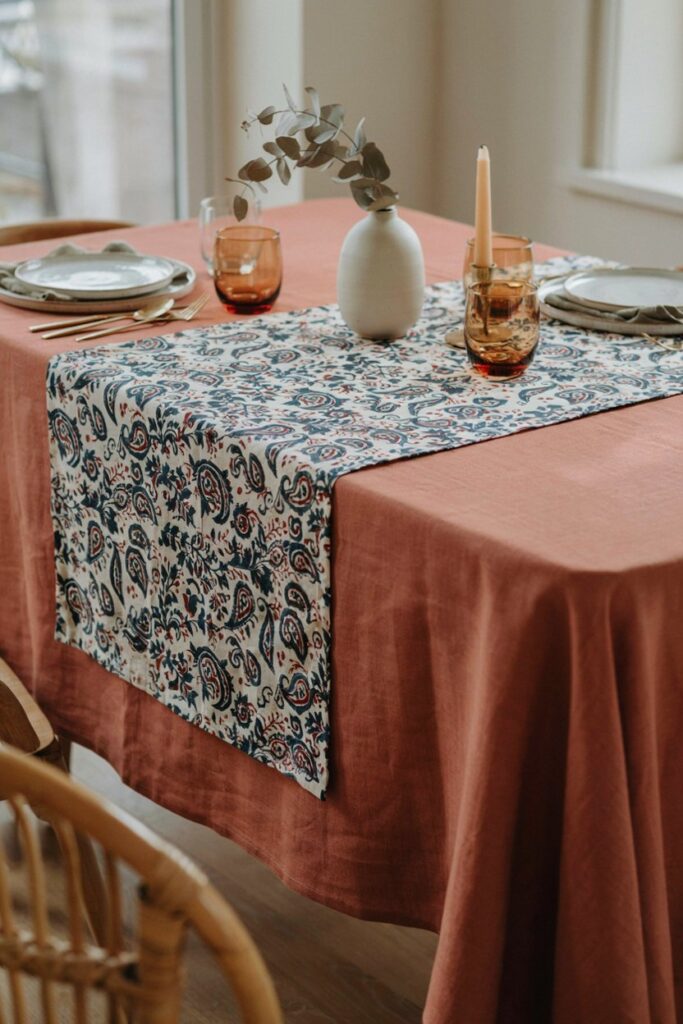
Start with a solid undercloth (linen in your accent color), then layer a smaller printed cloth or runner on top. Block-print florals, paisleys, and damask are the most-saved 2026 prints.
Why it works: Two layers add immediate depth; the print on solid is the first signal that this isn’t a casual dinner.
Where to find it: Sister Parish Design, Block Shop Textiles, Etsy vintage linens, anthropologie.
Quick tip: The top cloth should be smaller than the bottom — let 6+ inches of undercloth show around the edges.
2. Brass or Mixed-Metal Candlesticks
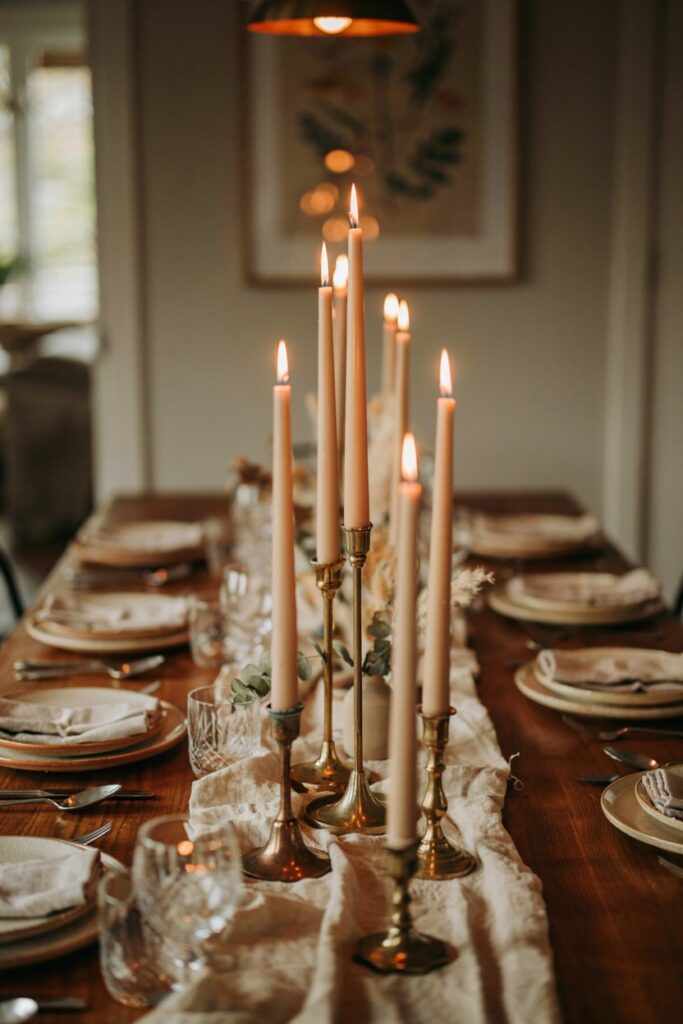
Tall taper candle holders in brass, gold, or mixed metals. Use 5–9 candlesticks in varying heights down the center of the table.
Why it works: Vertical drama is what makes maximalist tables photograph well. Taper candles also provide flattering light for everyone seated.
Where to find it: Vintage stores (best source), Anthropologie, CB2, West Elm, Etsy.
Quick tip: Use ODD numbers (5, 7, 9). Even-numbered groupings look matched-set; odd looks collected.
3. Velvet or Silk Napkins in a Bold Color
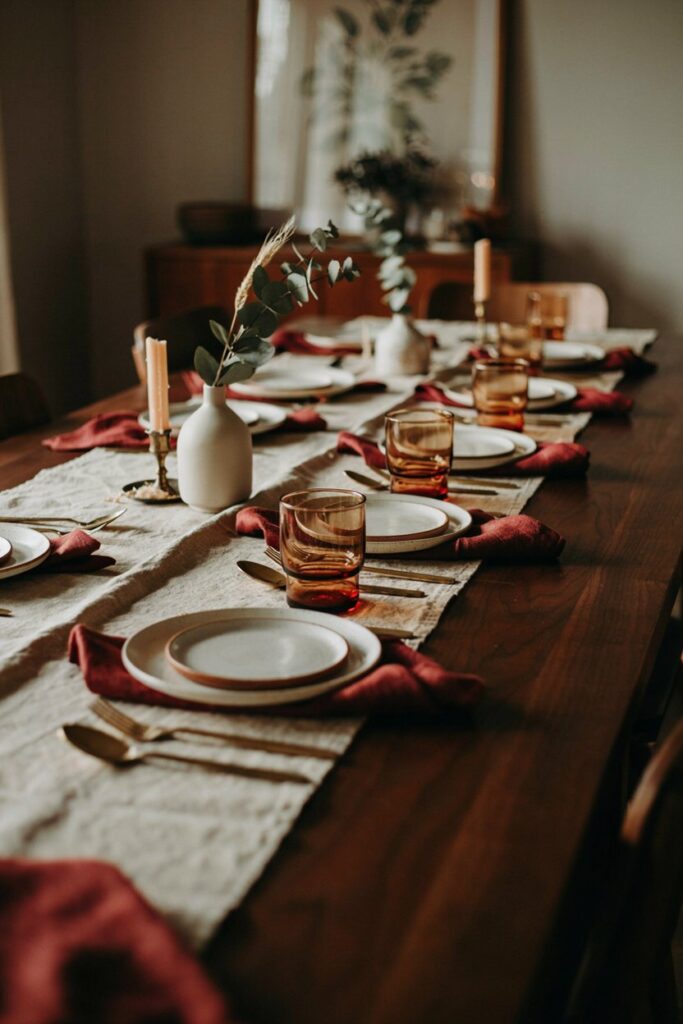
Cloth napkins in velvet, silk, or heavy linen — in burgundy, forest green, mustard, terracotta, or deep blue. Fold loosely and place on each plate.
Why it works: Velvet napkins photograph richer than fabric of any other texture. They also signal that this is a real dinner party.
Where to find it: Anthropologie, Etsy, vintage linens, Williams Sonoma (their velvet napkins are excellent).
Quick tip: 4 napkins is the minimum investment — 8 if you entertain regularly. Use the same napkin across all settings (mismatching is for plates only).
4. Vintage or Mismatched Plates
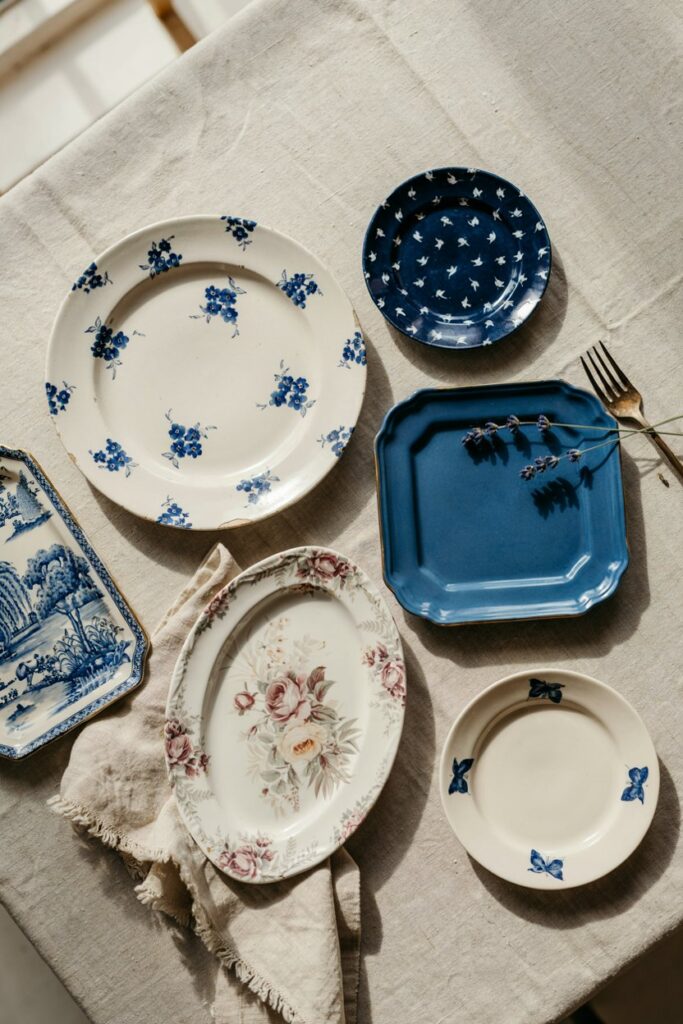
Plates that don’t match — but share a color or motif. Three options work: floral plates that share one common color, all-white but different shapes, or a fully eclectic mix unified by a single accent color.
Why it works: Mismatched plates are the signature of collected-not-bought entertaining.
Where to find it: Goodwill, estate sales, Facebook Marketplace, eBay, Replacements.com.
Quick tip: Build the collection slowly — buy 1–2 plates at a time when you find ones you love. By dinner party 5, you’ll have a full set.
5. Colored or Cut-Glass Goblets
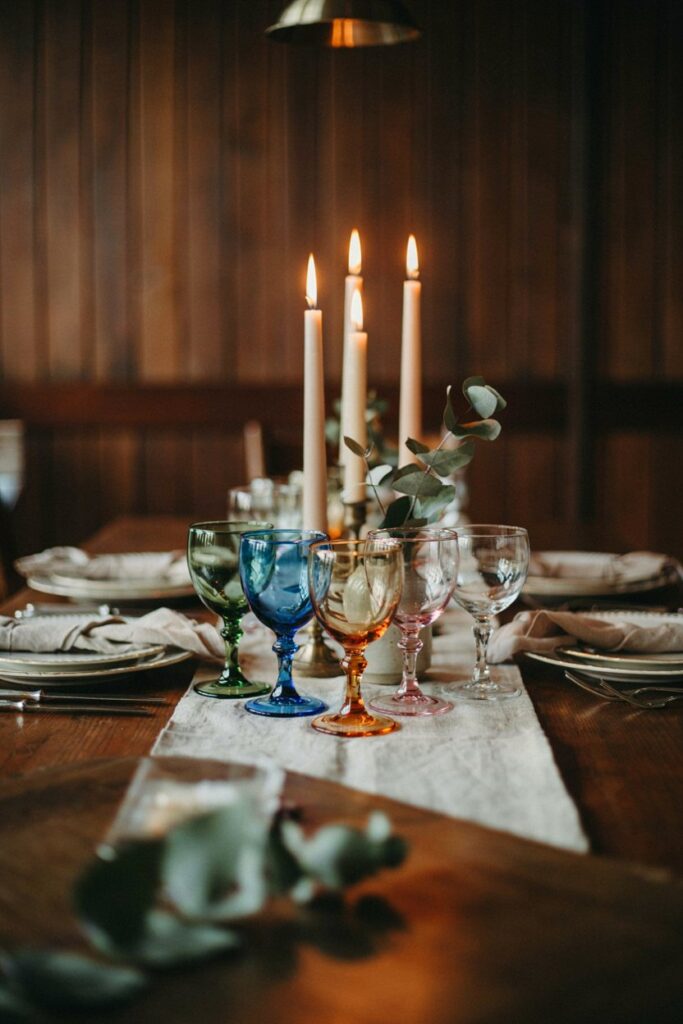
Stemmed glassware in colored glass (amber, blue, pink, green) or cut-crystal. Use as water goblets, wine glasses, or both.
Why it works: Colored glass catches candlelight beautifully — it’s the cheapest way to add “this is special” energy.
Where to find it: Vintage stores, IKEA POKAL, Etsy, Estelle Colored Glass (cult favorite).
Quick tip: Pick ONE color or accent — full rainbow of colored glass reads carnival, not maximalist.
6. Brass or Gold-Toned Flatware
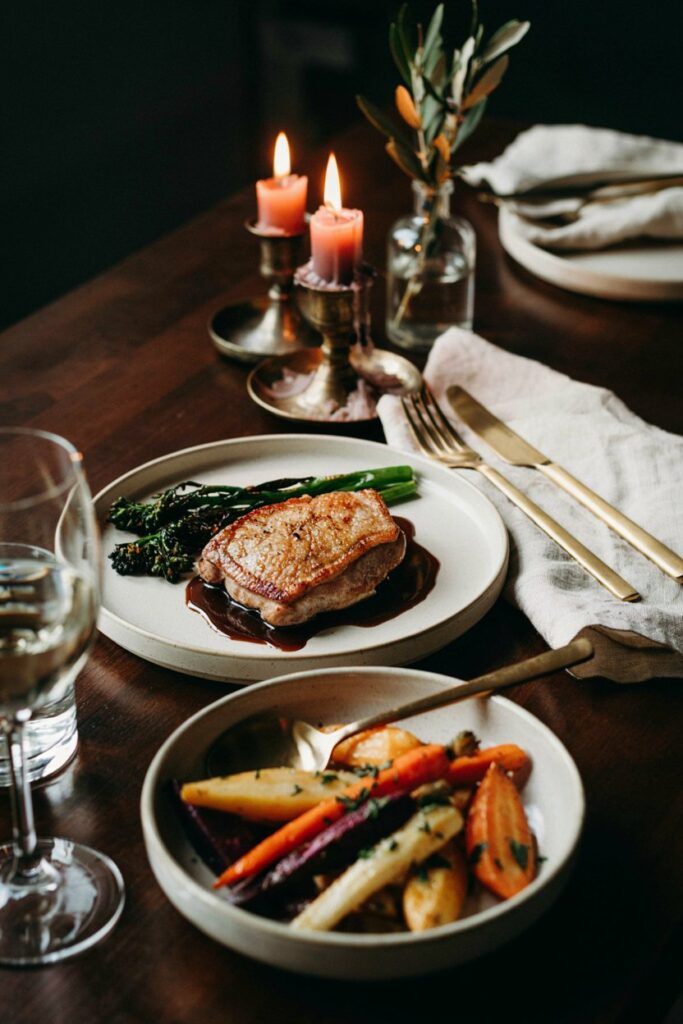
Flatware in brushed brass, gold, or mixed-metal finish. Adds warmth that silver/stainless can’t match.
Why it works: Gold flatware photographs much better than silver in candlelight — it warms every food photo.
Where to find it: Amazon (search “gold flatware set” — many affordable options), West Elm, Crate & Barrel, vintage.
Quick tip: Brushed gold ages better than shiny gold — shiny shows fingerprints and scratches faster.
7. Patterned or Beaded Chargers
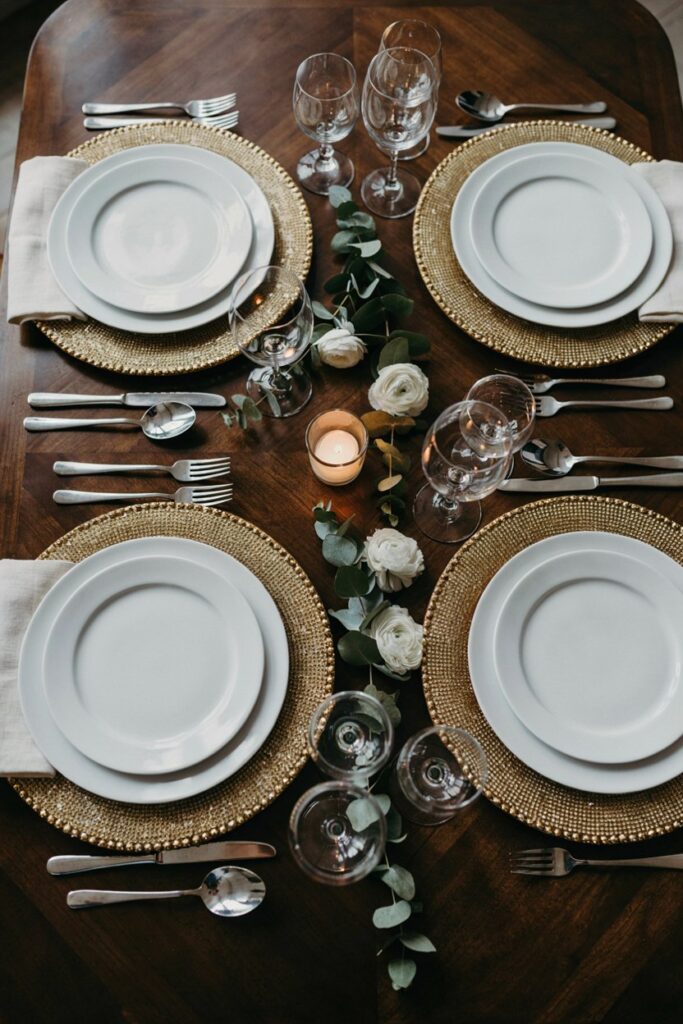
A charger plate beneath each dinner plate — in beaded gold, woven rattan, hammered brass, or patterned ceramic. Sets the base layer.
Why it works: Chargers create the visual “frame” for each place setting. They’re what make dinners look formal even when the food is casual.
Where to find it: Anthropologie, Z Gallerie, World Market, vintage thrift.
Quick tip: Beaded gold chargers are the highest-impact, but rattan/woven chargers are more versatile across seasons.
8. Statement Floral Centerpiece (Low & Spread, Not Tall)
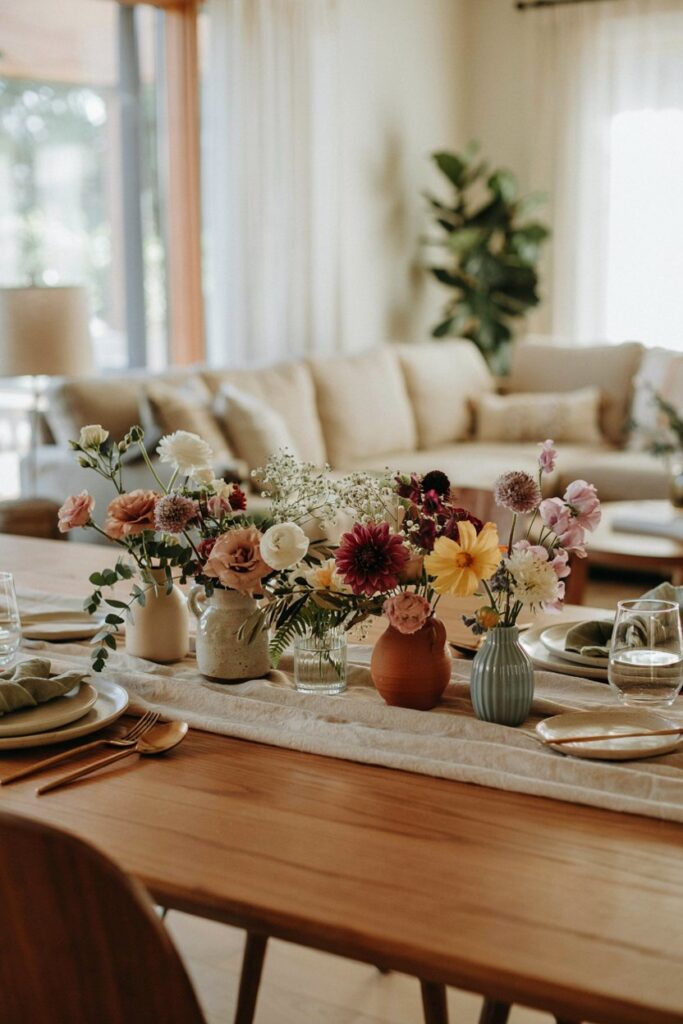
A floral arrangement that’s wide and low — not tall and skinny. Mix flowers in varying sizes, colors, and types. Goal: dramatic but eye-level for conversation.
Why it works: Tall arrangements block conversation. Low spread arrangements add drama without separating your guests.
Where to find it: Build your own with grocery store flowers + filler greens, or order from Trader Joe’s the morning of.
Quick tip: Use multiple small vases in a line down the center, not one big vase. More flexible, more layered, easier to manage.
9. Pillar Candles + Taper Candles (Both)
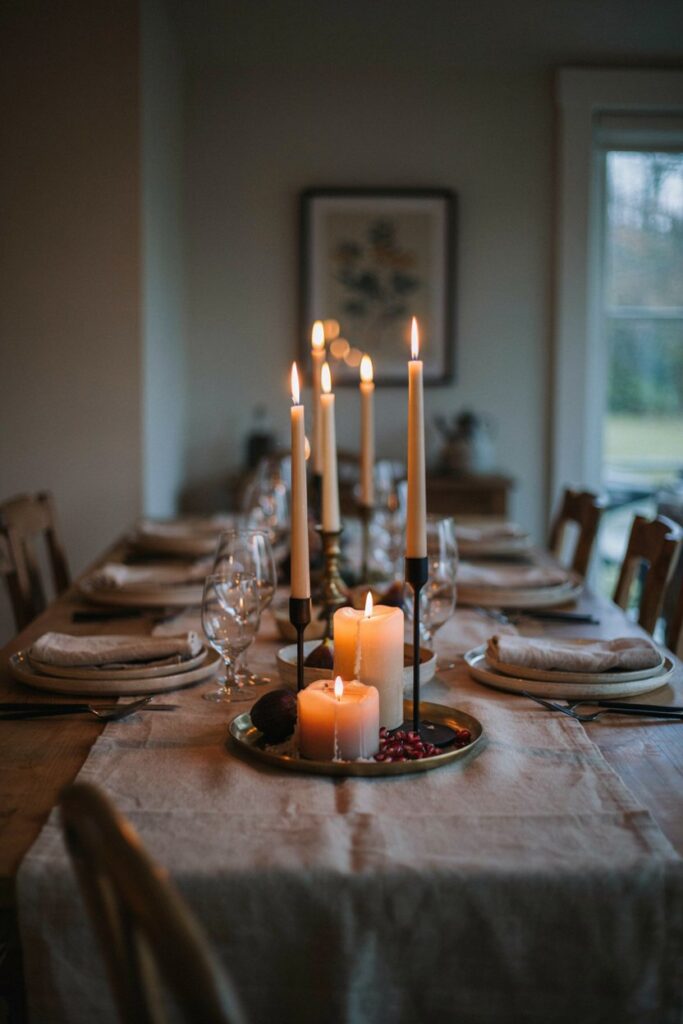
Mix pillar candles (chunky, on plates or stands) with taper candles (tall, in candlesticks). The dual heights add layered light.
Why it works: Pillars provide base-level glow; tapers provide vertical drama. Each does what the other can’t.
Where to find it: IKEA (best budget pillar candles), Target, World Market, Hearth & Hand.
Quick tip: Unscented only at the dinner table — scented candles compete with food smells.
10. Personal Place Cards or Menus
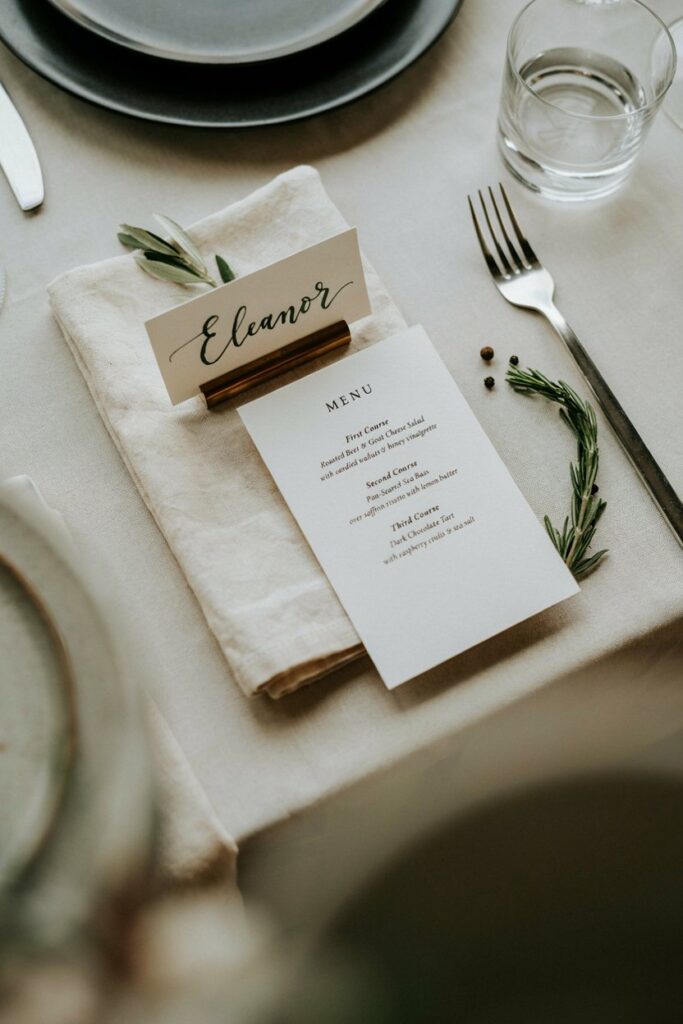
Hand-lettered or printed place cards at each setting — and/or a printed menu card showing the courses. Adds intentionality.
Why it works: Personal touches are what guests remember most. Place cards also solve the “where do I sit?” awkwardness.
Where to find it: Etsy (custom calligraphy), or DIY with calligraphy pen + cardstock.
Quick tip: Don’t get cute with seating “themes” — clear, elegant names work better than puns.
11. Draped Fabric Runner (Optional Layer)
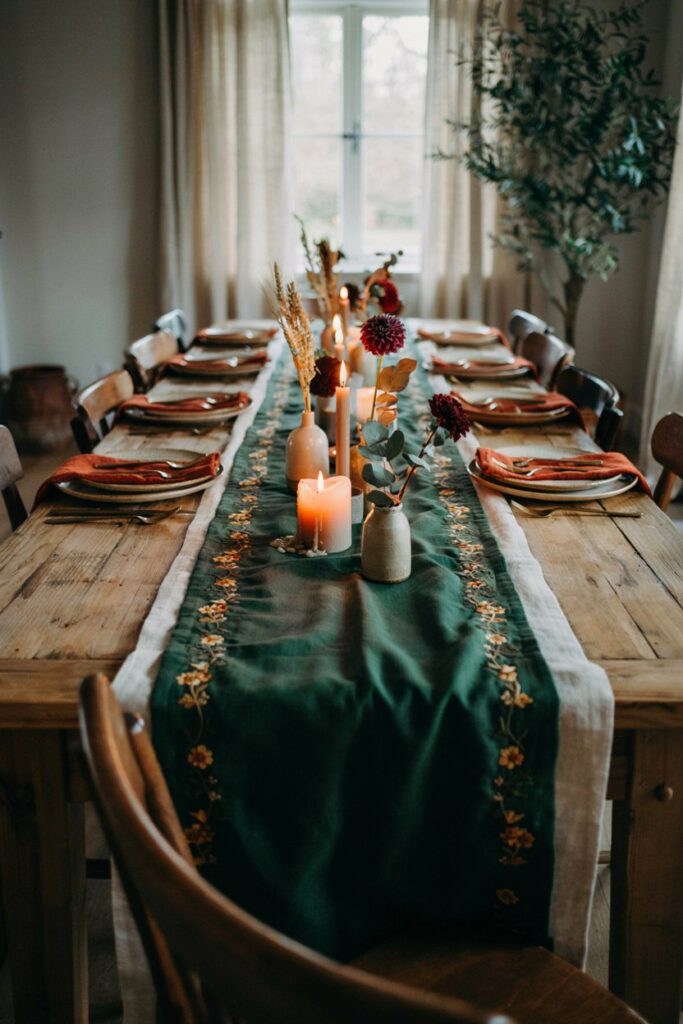
A fabric runner draped down the center of the table, slightly puddling at each end. Velvet, silk, or heavy embroidered cotton.
Why it works: Adds another textural layer between candles and tablecloth. Optional but transformative.
Where to find it: Anthropologie, Etsy, vintage fabric stores, repurposed scarf.
Quick tip: Runner should pool slightly at the ends of the table (intentional drape) — not hang stiffly.
12. Small Personal Touches at Each Setting
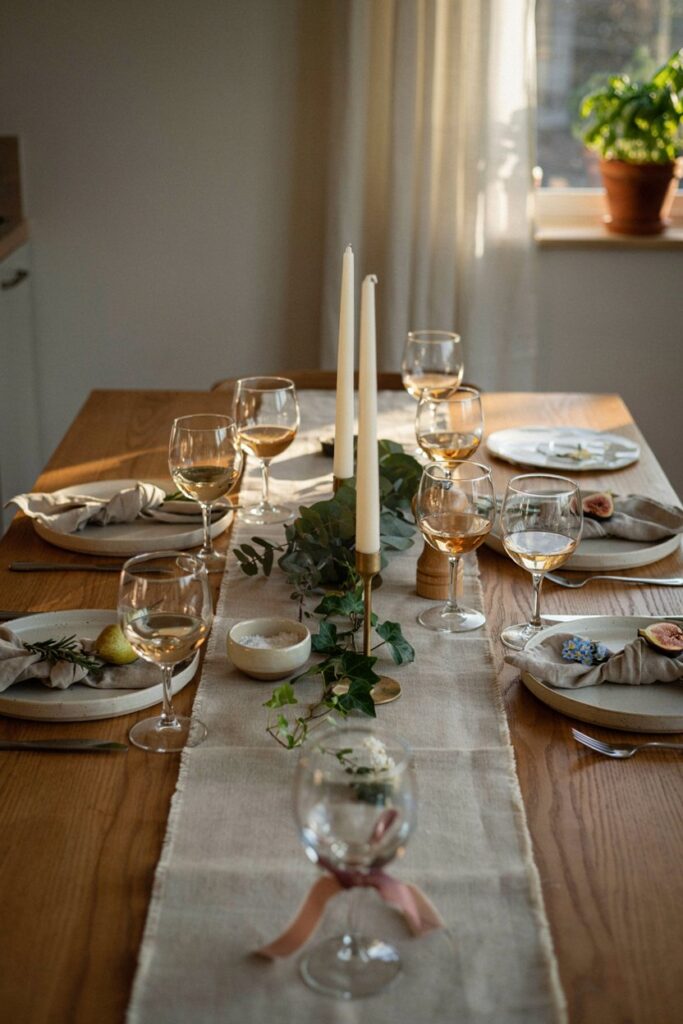
A sprig of greenery, a small piece of fruit (a fig, a tiny pear), a pressed flower, or a small ribbon at each place setting. The tiny detail that elevates everything.
Why it works: Personal-scale touches signal extreme care. Guests notice every time.
Where to find it: Grocery store herbs, your own garden, flower stems leftover from the centerpiece.
Quick tip: Pick the personal touch the morning of the dinner — fresh is the whole point. Wilted greenery undoes the effort.
The Table-Setting Order (Bottom Up)
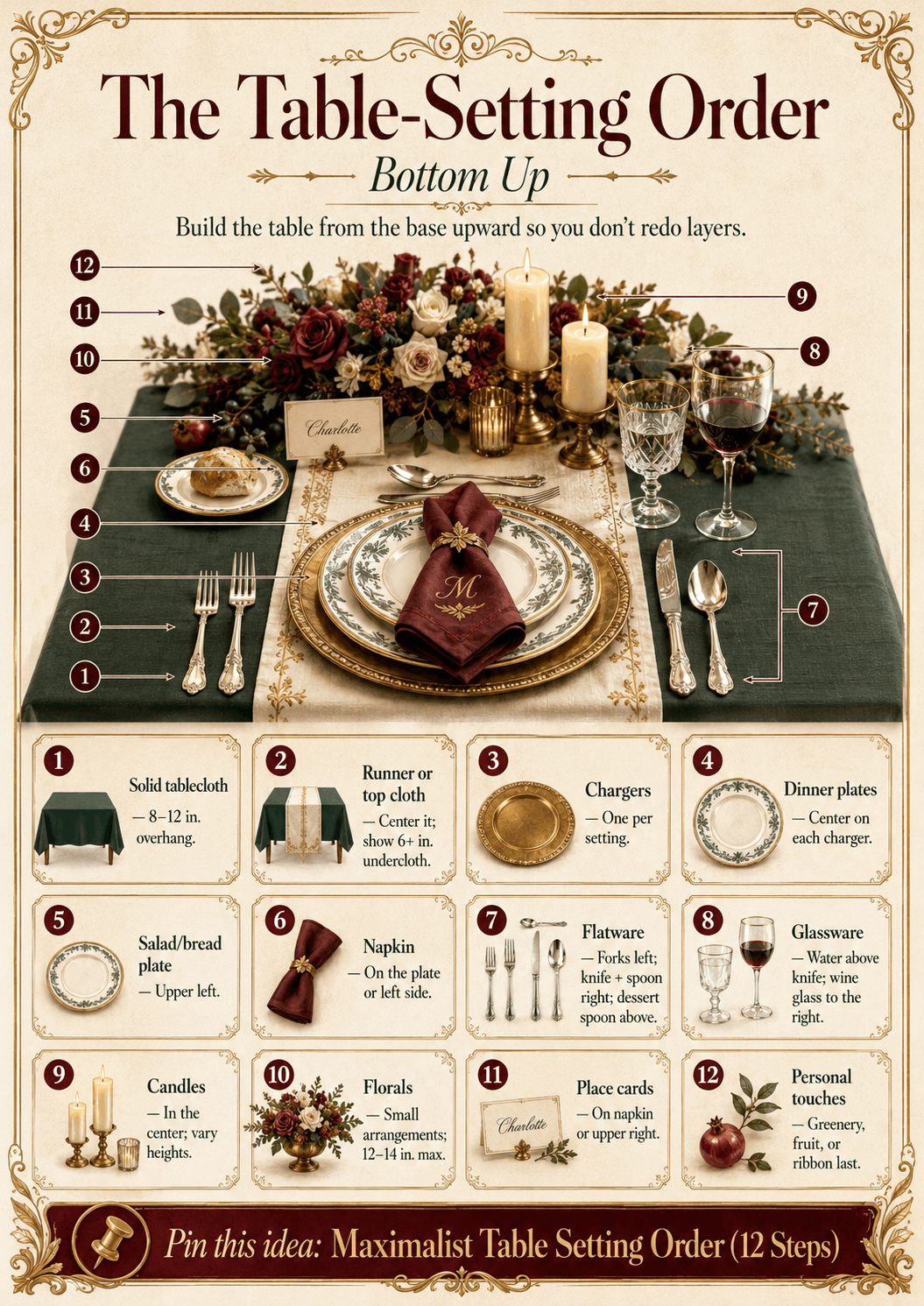
The order in which you build the table matters. Working bottom-up keeps you from re-doing layers.
Step 1 — Solid tablecloth. Lay it first. Should hang 8–12 inches over the table edge.
Step 2 — Printed top cloth or runner. Center it on the table. Leave 6+ inches of undercloth visible.
Step 3 — Chargers. One per place setting. Center each charger over where the dinner plate will go.
Step 4 — Dinner plates. Place on charger. Mismatched plates can be arranged so the most striking face the guest of honor.
Step 5 — Salad/bread plate (top-left). Smaller plate to the upper left of dinner plate.
Step 6 — Napkin. Folded loosely on the dinner plate (or to the left of it). Velvet, silk, or heavy linen.
Step 7 — Flatware. Fork(s) on the left, knife and spoon on the right. Dessert spoon above the plate. Match the spacing — measure if needed.
Step 8 — Glassware. Water goblet above the knife. Wine glass(es) to the right of the water glass.
Step 9 — Candles in the center. Tapers in candlesticks, with pillar candles between them. Vary heights.
Step 10 — Florals. Multiple small arrangements down the center line. Stay below eye level (12–14 inches max).
Step 11 — Place cards. On top of the napkin, or to the upper right of the dinner plate.
Step 12 — Personal touches. Greenery, fruit, or ribbon at each setting. Adds last because they’re fragile.
Lighting: The Most Underrated Element
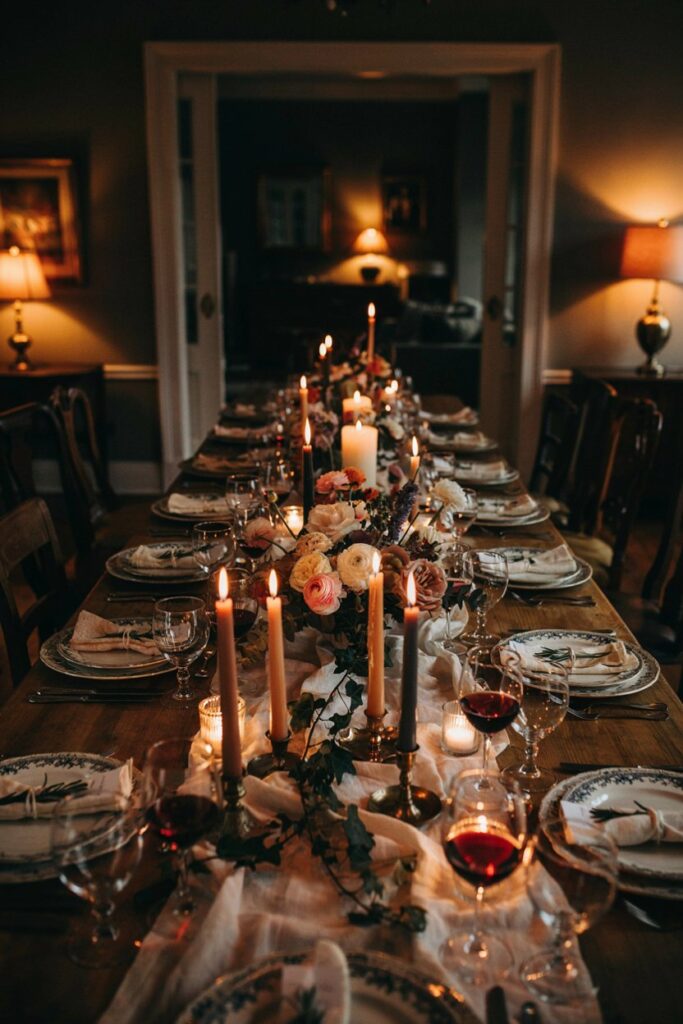
The right lighting transforms a maximalist table from “good photos” to “guests gasp when they walk in.”
Turn off overhead lighting. Overhead lighting flattens food and faces. Dimmer switches if you have them. Off if you don’t.
Use ONLY candles and lamps at warm color temperature (2700K or below). Cool LED light kills the mood instantly. Warm or candlelit only.
3 candles per place setting (minimum). One taper, one pillar somewhere on the table, plus a votive at each setting if possible. Light = mood.
Lamps on side tables (not just the dining table). If your dining area opens to a living space, dim those lamps too. Total room atmosphere matters.
Avoid colored bulbs. Skip the “moody purple” or “warm orange” bulb experiments — just use real candlelight + warm dim lamps. Anything fancier reads tacky.
For more on hosting and entertaining at home, Bon Appétit’s entertaining coverage has consistently excellent menu pairings, hosting timelines, and table setting inspiration.
What to Leave Off the Table
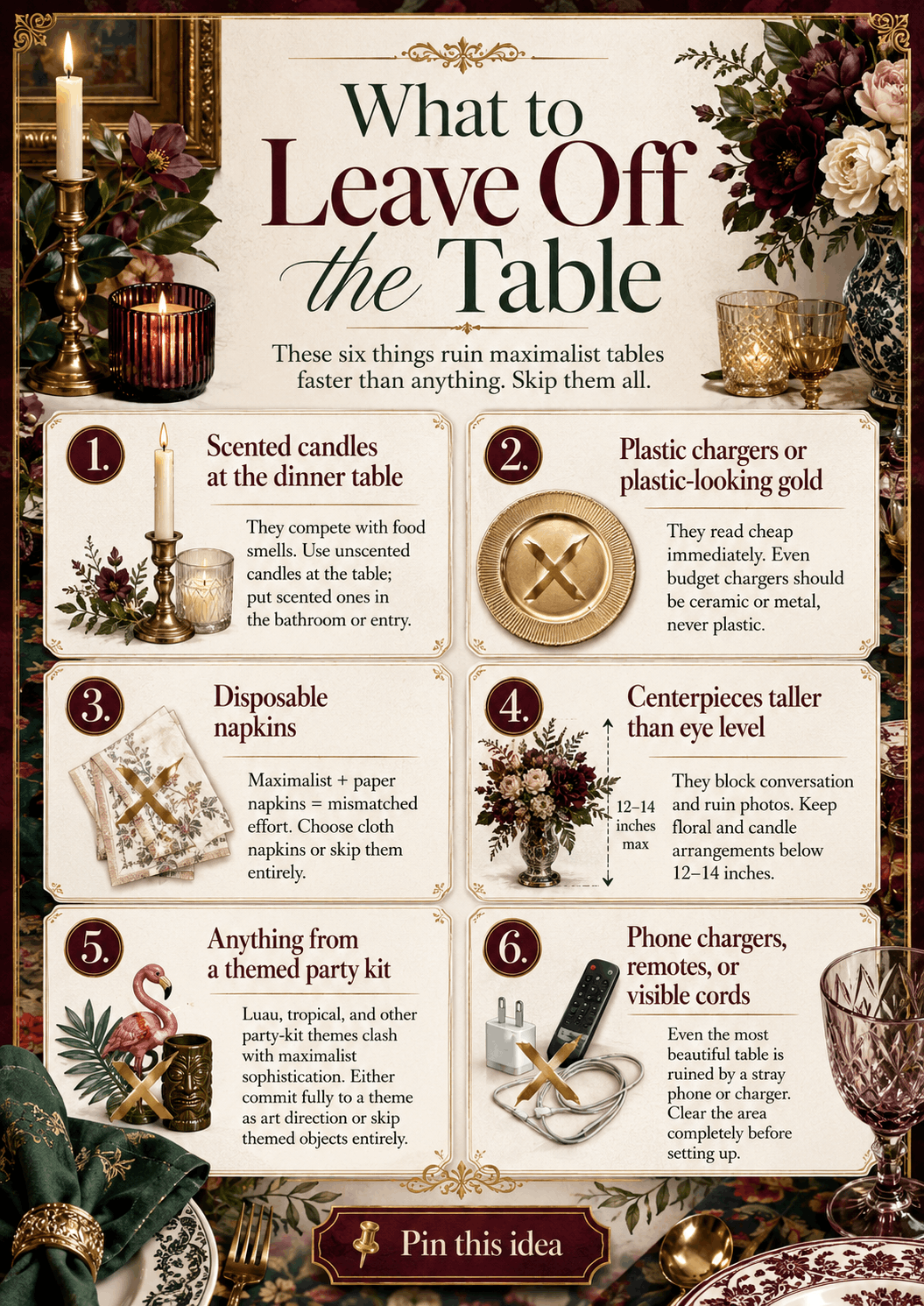
These six things ruin maximalist tables faster than anything. Skip them all.
Scented candles at the dinner table. Compete with food smells. Use unscented at the table; put scented in the bathroom or entry.
Plastic chargers or plastic-looking gold. Reads cheap immediately. Even budget chargers should be ceramic or metal, never plastic.
Disposable napkins. Maximalist + paper napkins = mismatched effort. Cloth or nothing.
Centerpieces taller than eye level. Block conversation, ruin photos. Keep all floral and candle arrangements below 12–14 inches.
Anything from a “themed party” kit. Costco-style party themes (luau, tropical, etc.) clash with maximalist sophistication. Either commit fully to a theme as art direction OR skip themed objects entirely.
Phone chargers, remotes, or visible cords. Even the most beautiful table is ruined by a stray phone or charger. Clear the area completely before setting up.
📌 Pin this idea
Where to Source Maximalist Decor
Curated by budget and what each source does best.
Best for vintage finds (cheap, unique): Goodwill, estate sales, Facebook Marketplace, eBay, local flea markets. Best for: candlesticks, plates, glassware, vintage linens.
Best for affordable new pieces: IKEA (candles, basics), Target (decor and linens), World Market (chargers, glassware), H&M Home (linens), Amazon (gold flatware).
Best for mid-range investment pieces: Anthropologie, Crate & Barrel, West Elm, CB2. Best for: chargers, statement plates, table linens.
Best for higher-end statement pieces: Williams Sonoma, Pottery Barn, Hearth & Hand at Target, Hudson Grace, Block Shop Textiles. Best for: heirloom linens, statement glassware, fine flatware.
Best for custom/artisan pieces: Etsy. Best for: place cards, custom napkins, vintage linens, calligraphed menus.
FAQs
Isn’t maximalism just expensive?
No — done well, it’s actually cheaper than minimalism because it works WITH vintage and mismatched pieces. The whole aesthetic celebrates collected-over-time, which means thrift stores and estate sales become your best friends. A full maximalist dinner setup for 8 can be built for $200 or less if you’re patient with sourcing. The “rules” matter more than the budget.
How long does setup take for a maximalist dinner party?
Plan 90 minutes to 2 hours for table setup on the day of, plus 30 minutes for last-minute floral arrangement and candle lighting. Larger tables (10+ guests) take longer. Pro tip: set the table the morning of or the night before for evening dinners — gives you breathing room and lets you adjust in good light.
Can a maximalist dinner party work with a small table?
Yes — scale the layering, don’t skip it. On a small table for 4: skip the runner (the tablecloth and chargers handle the layering), use 3 candlesticks instead of 9, and one small floral arrangement instead of multiple. The principles still apply; just dial back the volume.
What’s the difference between maximalist and cluttered?
Intention. Maximalism follows the rules (color story, scale mixing, vintage+new, vertical layers, negative space). Clutter ignores them. The same number of objects can read either way depending on whether they’re chosen and placed deliberately. The 5 rules at the top of this post are the entire difference.
Are personal touches actually worth the effort?
Yes — they’re the highest-impact, lowest-cost element of a maximalist dinner. Hand-lettered place cards, a sprig of greenery on each napkin, or a printed menu card cost almost nothing but signal genuine care. Guests remember the personal touches longer than the food. Don’t skip them.